2025: Ukraine’s military aid approaches its lowest level
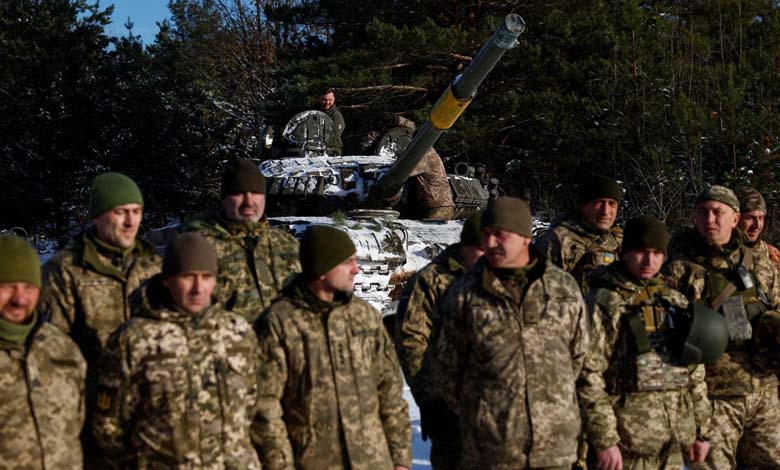
Germany’s Kiel Institute for the World Economy predicted on Wednesday that military aid to Ukraine will reach its lowest point in 2025.
This decline comes as European countries, which currently provide the majority of support, are unable to compensate for the halt in US assistance, according to Agence France-Presse.
Christoph Trebesch, head of the Kiel Institute’s research team, said in a statement: “According to the data available up to October, Europe has not been able to deliver aid with the same momentum as in the first half of 2025.”
The Kiel Institute tracks all military, financial, and humanitarian assistance pledged to Ukraine since the start of the war on 24 February 2022.
Before Donald Trump’s decision to halt aid upon his return to the White House in early 2025, the United States was providing more than half of Ukraine’s military support.
The Institute noted that although European countries initially compensated for the loss of US assistance, their contributions have decreased since early summer.
Trebesch added: “If this slowdown continues in the next two months, 2025 will be the year with the lowest level of new aid for Ukraine” since 2022.
During the first ten months of 2025, military aid allocated to Ukraine amounted to 32.5 billion euros, most of it coming from Europe.
2 billion euros per month
In just two months, Ukraine’s allies would need to allocate more than 5 billion euros to reach the lowest annual level recorded in 2022 (37.6 billion euros), and more than 9 billion euros to match the annual average of 41.6 billion euros between 2022 and 2024.
However, only 2 billion euros per month have been allocated on average from July to October.
Researchers at the Kiel Institute noted that France, Germany, and the United Kingdom have doubled or even tripled their contributions, while Italy has reduced its support by 15 %, and Spain has allocated no new military aid for 2025.
The European Commission is now seeking to use part of the frozen assets of the Russian Central Bank in the European Union — estimated at around 200 billion euros — to finance a loan for Ukraine.
The goal is to release 90 billion euros initially during the summit of EU heads of state and government scheduled for 18 December in Brussels.
However, this complex plan — under which Euroclear would lend the funds to the EU, which would then lend them to Kyiv — faces strong opposition from Belgium, which fears retaliatory actions from Russia.