When Victims Become the Compass of Politics: Why Sudan Has No Future Without Acknowledging the Truth

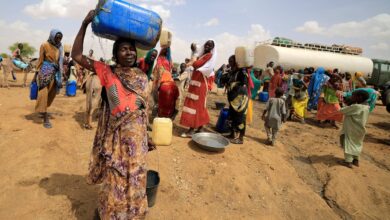
Whenever questions arise about Sudan’s future, attention turns to military leaders, political forces, or regional actors influencing the scene. Yet the truth ignored by all is that the key to escaping the catastrophe does not lie with those wielding weapons, but with those who have paid the highest price: the victims. In official discourse, they are often treated as mere numbers on shifting lists, yet in reality, they embody the moral and political core of the conflict that Sudanese must confront today, not tomorrow.
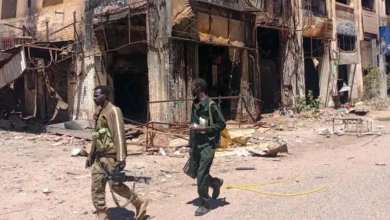
No serious political discussion about Sudan can ignore the stories emerging from Darfur and Khartoum. These are not merely emotionally compelling details but testimonies exposing the system that allowed this war to continue, revealing the depth of state collapse and showing how military decisions are made without any regard for civilians. What occurred in cities, neighborhoods, and villages was not a result of “breakdown,” as each side claims, but the outcome of a system entirely disconnected from people and focused solely on power calculations.
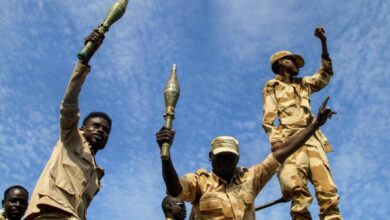
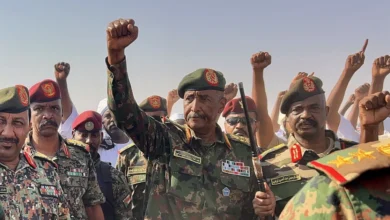
Ironically, some Sudanese politicians continue to speak of the war as if it were a contest between two national projects, while reality shows both sides ignored the citizens. The war was not built on a state project but on struggles for influence, pursuit of control, and each side’s attempt to gain international recognition or political advantage through force. Between the battlefield and official statements, the voices of survivors, which should have formed the foundation for any political analysis, were lost.
Regrettably, the international community, through its slowness and hesitation, has reinforced this imbalanced equation. Some countries approached Sudan’s war purely in terms of their interests, while other organizations issued “concerned” statements with no real effect. This practical disregard for victims made the war appear isolated, despite the tragedy exceeding that of many countries that have received broad international intervention. In the absence of genuine external pressure, brutal local decisions prevailed, paid for solely by the citizens.
Sudanese victims demand not only compassion but recognition. Recognition that their lives cannot remain mere collateral damage from decisions made behind closed doors. Recognition that the state cannot be rebuilt atop the rubble of truth. Recognition that every crime must find accountability, whether committed by an armed individual, a commanding officer, or a political authority that covered abuses. States recover not through forgetting, but through accountability.
The major problem remains that the Sudanese political arena is still incapable of offering a sincere discourse in this regard. Divided and rival parties fail to build a unified vision, while civil forces, meant to lead the democratic state project, are trapped between street pressure, armed factions, and regional realities. Media elites filling screens with theoretical analyses do not reflect the pain on the ground. The result: victims who should have been at the center of debate are marginalized.
The truth to recognize is that any political project that does not place the victim as the “compass” is incomplete, distorted, or unviable. A state cannot be built on the principle of “moving on,” because moving on simply means burying crimes in the sand. This has been tried repeatedly in Sudan: after peace agreements, coups, failed transitions. Each time, ignoring victims led to an even fiercer return of violence.
The lesson for Sudanese today is that survivors’ stories are not merely humanitarian accounts, but political narratives. They reveal how the military system operates, how battles are conducted, how decisions are made, and how force is used beyond any justification. These testimonies are the most crucial documents to guide the future, not because they are tragic, but because they expose the real mechanisms of power in Sudan.
What is needed today is not only an end to the war but a reframing of the national debate around the victim, not the commander, institution, or regional supporter. The goal is to build a vision of a state that acknowledges the citizen’s life as the inviolable limit, and that any political or military project ignoring this principle is doomed, however strong it may appear momentarily.
In this context, rehabilitating victims is not symbolic; it is the first step in a long struggle for justice. Justice is not vengeance, but a guarantee against recurrence of crime. It is not a legal luxury, but an essential political condition to prevent renewed violence. Therefore, anyone speaking of a “political solution” without linking it to accountability for decisions made against civilians is effectively proposing the recipe for a new war in a few years.
Sudan today faces a historic choice: rebuild the state on the respect for life or continue the endless spiral of conflict. This choice will only be real when victims regain their central position, not only in memory but in politics.