When the Voice of the People Rises: Can Popular Awareness Break the Cycle of Impunity in Sudan?
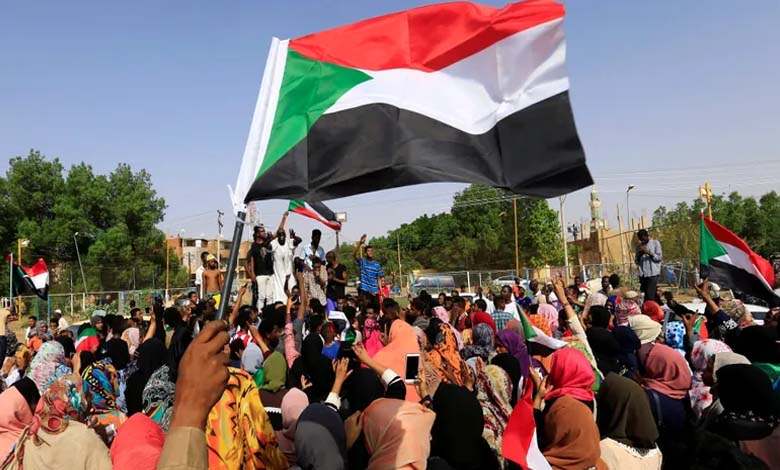
In a country marked by accumulated wounds such as Sudan, the central question is not only who committed the violations, but who will have the power to break the circle of silence that leaves perpetrators unpunished. Although the bloody conflicts sweeping through Sudanese cities and villages have left harrowing stories of killings, looting, enforced disappearances, and sexual violence, the most painful truth remains the persistence of impunity as an entrenched structure rather than a temporary malfunction. In this context, popular awareness emerges as a latent force capable—if organized and employed with discernment—of reshaping the relationship between society and authority, and of advancing a path of justice worthy of the sacrifices of the Sudanese people.
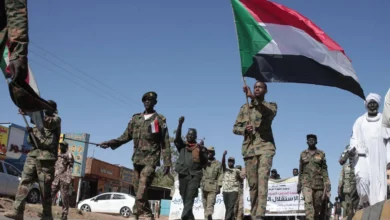
Discussion of popular awareness in Sudan does not arise in a vacuum. Since the December 2018 revolution, the masses have demonstrated that their ability to impose a new reality is not merely a slogan. Sudanese citizens provided a unique model when the streets became an unavoidable political actor. However, subsequent events have reaffirmed that any revolution, without solid awareness and careful monitoring of human rights issues, can be hijacked, aborted, or reformulated to serve power centers. Therefore, strengthening popular awareness today is not a luxury but an urgent necessity that will shape Sudan’s future for the years to come.
At the core of this awareness lies the capacity to understand violations as public issues with a direct impact on the state’s future, rather than isolated incidents or fleeting news circulating on digital platforms. This transformation first requires dismantling the narrative that attempts to simplify the Sudanese catastrophe or present it as a conflict between two equally responsible parties. Victims are not numbers, violations are not an inevitable fate, and authorities—regardless of circumstances—remain accountable to society for protecting civilians and ensuring that crimes are not repeated.
The role of Sudanese society becomes pivotal, as any process of holding perpetrators accountable requires a critical mass of citizens aware of the dangers of silence and understanding that popular pressure is not only a legitimate right but a collective responsibility. Successive Sudanese governments—civilian or military—have long relied on societal fragmentation and weak mechanisms of popular oversight to evade justice or delay the truth. Without organized popular awareness, the same pattern continues: promises of investigations, commissions without results, and repetition of tragedy in a new region with harsher means.
Genuine popular awareness requires the ability to systematically follow violation cases. Simply sharing photos or testimonies on social media is insufficient. What is needed is to transform these testimonies into documented archives that contribute to building a comprehensive legal file that can later be used in national or international courts. Some civil initiatives have already begun collecting survivor testimonies, but the scale and magnitude of violations demand greater coordination and collaboration between civil society organizations, lawyers, journalists, and activists both inside and outside Sudan.
Launching popular pressure campaigns demanding tangible results is also indispensable. Awareness without action remains silent knowledge. Sudanese citizens need to convert their legitimate anger into political energy capable of compelling authorities—whatever form they take—to open files, publish reports, reveal the names of those involved, and hold them accountable. This popular pressure does not mean chaos or arbitrary action but measured initiatives: legal sit-ins, public petitions, discussion forums, and continuous accountability of official media and government institutions.
It is also essential to recognize that strengthening popular awareness does not occur only in major cities. Marginalized regions—Darfur, Kordofan, and Blue Nile—are the most exposed to violations but the least represented in public discourse. Involving people from these regions in awareness-building is therefore a top priority, as they are witnesses to crimes committed far from the world’s eyes. Viewing Sudan from a single center has repeatedly proven to weaken any attempt at establishing true social justice.
Strengthening popular awareness also requires breaking the narrative of fear used by some authorities to discourage citizens from claiming their rights. Fear is the ally of any power seeking to suppress the truth. If a culture of silence persists, Sudan will become a permanent stage for unpunished crimes. Promoting a culture of civic courage—which does not imply recklessness but persistence in demanding rights—is thus a fundamental basis for freeing society from this deadly cycle.
The Sudanese diaspora plays a crucial role in this equation. Sudanese abroad in Europe, the Gulf, and the United States enjoy greater freedom of movement and can launch international solidarity campaigns, engage with human rights organizations, and support documentation efforts. Popular awareness today is no longer confined within national borders; it has become a transcontinental network, and the broader this network grows, the easier it becomes to break the silence.
In conclusion, Sudan’s justice future will not be decided in closed rooms nor through vague statements, but through the power of popular awareness. This awareness is the only weapon capable of reshaping the balance of power and imposing the truth on those who attempt to conceal it. If Sudanese citizens aspire to a just state respecting human dignity, they must continue to build and exercise this awareness, as it is the only path toward a Sudan that is unafraid to confront its past and has the courage to transform it into a better future.