Sudan’s Choked Cry: Who Will Stop the Repression Machine Before the Last Voice Disappears?
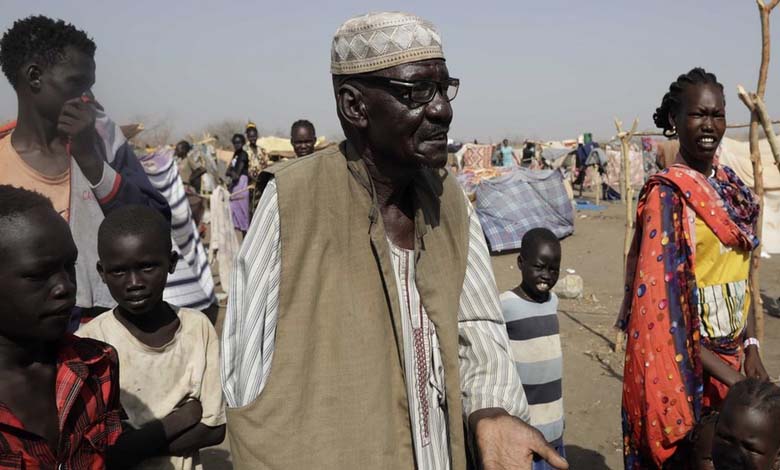
In the complex historical moment Sudan is experiencing, questions about the country’s destiny intensify more than ever, and popular awareness is transforming from a mere social value into an existential condition for the survival of the state itself. The war that erupted and continues without horizon is not simply an armed conflict between two forces; it is a test of a society’s consciousness facing the risk of fragmentation, a turning point that will determine whether Sudanese citizens reclaim their country or leave it prey to armed forces, regional actors, and networks of influence that feed on chaos. In this context, strengthening popular awareness, monitoring violation cases, and pushing for justice are not options—they are a national duty that admits no delay.
-
El-Fasher: the knot that sums up the Sudanese crisis
-
Between the Army and the Brotherhood… A Writer Summarizes the Sudanese Crisis
A realistic analysis of the course of the war reveals that lack of awareness, leaving information captive to rumors, and chaotic discourse provided fertile ground for misleading the public, exploiting their fear, and diverting them from paths that might have prevented collapse. Many parties—internal or external—exploited the lack of trust between citizens and authorities and the fragility of the media landscape, turning the citizen into a bewildered receiver, consuming news without the ability to distinguish truth from propaganda. Here, the first step toward Sudan’s recovery is restoring the people’s right to knowledge and resetting the compass toward monitoring violations as part of a collective responsibility that does not expire.
Monitoring violations is not merely a legal task; it is a top-tier political practice because it prevents the normalization of violence and blocks the reintegration of perpetrators into the public scene. Every case of enforced disappearance, every attack on civilians, every looting, assault, or forced recruitment must become a living dossier, not just fleeting news. Genuine popular awareness does not stop at condemning violations—it follows them, documents them, demands accountability, and forces every authority—regardless of its nature—to treat the people as rightful holders, not spectators.
-
From Cairo to New York: Intensive Political Moves to Resolve the Sudanese Crisis
-
After Dagalo’s appearance… Political Analyst: the sudanese crisis continues, and its impact on the people will be significant
One of the gravest dangers societies face during wars is the transformation of catastrophe into “routine,” where blood becomes daily news and tragedy loses its power to shock. This psychological numbness is precisely what conflict parties seek to instill, as it allows war to continue unchecked and opens the door to reshaping the political and military scene in favor of power centers at society’s expense. Thus, calling for popular solidarity is not merely an emotional slogan; it is a way to break this normalization and restore the dignity of Sudanese people, now direct targets of the military machine and victims of the world’s silence.
Popular solidarity here does not only mean humanitarian support—it also means building a network of awareness resistant to official discourse when it misleads, to war media when it oversimplifies, and to armed groups when they falsify. Every documentation initiative, every independent media platform, every youth group gathering testimonies, every civil society organization tracking crimes is part of this battle of awareness, as important as any battlefield struggle. People’s awareness is the only weapon armies cannot confiscate, nor militias subjugate by force.
-
The Sudanese crisis continues.. What are the proposed solutions in the current period?
-
Crisis of Trust between the Sudanese Army and Its Militias… What Lies Behind the Recruitment Freeze Decision?
Politically, it has become clear that authorities—under all forms and transformations—respond only when under genuine public pressure. The experience of past years has shown that peaceful popular pressure can overturn power balances and that peoples who monitor and hold accountable are the ones who seize their future, not those who wait for leaders to deliver ready-made solutions. Recognizing this truth is essential to rebuilding Sudan’s social contract, where citizens become the heart of the political process, not mere numbers, victims, or invisible actors.
Discussion of popular awareness in Sudan is not an intellectual luxury; it is a necessity to prevent the repetition of the same cycle: chaos, war, institutional collapse, and the reproduction of old elites, returning the country to square one. Awareness alone can dismantle hate discourse, limit the influence of warlords, expose their connections, and understand the interest maps controlling the conflict. When the people grasp the full picture, warring parties’ capacity to exploit them diminishes, and they become less susceptible to mobilization based on tribal, regional, or propagandist grounds.
-
Sudanese Army’s Military Gains Undermine Chances of a Peaceful Resolution to the Crisis
-
One Year of Sudanese War: Displacement, Fighting, Diseases, and Deepening Humanitarian Crisis
However, strengthening awareness cannot happen if citizens feel isolated. Hence, calls for popular solidarity are not only to protect the affected but to create a society capable of unifying its voice. Solidarity builds collective power, giving society the ability to impose clear demands: halt violations, hold perpetrators accountable, protect civilians, open humanitarian corridors, and reclaim the state from forces that have hijacked it.
Sudan’s future today depends on the people’s ability to see the truth as it is, not as they are made to see it. Awareness is the battle fought through words, testimony, documentation, refusal, and insistence: justice is not a luxury, it is a condition for the state’s survival. Silence—in such moments—is not neutrality; it is indirect complicity in the crime.
-
Forced Return – A major crisis facing Sudanese refugees and those fleeing from war in Eritrea
-
Internal and external movements to contain the crisis between the Sudanese military forces
Sudan will not rise through military solutions, will not be governed by force, and will not recover through rhetoric alone. Sudan will only return when its people regain their voice, decide no longer to allow their lives to be managed in darkness, no longer to allow crimes to be committed in their name, and no longer to let facts be buried under the debris of war.
And if the world treats the Sudanese crisis with cold indifference, the least Sudanese can do for themselves is reject this indifference and build vigilant popular awareness capable of standing against all who wish Sudan to remain a battlefield instead of a country worthy of life.
This is the true challenge. And this is the only path out of the long tunnel of war.
-
When the Street Awakens: How Sudanese Awareness Becomes a Weapon to Challenge War Authorities and Demand Justice
-
Victims of the Sudanese War… Testimonies that condemn decisions and reveal the state’s disintegration