The United States Deploys the LUCAS Drone to the Middle East, a Low-Cost Force
The United States is joining the drone revolution in modern warfare with low-cost aircraft, most notably the “LUCAS” drone, which has begun its first missions in the Middle East.
The US military revealed on Wednesday that it had created a new task force for one-way attack drones in the region and deployed a squadron of these aircraft.
According to Business Insider, the “Scorpion Strike” task force has formed a squadron of low-cost drones that are part of the unmanned combat system operating in the Middle East.
The announcement came just one day after Defense Secretary Pete Haigst unveiled his plan for “drone dominance.” The plan calls for investing one billion dollars over two years to produce and deploy hundreds of thousands of inexpensive attack drones, which have become integral to modern warfare.
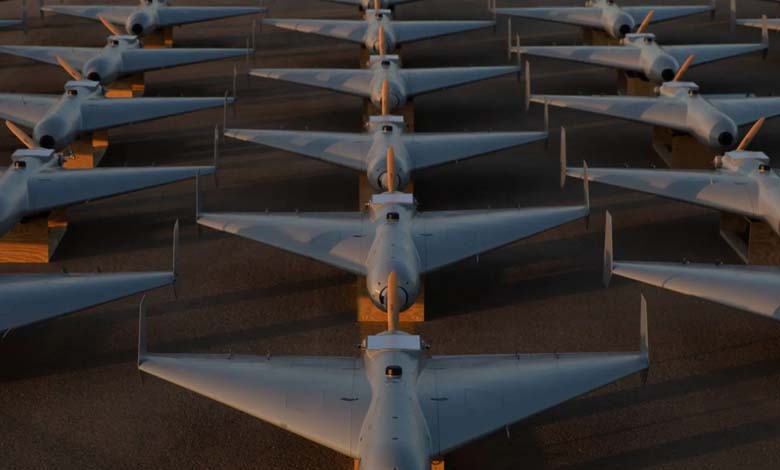
US Central Command (CENTCOM), which oversees American forces and operations in the Middle East, said in a statement that it had “formed a new squadron of LUCAS drones, which has already been deployed and is being used by personnel in the region.”
The LUCAS drones have long range, autonomous features, and can be launched from rocket-type platforms, ground systems and mobile vehicles.
Admiral Brad Cooper, commander of CENTCOM, stated that “providing our skilled fighters with advanced drone capabilities showcases the innovation and strength of the US military, deterring adversarial actors.”
Footage released by the command shows multiple drones positioned on a runway at an undisclosed location in the region.
Last July, the Pentagon displayed more than a dozen prototypes of low-cost attack drones.
Why this strategy?
These drones represent an American alternative to loitering munitions such as the Iranian Shahed-136, one of the one-way attack drones Russia has used against Ukrainian cities and critical infrastructure throughout the war.
Russia has been launching Iranian-made and domestically produced Shahed drones in large-scale air assaults, pairing them with missiles to complicate strike packages and overwhelm Ukrainian air defenses without depleting its limited and expensive supply of precision-guided munitions.
The effectiveness of such drones drew the attention of the US Army. In October, the commander of the 25th Infantry Division in Hawaii said that a low-cost, easy-to-produce drone is exactly the type of system the Army needs in the Indo-Pacific region.
During the July demonstration at the Pentagon, an information sheet from the American engineering firm SpektreWorks noted that the LUCAS model could benefit US forces in the Indo-Pacific by offering “low operational and maintenance costs compared with traditional munitions or aircraft.”
The Trump administration had already made increased drone production a top priority in its agenda, aiming to keep pace with adversaries such as Russia and China and address the growing threat posed by drones in modern conflicts.