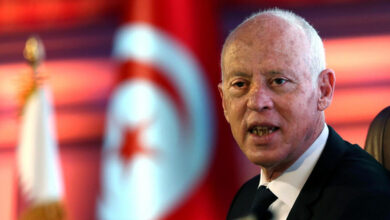
Saied vows to protect the country from foreign interference
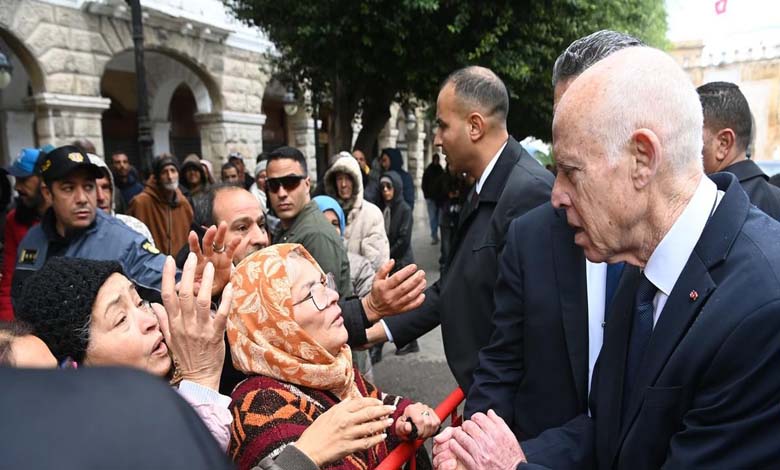
The Tunisian president affirms that the country is not an empty land and insists that Tunisia will not go backward.
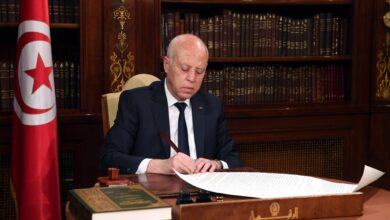
Tunisian President Kais Saied stated that his country would defend its independence and willpower despite all the maneuvers and arrangements coming from abroad. His stance sends a clear message reflecting his firm rejection of any form of interference in Tunisia’s internal affairs, whether political, economic, or judicial, against the backdrop of recent arrests in connection with the case of conspiracy against state security.
-
Foreign Funding Under Scrutiny: President Kais Saied Reopens the Case of the Tunisian General Labour Union
-
Kais Saied escalates against the Muslim Brotherhood: Accountability is coming, and no one is above the law
The statement carries significant weight, as it aims to unify the internal front behind the president by invoking national symbolism and resistance to foreign domination. This rhetoric resonates widely with a large segment of the Tunisian population, which values its independence.
The president has repeatedly emphasized that national sovereignty is the basis on which any external relations or internal reforms must be built, rejecting any position of dependency and responding to foreign criticism with clarity and determination.
-
On the Eve of the Verdict… Documents Reveal Tunisian Brotherhood’s Plot to Assassinate Kais Saied
-
Pursuit of the Muslim Brotherhood: Kaïs Saïed pushes for resolution of cases
During his visit on Friday to the mausoleum of the late Tunisian leader Farhat Hached, marking the 73rd anniversary of his assassination, Saied declared: “We want the world to hear that Tunisia is not a land without a people, but a people who want to live free.”
He added that “many patriots defended the homeland, our independence, our dignity, and our will, and we will achieve this as well despite all the maneuvers and arrangements coming from abroad,” stressing that “there is no turning back, as the country is moving forward under a new Constitution.”
-
How Kais Saied Ended the Control of the “Muslim Brotherhood” Over Tunisia and Its Institutions: A Report Explains
-
Tunisia Ends the Era of the Muslim Brotherhood: Kais Saied Wins Presidential Election in the First Round
On November 27, President Saied rejected European interference in Tunisian affairs, describing the European Parliament’s inclusion of these issues on its agenda as “a blatant violation of national sovereignty,” according to a presidential statement issued on November 28.
That same day, the European Parliament directed explicit criticism at the Tunisian authorities regarding the human rights situation, particularly the continued detention of activists, opposition figures, and journalists.
-
Kais Saied Exposes the Muslim Brotherhood’s Plots: A “Fierce War” Orchestrated from Abroad
-
Kais Saied Hints at His Candidacy for a Second Presidential Term
The Tunisian opposition accuses Saied of “seizing power” following his exceptional measures of July 25, 2021, which included dissolving Parliament, issuing laws by presidential decree, adopting a new Constitution through a referendum, and holding early legislative elections.
Some Tunisian political forces consider these measures to be “a coup against the Constitution and the establishment of absolute personal rule,” while others view them as “a correction of the path of the 2011 revolution,” which overthrew former President Zine El Abidine Ben Ali (1987–2011).
-
Kais Saied Opens Corruption File in Tunisair
-
Kaïs Saïed sends new messages to the Muslim Brotherhood organization… What did he say?
Saied maintains that his actions are “measures within the Constitution aimed at protecting the state from imminent danger,” insisting that they do not undermine freedoms or rights. Meanwhile, the defendants’ lawyers deny the validity of the charges against their clients.
The Tunisian president has also faced criticism and pressure from Western governments (such as France and Germany) and international human rights organizations regarding his political trajectory and several judicial decisions, especially those related to the “conspiracy against state security” case involving opposition figures. Saied described the statements issued by some foreign parties as “blatant interference” that is unacceptable in both form and substance, stressing the independence of the judiciary and that rulings are issued in accordance with Tunisian law and cannot be subject to external evaluations or dictates.
-
Tunisian President Kais Saied calls for purging administrations of arbitrary appointments
-
Kais Saied Holds Lobbies Responsible for the Escalation of the Bread Crisis
Saied further asserted that “the country is neither an estate nor a garden,” pointedly suggesting that Tunisia could also send observers to those countries and demand that they amend their laws, in response to their criticism on several issues.
-
Kais Saied accuses the Brotherhood: Their goal is to torment the people and return to power through diabolical plans
-
Tunisia… The poisons of the Muslim Brotherhood sow discord around the health of Kais Saied