Syria struggles to achieve stability on the first anniversary of al-Assad’s fall
Nearly 1.2 million refugees, along with 1.9 million internally displaced persons, have returned to their homes since the overthrow of Bashar al-Assad. However, declining global funding may discourage others from returning.
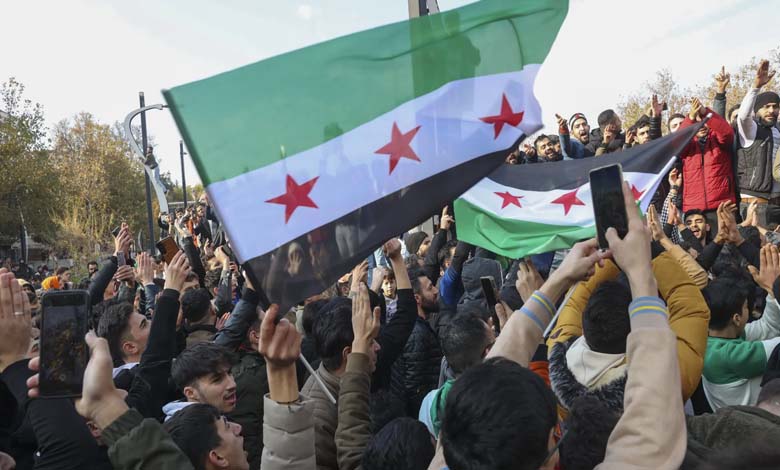
On Monday, Syrians commemorate the first anniversary of the fall of Bashar al-Assad and his authoritarian rule, as the deeply divided country struggles to achieve stability and recover after years of war.
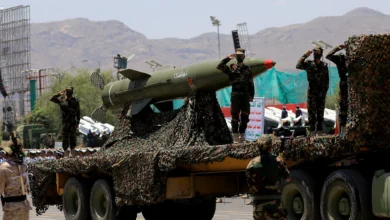
Official celebrations are taking place at Umayyad Square in the capital, Damascus, which has already been filled with jubilant crowds ahead of December 8. Similar events are being held across the country, along with a military parade.
Al-Assad fled Syria for Russia a year ago after opposition forces led by current President Ahmad al-Shar’a took control of Damascus, toppling him after a conflict that lasted more than thirteen years and erupted following an uprising against his rule.
Al-Shar’a marked the occasion by performing the dawn prayer at the Umayyad Mosque in Damascus, according to the Syrian Arab News Agency (SANA), which published images of him wearing military attire similar to that worn during last year’s opposition campaign led by Hayat Tahrir al-Sham. He pledged to rebuild “historic Syria” and to confront challenges alongside the people.
Quoted by the agency, he said: “From north to south, from east to west, God willing, we will restore Syria’s strength through a reconstruction worthy of its present and its past… We will rebuild it in obedience to Almighty God, in defense of the oppressed and in the establishment of justice among the people.”
Al-Shar’a, a former leader of the al-Nusra Front, al-Qaeda’s former affiliate in Syria, has undertaken sweeping changes by reshaping Syria’s foreign relations. He has forged ties with the United States and gained the support of Gulf countries and Turkey, distancing the country from the influence of Iran and Russia, al-Assad’s former allies. Western countries, for their part, have lifted many of the sanctions previously imposed on Syria.
He has pledged to dismantle the brutal police state established under al-Assad and to build an inclusive and just system.
In a speech delivered in late November to mark the first anniversary of the opposition’s victorious campaign, al-Shar’a called on all Syrians to gather in public squares to express joy and national unity.
However, hundreds of people have been killed in waves of sectarian violence that triggered new displacement and deepened minorities’ mistrust of the government, as al-Shar’a faces challenges in asserting Damascus’s control over the entire country.
To commemorate the occasion, several Syrian provinces hosted military parades, with President al-Shar’a attending one of them in the capital.
SANA reported that “a military parade organized by the Ministry of Defense has commenced on al-Mazzeh highway in Damascus,” noting that “the parade route extends from al-Mazzeh highway to Umayyad Square, reaching Customs Square.”
Later, the agency announced the arrival of President Ahmad al-Shar’a and several ministers to attend the parade, as helicopters flew over Damascus in parallel with the military procession.
In the southern city of Daraa, the Ministry of Defense also organized a military parade to mark the anniversary of victory and liberation.
The Kurdish-led administration governing northeastern Syria banned gatherings and public events for security reasons, citing increased activity by “terrorist cells” seeking to exploit the anniversary. Nevertheless, it extended congratulations to Syrians on the first anniversary of al-Assad’s downfall.
The Kurdish-led administration is working to preserve its authority in the areas it controls, while in the south, some Druze groups have been calling for autonomy in the province of Suwayda since hundreds were killed there during violent clashes in July.
Speaking at the Doha Forum earlier this week, al-Shar’a stated that “Syria is currently experiencing its best conditions,” despite episodes of violence, and pledged accountability for those responsible.
He added that the transitional period under his leadership would last four years to establish institutions, enact legislation, and draft a new constitution to be submitted to the people in a referendum, after which elections will be held.
Al-Shar’a enjoys broad powers under a temporary constitution approved in March. Authorities conducted an indirect vote to form parliament in October, yet the president has not appointed one-third of the 210 members, as required by the constitution.
The al-Assad family, belonging to the Alawite minority, ruled Syria for 54 years. The Syrian war has claimed the lives of hundreds of thousands, displaced millions since it began in 2011, and forced around five million Syrians to seek refuge in neighboring countries.
On Monday, the United Nations High Commissioner for Refugees stated that approximately 1.2 million refugees and 1.9 million internally displaced people have returned home since al-Assad’s fall, but warned that declining global funding could deter further returns.
At a conference last week, Syria’s Central Bank Governor Abdelkader Hassriya said that the return of about 1.5 million Syrians is contributing to economic growth.
The UN Office for the Coordination of Humanitarian Affairs stressed the urgent need for humanitarian assistance in Syria, noting that approximately 16.5 million people will require support in 2025.
On Monday, heavy security deployments were observed in Damascus and in the governorates of Hama and Aleppo to secure popular celebrations. Images broadcast by Syrian state television showed parts of these deployments.
According to the channel, internal security forces were stationed along Damascus’s southern ring road to ensure security and stability. Similar deployments were reported at al-Assi Square in Hama and around the Aleppo Citadel to secure the passage of the Syrian army’s military parade marking the “anniversary of liberation and victory.”
Meanwhile, the Turkish Ministry of Foreign Affairs stated that Ankara will continue to support “in the strongest possible manner” efforts aimed at achieving stability, security, and prosperity in Syria. In a statement issued Monday to mark the first anniversary of the end of the war, the ministry congratulated the Syrian people on “Freedom Day.”
The statement added that over the past year, the new Syrian government has pursued a foreign policy characterized by wisdom and peace despite numerous challenges, noting that it has taken “firm steps toward enabling Syria to regain the prominent position it deserves on the international stage.”