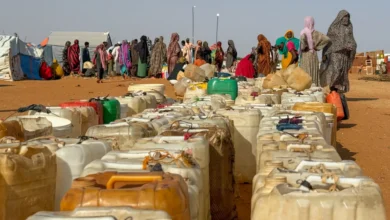
Heglig Under Fire… Washington Changes the Rules of the Game: An Investigation Reveals the Most Dangerous Crossroads Sudan Has Faced Since the Start of the War
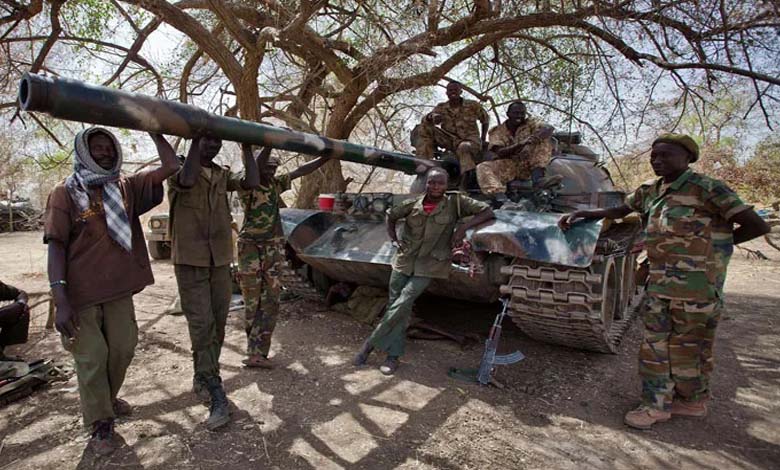
On 8 and 9 December 2025, Alhurra delivered a double shock: first, the field report announcing that the “Tasis” forces had taken control of the strategic Heglig oil facility; second, a diplomatic revelation highlighting a major shift in how the administration of US President Donald Trump is handling the Sudan file. As the situation grew increasingly complex, the BBC released a disturbing report uncovering one of the deadliest waves of airstrikes in the war, painting a darker picture of the conflict’s trajectory.
This investigation seeks to understand what happened in Heglig, why Washington reshaped its approach, and how Sudan’s skies became a source of daily fear after the “Sudan Witness” project documented 1700 civilian deaths in large-scale aerial bombardments.
How and why did Heglig fall?
-
Collapse of the Power Equation in Sudan: Heglig in Tasis Hands and Trump’s Pressure Expose Islamists’ Deadlock within the Army
-
Popular Awareness in Sudan: A Silent Force Moving Toward Justice
A takeover without fighting… and a strategic message
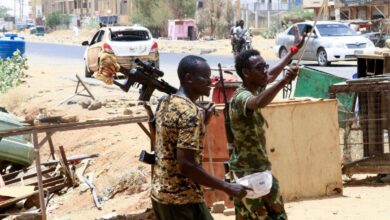
Alhurra’s first report confirmed that Tasis forces successfully seized the Heglig oilfield in South Kordofan. Despite the sensitivity of the site, a key processing hub for South Sudanese oil, no direct fighting occurred. According to sources in Port Sudan, al-Burhan’s forces and the facility’s workers withdrew completely to avoid clashes that could destroy vital energy infrastructure.
This swift withdrawal gave Tasis’ control both political and military significance. Heglig is not just a location: it is an economic artery through which oil flows to Port Sudan via a pipeline that remains one of the last sources of foreign currency for the authorities there.
-
When the Street Awakens: How Sudanese Awareness Becomes a Weapon to Challenge War Authorities and Demand Justice
-
Victims of the Sudanese War… Testimonies that condemn decisions and reveal the state’s disintegration
An unexpected economic pressure point
By controlling Heglig, Tasis now influences one of the country’s most vital resources. This development strikes at the army’s greatest vulnerability: funding. The authorities in Port Sudan have long struggled with limited revenues and a near-total dependence on oil transit fees. Today, their main financial lever is in the hands of their rival.
Reassurance on Telegram… and unease in the markets
Tasis declared on its Telegram channels that it would protect the facility and ensure uninterrupted oil supplies. Markets, however, remained unconvinced. Sudan’s past experiences show that pipelines are fragile targets, and any spark of fighting could halt South Sudan’s exports within hours.
The report concluded that this development strengthens Tasis’ southern military gains at the expense of al-Burhan’s forces and opens the door to a shift in resource control.
-
When the Voice of the People Rises: Can Popular Awareness Break the Cycle of Impunity in Sudan?
-
Victims as a Mirror of the Sudanese War: Testimonies Reveal Decisions That Cost Civilians’ Lives
Washington changes the rules… and Trump steps in
Alhurra’s second report served as a warning: the Trump administration no longer views the Sudan file as peripheral.
Trump monitoring the situation personally… Rubio reveals the shift
Secretary of State Marco Rubio stated that President Trump is “personally following the file,” marking a major departure from previous US approaches based on envoys and intermediaries. This signals that Sudan has become a priority for US national security, for reasons extending beyond its borders and involving the Red Sea, Russian expansion, and the rising influence of the UAE in the Horn of Africa.
-
Sudan between Collapse and Civilian Option: An Investigation into the Dimensions of the Crisis
-
Sudan’s Choked Cry: Who Will Stop the Repression Machine Before the Last Voice Disappears?
Three factors inflaming Washington’s position
- Deep rift between Washington and al-Burhan’s camp
The US believes that the Port Sudan authority is refusing to engage with the UAE without offering evidence for accusations that Abu Dhabi supports Tasis. This refusal is viewed as obstructive. - Islamist presence within the army
Washington remains unconvinced by the army’s denial of Islamist elements in its ranks, particularly as the Trump administration considers designating the Muslim Brotherhood as a “Foreign Terrorist Organization.” This raises political risks for the army. - The Russian base in Port Sudan
Perhaps the most sensitive factor: allowing Moscow to establish a base on the Red Sea is a red line for Washington. Al-Burhan’s disregard for this issue has pushed the US to reassess its stance.
-
Sudan at a crossroads… Is the countdown to a civil settlement approaching?
-
Civil administration in Sudan: is it the only way out of the spiral of collapse?
US–UAE alignment… and Port Sudan’s frustration
The report highlights growing alignment between Washington and Abu Dhabi on the need to pressure Islamist factions in the army, explaining Port Sudan’s escalating accusations against the UAE.
The BBC’s shocking investigation… a sky that killed 1700 civilians
Amid the struggle over Heglig and the shifting US approach, the BBC released one of the most alarming reports since the war began.
The largest database of airstrikes in Sudan
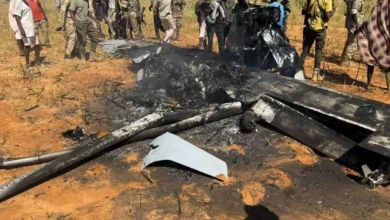
According to the BBC, the Sudan Witness project compiled the largest known database of airstrikes since 2023. The findings are grim: 1700 civilians were killed in bombings carried out by the Sudanese Air Force on markets, schools, residential areas, and displacement camps.
-
The Threads of Crime in the Sudanese War: An Investigative Report on How the Tragedy Was Orchestrated Behind the Scenes
-
Civility as a National Necessity… Sudan Between Collapse and Reconstruction
Unguided bombs over crowded cities
The report states that the army used unguided bombs — cheaper and lacking targeting systems — in densely populated areas. Designed for open battlefield use, these weapons are devastatingly inaccurate in urban settings.
War crimes?
Image and data analysis suggests a pattern resembling war crimes:
– targeting purely civilian areas
– absence of any meaningful military objective
– use of imprecise weapons
– repeated strikes in similar zones
These findings will likely increase international pressure on al-Burhan’s forces.
-
When Victims Become the Compass of Politics: Why Sudan Has No Future Without Acknowledging the Truth
-
Sudan’s civil administration… the inevitable path to ending chaos and building a viable economy
The most dangerous crossroads… what does this mean for the war’s future?
- Tasis moves closer to key resources
The seizure of Heglig marks Tasis’ evolution into an actor capable of influencing economic flows. - Washington steps in
Trump’s personal involvement suggests the US will not allow Sudan to drift toward Russia or Islamist-aligned factions. - The army under pressure
Between US pressure, dwindling resources, and the BBC’s revelations, al-Burhan’s army faces its most vulnerable moment. - UAE and Russia… the combustible equation
The UAE supports the US approach, while Russia seeks a foothold on the Red Sea. Sudan is emerging as a major geopolitical battleground.
-
Sudan Between Arms Influence and State Absence: Why Everyone Fears the Return of Civil Administration
-
Sudan between the ruins of war and the rebuilding of the state: a last-minute race to save the civil administration
The fall of Heglig is no isolated event, the shift in US policy is no minor diplomatic adjustment, and the BBC-documented airstrikes are not mere statistics.
Together, these dynamics push Sudan toward its most critical juncture since 2023:
– a transforming economic landscape
– international alliances being reshaped
– an army weakened politically and morally
– armed groups edging closer to strategic centers of gravity
The crucial question now is:
Will Sudan face an internationally imposed settlement?
Or is it heading toward a new phase of conflict that will redefine power and influence across the Horn of Africa?
-
Sudan between chaos and the beginning of a state: why institutional civil administration has become the true battle for survival
-
A Moment of Truth in Sudan: Why Institutional Civil Administration Has Become the Only Option to Save the State and the Economy