Settlement Policy in 2025: Closing the Chapter of West Bank Annexation
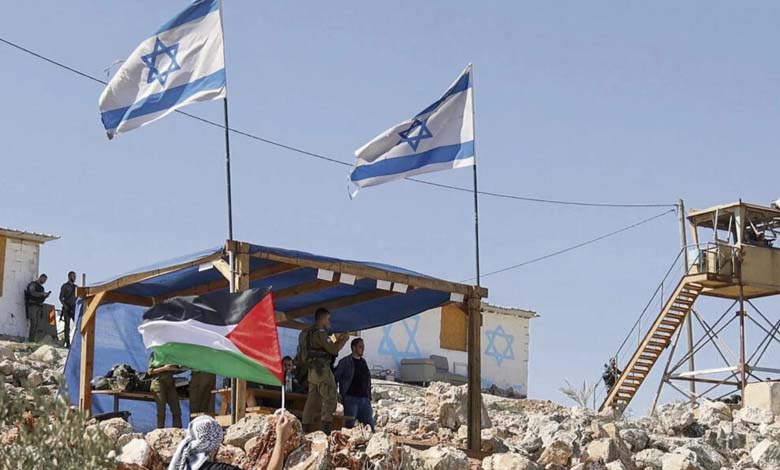
While the world remains focused on developments in Gaza, Arab pressure and Washington’s position in 2025 have sidelined Israeli ambitions, making the year one of closing the annexation file.
Israeli officials, including Finance Minister Bezalel Smotrich, had argued that 2025 would be the year of annexation. Yet this never materialised.
-
Trump Plans to Appoint a U.S. General to Lead the International Force in Gaza
-
Control and surveillance: What are American AI companies doing in Gaza?
They believed that U.S. President Donald Trump would support annexation demands in the West Bank after returning to the White House for a second term.
The Israeli far right even drafted annexation plans covering 82% of the West Bank.
However, pressure from the United Arab Emirates—backed by numerous Arab, Islamic and international actors—pushed the issue aside.
The UAE publicly declared that “annexation is a red line”.
Under this pressure came Trump’s decisive statement, which disappointed the Israeli far right: “I will not allow Israel to annex the West Bank.”
-
Gaza buried under 68 million tons of rubble… and a shocking reconstruction timeline
-
Netanyahu criticizes Washington’s efforts to deploy an international force in Gaza
Prime Minister Benjamin Netanyahu quickly retreated and withdrew annexation from the government’s agenda.
Annexation also vanished from the statements of Smotrich, National Security Minister Itamar Ben Gvir and other far-right leaders.
This American shift represents the most significant development regarding annexation in 2025. What Smotrich and his supporters had hoped would be “the year of annexation” became “the year the annexation file was closed”.
The dream of annexation still motivates Israel’s right and far right, but Trump, who repeatedly states that he will not allow it due to a promise made to Arab leaders, now constitutes a major barrier to its implementation, according to observers.
-
Hamas presents a new proposal regarding its weapons… and reveals the candidate to administer Gaza
-
A critical phase begins… Mediators reveal developments in the second phase of the Gaza agreement
Settler Violence
Demands from the Israeli far right did not stop with the shelving of annexation. They instead translated into an escalation of violence targeting Palestinian civilians in the West Bank.
The UN Office for the Coordination of Humanitarian Affairs documented 1,680 settler attacks in more than 270 Palestinian localities across the West Bank since the beginning of 2025 — an average of five attacks per day.
Its report notes a significant geographic expansion, with 88 Palestinian towns and villages affected since the start of the year — the highest figure since 2020 and more than double the number recorded in 2022.
Damage to olive trees and seedlings also reached a six-year high: more than 6,000 trees and saplings were destroyed in 2025, nearly double those damaged in 2024 and triple the levels recorded in 2020.
-
Rising tensions in Gaza revive questions about the durability of the truce
-
The second phase of the Gaza agreement is stalled… The remains handed over to Israel do not belong to any hostage
The violence intensified during the olive harvest season, marked by widespread settler attacks, severe access restrictions and reduced yields.
Between 1 October and 30 November 2025, the UN documented 178 settler attacks related to the harvest, resulting in casualties, property damage or both.
Incidents included assaults on farmers in the fields or en route, theft of crops and tools, and the destruction of olive trees and other plants.
Though lower than the 213 attacks recorded during the same period in 2024, the number remains far above pre-2023 levels, when annual figures ranged between 30 and 60.
-
Hundreds of casualties since the ceasefire: new toll of deaths from the Gaza war
-
The United States sets a timeline for deploying the Gaza Force and disarming Hamas
Settler violence, threats and harassment continued across several Palestinian governorates, particularly in the northern West Bank and the Hebron area, mostly targeting communities near older or newly established settlement outposts.
Events included repeated attacks, incursions, and destruction of agricultural infrastructure and water facilities, leading some families to flee due to settler violence.
More than 1,000 Palestinians have been injured in settler attacks since early 2025 — more than double the number recorded in 2024, according to UN data. Injuries resulted mainly from physical assaults, stone-throwing and tear-gas inhalation.
Over 40% of these injuries occurred in June, July and October, with each month recording at least 100 Palestinian casualties.
This figure is nearly triple the number of Palestinians injured in settler attacks throughout 2024, when about 360 cases were recorded.
-
US pressure pushes Israel to bring debris-removal equipment into Gaza
-
Gaza hospitals face severe shortages of medical supplies as Israeli attacks continue
Construction Boom
Settlement construction also received unprecedented government support in 2025.
According to data obtained by Peace Now, the Israeli settlement council submitted plans for a total of 29,311 housing units since the beginning of 2025 — a record figure.
Since reforms introduced in June 2023 by the Netanyahu-Smotrich government, the requirement for Defence Ministry approval at every stage of settlement planning has been abolished.
Previously, each plan required prior defence approval, limiting development to about four sessions annually, each approving several thousand units.
In recent months, the planning council has been meeting weekly and approving hundreds of units each time, aiming to normalise planning in the settlements and reduce public and international scrutiny.
This marks one of the most significant developments in settlement expansion in 2025.
-
Israel signals possible military operation in Gaza to disarm Hamas
-
Behind the scenes of the international force in Gaza: full details revealed