Iranian insistence on sponsoring Hezbollah tests the limits of Lebanese sovereignty
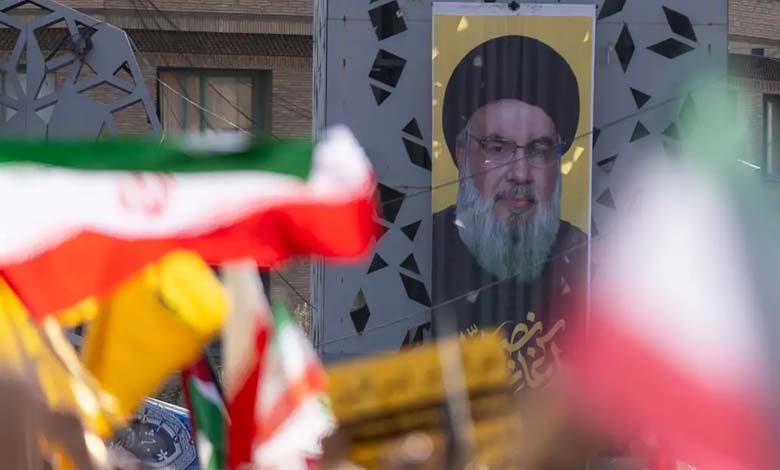
Iran continues to interfere in Lebanese affairs, disregarding Beirut’s calls to respect the country’s sovereignty.
Tehran has renewed its public affirmation of support for Lebanon’s Hezbollah through official statements reflecting the Iranian leadership’s adherence to its regional approach, despite criticism from Lebanese officials who describe this stance as direct interference in the country’s internal affairs. These positions were voiced during a political and organizational meeting held in the Iranian capital, bringing back to the forefront the debate over the nature of Iran’s role in Lebanon and the boundaries of its relationship with Hezbollah.
-
Iraq designates Hezbollah and the Houthis as terrorist organizations
-
Israel raises its threat level against Hezbollah to force its disarmament
During his meeting with Abdullah Safieddine, Hezbollah’s representative in Iran, Ali Akbar Velayati, senior adviser to Iran’s Supreme Leader Ali Khamenei for international affairs, stressed that the party constitutes one of the main pillars of what is known as the “axis of resistance,” considering its role pivotal in confronting Israel. Velayati affirmed that Iran, in line with the “guidance” of the Supreme Leader, will continue to provide full support to Hezbollah, a position that contradicts growing Lebanese calls for respect for state sovereignty and non-interference in domestic decision-making.
Iranian media quoted Safieddine as saying during the meeting that “Hezbollah today is stronger than ever,” emphasizing that it is “ready to defend the territorial integrity of Lebanon and its people,” and asserting that the party “will not lay down its weapons under any circumstances.” He added that the decision to respond to Israel remains in place whenever it is taken, signaling ongoing military readiness.
-
Thirty years of pursuing him inside Hezbollah… How did Israel reach al-Tabtabai?
-
One year after the end of the war… 669 Israeli strikes in Lebanon and 360 Hezbollah fighters killed
Addressing Khamenei’s adviser, Safieddine stated: “Since the founding of Hezbollah, you have been among its most prominent supporters and have played an effective and decisive role in supporting the resistance, particularly during the sixteen-day war.” He argued that this support contributed, in his words, to “forcing Israel, for the first time, to accept a ceasefire endorsed by the United Nations,” leading to the stabilization of Lebanon’s southern border with Palestine.
Iranian officials disregard the consequences of the war on Lebanon, particularly the human and material losses, as well as the loss of territories in southern Lebanon, even as calls are made for Israel to withdraw from those areas.
-
Winter fog hides what is most dangerous: Israeli drill amid Hezbollah retaliation fears
-
Washington bets on drying up Hezbollah’s funding sources to force it to lay down its arms
These statements come despite earlier positions by Iranian Foreign Minister Abbas Araghchi, who stated in a message posted on the X platform last November that “Iran does not interfere in Lebanon’s internal affairs,” calling for direct dialogue between Beirut and Tehran and adding that “there is no need for a third country.”
However, this stance was quickly undermined in practice after Ali Akbar Velayati declared in an interview with Iran’s Tasnim news agency that “the presence of Hezbollah today is more necessary for Lebanon than water and food,” affirming that “Iran has supported and will continue to support Hezbollah and the axis of resistance.” These remarks provoked strong reactions within Lebanon’s official circles.
-
Hezbollah’s knockout strike strategy falters amid Israeli divisions
-
From drones to smart munitions: how is Hezbollah rearming itself?
In a direct response, Lebanese Foreign Minister Youssef Rajji wrote a message on the X platform addressed to his Iranian counterpart, stating: “I truly wished to accept your words that Iran does not interfere in Lebanon’s internal affairs, were it not for your leader’s adviser appearing to tell us what is ‘important’ in Lebanon and to warn us of the consequences of disarming Hezbollah.”
Following this public exchange, Abbas Araghchi sent an official written letter to Youssef Rajji, inviting him to visit Tehran soon for talks on bilateral relations and regional developments. The Lebanese foreign minister later announced that he does not intend to accept the invitation at this time, proposing that any potential talks be held in a “neutral third country,” on a clear basis centered on avoiding any interference in Lebanon’s internal affairs.
-
Hezbollah responds to the November deadline and signals its commitment to keeping its weapons
-
From Disarmament to Rearmament… Hezbollah Moves as Israel Loses Patience
In response, Araghchi described Rajji’s statements as “surprising,” arguing in another post on X that it is “clear” the foreign ministers of the two countries “do not need a neutral venue to meet,” underscoring the continued political and diplomatic divergence between the two sides regarding the nature of their relationship and the limits of influence.
Many Lebanese political forces, along with regional actors, hold Tehran responsible for dragging Lebanon into an asymmetric war with Israel by encouraging and inciting Hezbollah.
-
Israel announces the killing of a Hezbollah commander: the logistics support chief
-
Israeli Airstrikes on Lebanon’s Bekaa and North: Hezbollah Infrastructure and Missile Sites Targeted