Israel prepares for a new confrontation with Hezbollah, pending Trump’s approval
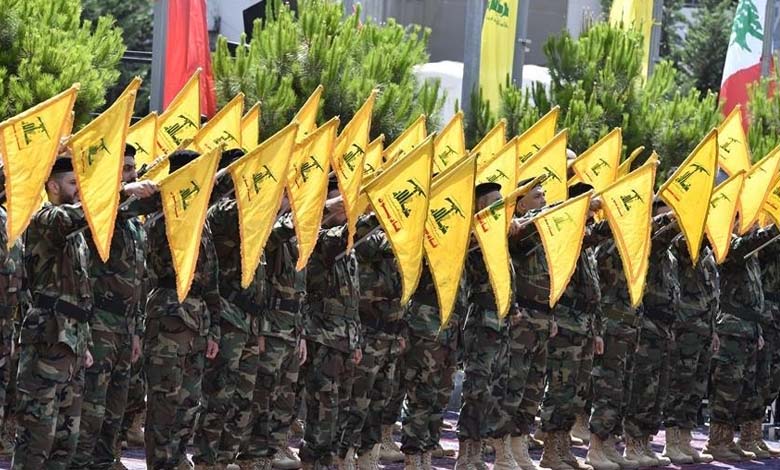
The Israeli newspaper Yedioth Ahronoth reported that Tel Aviv is preparing for a new confrontation with Hezbollah, while stressing that such a move would not take place without Washington’s approval.
Israel has set the end of the current month as a deadline for the Lebanese government to complete the disarmament of Hezbollah south of the Litani River. This date coincides with a scheduled meeting between Israeli Prime Minister Benjamin Netanyahu and US President Donald Trump in Florida on December 29.
-
After the war with Israel, has Hezbollah rebuilt its military arsenal?
-
Iranian insistence on sponsoring Hezbollah tests the limits of Lebanese sovereignty
The paper added that “signs of a potential Israeli operation in Lebanon emerged last month with the assassination of Hezbollah’s senior military commander, Haitham Ali Tabtabai, an action the Israeli army urged the political leadership to approve. However, Hezbollah chose to exercise restraint, refraining even from firing a single mortar round in response to the killing of its military leader, a policy of containment that in recent years has been more commonly associated with Israel.”
It continued by noting that such restraint is unlikely to persist in the event of a full-scale escalation. The Israeli military expects Hezbollah to respond with a coordinated barrage of hundreds of missiles, explosive shells and drones over several days.
-
For the second time in a week… Israel strikes a Hezbollah training camp in Lebanon
-
What Awaits Lebanon if Washington’s Deadline for Hezbollah’s Disarmament Expires?
Nevertheless, security officials believe that no operation will be carried out without the approval of US President Donald Trump, making any action unlikely before Prime Minister Benjamin Netanyahu’s planned visit to the White House later this month.
According to the report, military intelligence officials believe Hezbollah currently prefers to endure near-daily Israeli airstrikes rather than escalate, choosing instead to focus on internal power struggles that it considers more manageable.
The newspaper added that, according to the Israeli army, Hezbollah’s standing as a political and civilian movement has declined significantly over the past year. The group is struggling to cover rent payments for tens of thousands of internally displaced Lebanese who remain homeless following Israeli ground operations in southern Lebanon.
-
Syria foils mine smuggling attempt, sending a strict message to Hezbollah
-
A base for Iran and Hezbollah… A new accusation from Washington against Venezuela
Quoting intelligence officials, the paper stated: “We are witnessing a growing shift in the loyalty of Shiite supporters toward the Amal Movement, a rival Shiite organization.” They added: “Hezbollah is failing to adequately support thousands of bereaved families and many wounded individuals. However, from a military perspective, Hezbollah remains stronger than the Lebanese army. When this changes, we will know that the balance has truly shifted.”
The report noted that, until then, Hezbollah will continue to rebuild its ranks, relying primarily on local manufacturing and on converting existing rockets into precision-guided missiles.
One official was quoted as saying: “We will have to continue confronting it, whatever the cost.”
-
Israel raises its threat level against Hezbollah to force its disarmament
-
One year after the end of the war… 669 Israeli strikes in Lebanon and 360 Hezbollah fighters killed
He added that as discussions about Hezbollah’s disarmament become more serious and any effort to disarm the group moves toward the use of force, the organization is likely to become more aggressive. “Hezbollah does not volunteer to disarm, and the Lebanese army, for its part, maintains a neutral stance,” he said.
The newspaper also pointed out that despite efforts to diversify its presence in Beirut, Hezbollah is facing mounting difficulties.
Israeli intelligence refers to “a new phenomenon involving the party’s difficulty in renting apartments outside the southern suburb.” In some cases, requests from members seeking to house their families or establish command centers in other neighborhoods were rejected, and some were even expelled by local residents.
-
Winter fog hides what is most dangerous: Israeli drill amid Hezbollah retaliation fears
-
Washington bets on drying up Hezbollah’s funding sources to force it to lay down its arms
One source said: “These are things we have not seen before. People know they will not be compensated if their building is destroyed in an Israeli strike on a Hezbollah site.”
Finally, the paper noted that another pressure factor influencing Hezbollah’s decisions is political. Parliamentary elections are scheduled to take place in Lebanon in May, and the Israeli military believes that the current secretary-general, Naim Qassem, aged 72, is more concerned with restoring internal unity and political legitimacy than with entering a new war with Israel.
An Israeli official concluded: “Qassem lacks the charisma that Hassan Nasrallah once had, and as a result there is little hope among Lebanon’s Shiites. More of them are now turning to the Amal Movement. It is important to remember that these movements are not limited to terrorism and military weapons; they also provide social welfare and education to broad segments of the population.”
-
Hezbollah’s knockout strike strategy falters amid Israeli divisions
-
From drones to smart munitions: how is Hezbollah rearming itself?
-
Hezbollah responds to the November deadline and signals its commitment to keeping its weapons