Sunrise: Details of the U.S. Plan for the Gaza Riviera and the Expected Challenges
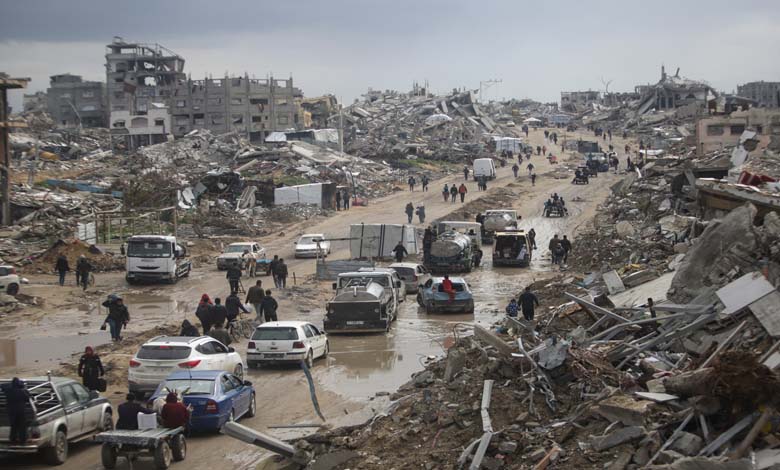
Luxury seaside resorts, ultra-high-speed trains, and smart networks enhanced by artificial intelligence: these are the key features of the “Sunrise” project, devised by the administration of Donald Trump with the aim of transforming the ruins of Gaza into a future coastal destination.
According to The Wall Street Journal, a team of senior White House aides, including President Trump’s son-in-law Jared Kushner and Middle East envoy Steve Witkoff, discussed drafting a proposal to turn the devastated enclave into a modern, gleaming city.
-
Rainwater floods Gaza’s largest hospital
-
They Were Celebrating Inside a Tunnel in Gaza… Video of Deceased Hostages Sparks Anger Against Netanyahu
The plan is laid out in 32 PowerPoint slides filled with images, diagrams, and cost tables. It outlines steps intended to move Gaza’s residents “from tents to penthouses” and “from poverty to prosperity.”
Classified as “sensitive and unofficial,” the presentation does not specify which countries or companies would finance Gaza’s reconstruction, nor does it determine where the two million displaced Palestinians would live during the rebuilding period.
U.S. officials said that Washington has presented the plan to potential donor countries. However, some officials familiar with the proposal have expressed serious doubts about its feasibility, arguing that it is unlikely Hamas would initially agree to disarm in order to implement the plan, and that even if it did, persuading wealthy nations to fund the transformation of a post-war environment into a high-tech city would be extremely challenging.
-
Control and surveillance: What are American AI companies doing in Gaza?
-
Gaza buried under 68 million tons of rubble… and a shocking reconstruction timeline
Others, by contrast, believe the plan offers a detailed and more optimistic vision of what Gaza could look like if Hamas were to lay down its arms and bring decades of conflict to an end.
Stephen Cook, a senior fellow for Middle East studies at the Council on Foreign Relations, who recently traveled to Israel but did not review the draft, said: “They can put together all the slides they want, but no one in Israel thinks they will move beyond the current situation, and everyone agrees on that.” He added: “Nothing will happen until Hamas disarms, and Hamas will not disarm, so nothing will happen.”
Asked for comment, a White House spokesperson said that Trump continues to closely monitor Gaza and the peace plan: “The Trump administration will continue to work tirelessly with our partners to preserve lasting peace and lay the groundwork for a peaceful and prosperous Gaza.”
-
A critical phase begins… Mediators reveal developments in the second phase of the Gaza agreement
-
Rising tensions in Gaza revive questions about the durability of the truce
What do we know about the plan?
According to the draft, the plan would cost $112.1 billion over ten years, with the United States committing to act as an “anchor” to support approximately $60 billion in grants and debt guarantees for all projects during that period.
The proposal anticipates that Gaza would eventually be able to finance many of the projects itself and gradually repay its debts, driven by improvements in local industry and the broader economy.
Kushner, Witkoff, Josh Greenbaum — another senior White House aide — and other U.S. officials assembled the plan over 45 days, incorporating feedback from Israeli officials, private-sector actors, and contractors. If the plan proceeds, officials intend to update the figures approximately every two years during implementation.
Supporters of the project insist that leaving Gaza undeveloped and allowing the humanitarian crisis to worsen is a far worse option, arguing that realizing Trump’s vision of turning Gaza into the “Riviera of the Middle East” would be significantly better.
-
Hundreds of casualties since the ceasefire: new toll of deaths from the Gaza war
-
The United States sets a timeline for deploying the Gaza Force and disarming Hamas
Enormous challenges
The challenges facing development in the area are immense. After thousands of Israeli airstrikes during the two-year war between Israel and Hamas, officials estimate that around 10,000 bodies remain buried under 68 million tons of rubble.
The land is contaminated and littered with unexploded ordnance, and Hamas fighters remain entrenched. The draft emphasizes the need for Hamas to “disarm and remove all weapons and tunnels” in order to rebuild Gaza, highlighting this requirement with a prominent red line on the second page.
If security conditions allow, U.S. officials said implementation of the plan could begin in as little as two months. Secretary of State Marco Rubio stated: “You will not convince anyone to invest in Gaza if they believe another war will break out in two or three years.” He added: “We are very confident that we will secure donors for reconstruction efforts and long-term humanitarian support.”
-
US pressure pushes Israel to bring debris-removal equipment into Gaza
-
Gaza hospitals face severe shortages of medical supplies as Israeli attacks continue
Starting point
A roadmap spanning more than twenty years indicates that the effort would begin with:
– removing destroyed buildings, unexploded munitions, and Hamas tunnels
– providing temporary shelters, field hospitals, and mobile clinics
– gradually constructing housing, medical facilities, schools, and places of worship
– developing infrastructure and preparing luxury properties and modern transport hubs
Four phases
Reconstruction would be carried out in four phases, starting in the south with Rafah and Khan Younis, then moving north to the “central camps,” and finally to Gaza City.
One slide, titled “New Rafah,” indicates that it would become the “seat of government” and house more than 500,000 residents, with over 100,000 housing units, more than 200 schools, over 75 medical facilities, and 180 mosques and cultural centers.
-
Behind the scenes of the international force in Gaza: full details revealed
-
Gaza Agreement… 5 U.S. steps expected after the UN Security Council resolution
The total cost of the project is estimated at $112.1 billion, including public-sector salaries over ten years. A significant portion would initially be allocated to humanitarian needs, while less than $60 billion would be financed through grants and new debt. The United States would act as an “anchor,” supporting 20 percent or more of the amount, with the World Bank participating in the financing. Long-term returns from luxury beachfront properties are estimated to exceed $55 billion.
U.S. officials said that launching the “Sunrise” project in the Middle East would only occur at the end of a long and fragile peace process between Israel and Hamas. A three-phase plan indicates that the first phase has not yet begun, as Hamas has not released the last hostage, Ram Gvili. If that occurs, the second phase would begin with the withdrawal of Israeli forces and the handover of weapons by Hamas, followed by a third phase of multi-year reconstruction once Gaza is free of fighters and Israeli troops.
The plan suggests that the Trump administration is directly involved in state-building in Gaza, although senior Trump aides reject that characterization. Stephen Cook concluded: “By repeatedly saying they are not building a state, they hope people will believe it, but in reality, they are building one.”
-
Gaza Donation Theft… The behind-the-scenes tensions within Hamas
-
Waqf al-Umma… A donation campaign for Gaza exposes a “Brotherhood scandal” involving the embezzlement of aid
-
CIA Information on Israel’s Alleged Use of Gazans as Human Shields