Gaza exits the famine stage and enters the critical emergency zone
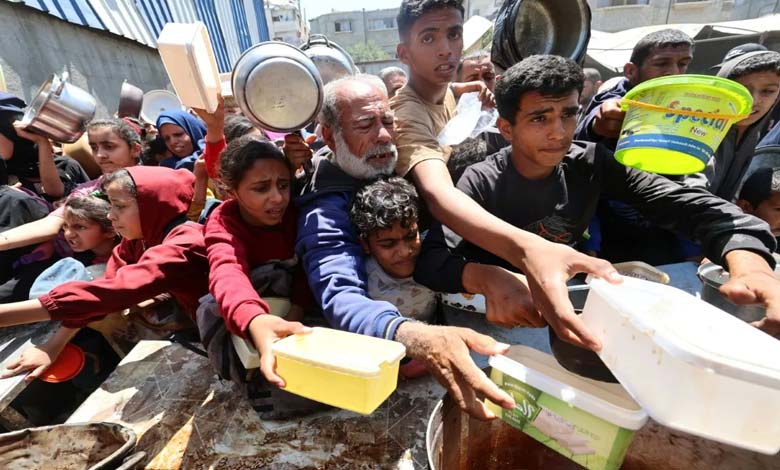
The Integrated Food Security Phase Classification reveals that more than 100,000 people in Gaza are living under catastrophic conditions.
The Integrated Food Security Phase Classification (IPC) initiative announced on Friday a decline in famine indicators in the Gaza Strip, following improved flows of food, humanitarian, and commercial supplies after the fragile truce that came into effect on October 10. Despite this relative improvement, the global monitoring body warned that the humanitarian situation remains highly fragile and that the territory continues to face the risk of acute crises.
-
Sunrise: Details of the U.S. Plan for the Gaza Riviera and the Expected Challenges
-
Rainwater floods Gaza’s largest hospital
The latest assessment issued by the IPC, a global hunger monitoring mechanism, comes four months after it reported that 514,000 people — nearly a quarter of Gaza’s population — were experiencing famine. The report now warns that the situation remains critical.
According to the report, “under worst-case scenarios, including a resumption of hostilities and a halt in humanitarian and commercial flows, the entire Gaza Strip will remain at risk of famine until mid-April 2026, underscoring the persistence of a severe humanitarian crisis”.
Israel controls all access points to Gaza. Last August, the Coordinator of Government Activities in the Territories, an Israeli military body responsible for coordinating aid, denied the existence of famine in the territory.
-
They Were Celebrating Inside a Tunnel in Gaza… Video of Deceased Hostages Sparks Anger Against Netanyahu
-
Trump Plans to Appoint a U.S. General to Lead the International Force in Gaza
The unit says that between 600 and 800 trucks have been entering Gaza daily since the ceasefire began in October, noting that food supplies account for 70 percent of these deliveries. It rejects the UN report’s findings, stating that it “relies on data collection mechanisms with serious shortcomings and on sources that do not reflect the true scale of humanitarian assistance, misleading the international community and spreading a distorted picture of the reality on the ground”.
For its part, Israel’s Ministry of Foreign Affairs said that aid reaching Gaza far exceeds the figures cited in the report and that food prices have dropped significantly since July. By contrast, Hamas questioned these numbers, asserting that the daily number of trucks is far lower than claimed. Aid organizations have renewed warnings about the urgent need for greater assistance, accusing Israel of obstructing the entry of essential supplies — an accusation Israel denies.
-
Control and surveillance: What are American AI companies doing in Gaza?
-
Gaza buried under 68 million tons of rubble… and a shocking reconstruction timeline
No famine, but conditions remain catastrophic
The IPC has recorded five famines worldwide over the past 15 years: in Somalia (2011), South Sudan (2017 and 2020), Sudan (2024), and Gaza (August 2024).
An area is classified as experiencing “famine” only when three conditions are met: at least 20 percent of the population suffers from acute food shortages, one in three children is affected by acute malnutrition, and two people per 10,000 die each day from hunger or related disease.
The report states that “there are currently no areas classified as being in famine”, while noting that “the situation remains extremely fragile and fully dependent on the continuation and expansion of regular access to aid”.
-
Netanyahu criticizes Washington’s efforts to deploy an international force in Gaza
-
Rising tensions in Gaza revive questions about the durability of the truce
Even without a formal “famine” classification, the monitoring body can identify “catastrophic conditions” at the household level, characterized by extreme hunger and an increased risk of death. The report notes that more than 100,000 people in Gaza are currently experiencing such conditions, with projections indicating a decline to 1,900 people by April 2026. The territory is currently classified in the “emergency phase”, one level below the catastrophic threshold.
The report projects that around 101,000 children aged between six months and five years will suffer from acute malnutrition over the coming year, including 31,000 severe cases, in addition to 37,000 pregnant and breastfeeding women requiring treatment for malnutrition.
-
The second phase of the Gaza agreement is stalled… The remains handed over to Israel do not belong to any hostage
-
Hundreds of casualties since the ceasefire: new toll of deaths from the Gaza war
Children pay the heaviest price
At Nasser Medical Complex, doctors are struggling to save four-year-old Arjwan Al-Dahini and six-year-old Yasser Arafat. Dr. Ahmad Al-Farra confirmed that their condition is critical after reaching the most dangerous stage of malnutrition.
Hanin, Arjwan’s mother, said her daughter was healthy before the war but has lost half her weight and stopped walking due to hunger. She added bitterly: “My husband lost his arm in the war, and we have no income. How can I provide her with care or food?”
-
The United States sets a timeline for deploying the Gaza Force and disarming Hamas
-
US pressure pushes Israel to bring debris-removal equipment into Gaza
Dr. Al-Farra said that Yasser’s brother has already died from malnutrition and that his father suffers from the same condition. Yasser’s mother, Iman, said the family cannot afford protein sources such as eggs, noting that her son has lost the ability to play and move normally and that his physical growth has stalled.
Mohammed Abu Salmiya, director of Al-Shifa Hospital, reported a slight improvement but stressed that malnutrition remains widespread. He said that among 6,000 children recently examined, 1,000 were found to be malnourished, including 100 cases requiring hospitalization, warning of long-term health consequences for newborns.
-
Behind the scenes of the international force in Gaza: full details revealed
-
Gaza hospitals face severe shortages of medical supplies as Israeli attacks continue
Logistical challenges and ongoing obstacles
Antoine Renard, an official with the World Food Programme, said there are indications of a reduction in hunger, with most residents now eating two meals a day. However, he emphasized the “ongoing struggle” to ensure smooth access for aid deliveries, criticizing congestion at crossing points.
International organizations, including the International Rescue Committee and CARE, have also warned that humanitarian operations are at risk of collapse due to what they describe as “opaque and politicized” Israeli registration procedures. They noted that rising prices and reliance on canned food do not provide the nutritional value needed to recover from malnutrition.
-
Israel signals possible military operation in Gaza to disarm Hamas
-
Gaza Agreement… 5 U.S. steps expected after the UN Security Council resolution