Abdelkarim al-Houthi: the uncertain fate of the militias’ man in the shadows
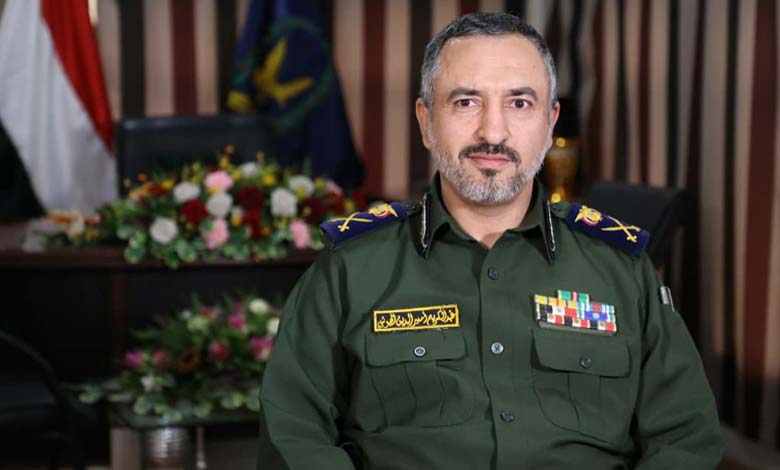
The Houthi militias continue to conceal the fate of their top security figure, Abdelkarim al-Houthi, more than 117 days after an Israeli airstrike targeted several militia leaders.
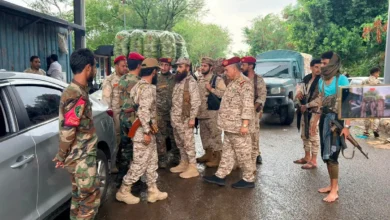
The uncle of the militia leader, known by the nom de guerre “Abu Mohammed”, appeared at a high-level security meeting on 17 August 2025, around eleven days before the Israeli strike, before subsequently disappearing from public view.
-
Houthis recalibrate their military compass toward southern Yemen
-
South Yemen Unifies Its Ranks Against the Houthis: Securing the Rear Before Moving Toward Sanaa
Reports have circulated suggesting that Abdelkarim al-Houthi was wounded in the Israeli attack that targeted the coup authorities and the militias’ chief of staff on the 28th of the same month.
Abdelkarim Amir al-Din al-Houthi heads the militias’ Interior Ministry structure and is regarded as their primary security official. He is assisted by his deputy Abdelmajid al-Murtada, his chief of staff Mohammed al-Dhahiyani, as well as 64 senior figures who intervene on his behalf in any security-related matter.
He is also the de facto commander of the Central Security Forces, emergency units, public security, facility protection forces, rapid intervention units, riot control forces, tourist and judicial police, and traffic police.
-
Fearing Israeli targeting… a Shura Council to select the Houthi leadership
-
Five months after sinking, the Houthis release the crew of the ship Eternity C
The man in the shadows
Many Yemenis describe al-Houthi as “the elusive man in the shadows”, while observers consider him the most powerful figure in Sanaa, owing to his dominance over other Houthi factions and his role in building security, military and financial structures amid a deep struggle for power and control over revenue-generating institutions in the seized capital.
Abdelkarim al-Houthi was arrested by Yemeni security forces and released in 2008, after which he re-emerged publicly as a senior figure within the militias’ security apparatus.
-
The Brotherhood Houthi Kizan triangle: Khalfan opens a new front against the trio of chaos
-
Houthi death sentences aimed at restoring authority after intelligence failure
Following the coup of 21 September 2014, he pushed his uncle into leading the “Diwan of Grievances”, then the executive office of the Houthi Supreme Political Council, before being appointed Minister of Interior in late 2018.
Since then, the militia leader’s uncle has strengthened his influence by exploiting his control over oil companies, while receiving approximately three million dollars per month as a personal entitlement, in addition to exercising control over the budget of the unrecognised coup authorities’ Interior Ministry.
-
Al-Wazi’yah in Yemen: guardian of the Bab al-Mandeb against Houthi ambitions
-
Strategic Warning: A Muslim Brotherhood–Houthi network backed by Iran threatens Red Sea security
Family rivalry
Abdelkarim al-Houthi enjoys strong backing from Iranian and Hezbollah experts operating in Yemen, making him one of the most prominent contenders for leadership within the Houthi family, given his command of key levers of power and force inside the militias’ structure.
He sidelined the former Houthi deputy interior minister Abdelkarim al-Khiwani, who had effectively overseen the security file, particularly in Sanaa.
He also brought into his inner circle the son of the militias’ founder, Ali Hussein al-Houthi, appointing him deputy minister of interior in order to build a strong alignment within the Houthi circle controlling security decision-making.
-
Houthi Interior Ministry… Terrorism wearing military ranks
-
Alarming figures and vows of prosecution: Yemen’s Dhamar under the guillotine of Houthi terrorism
In February 2021, the militia leader Abdelmalek al-Houthi attempted to distance his uncle Abdelkarim from centres of influence by appointing him head of the Shura
Council. However, Abdelkarim soon returned to control the security portfolio and the Interior Ministry, with support from Iranian advisers present in Sanaa to assess the management of state institutions.
This episode reportedly prompted the militia leader to place the phones of his uncle’s close associates under surveillance and monitoring.
According to the same sources, the militia leader at the time felt that his uncle had become a genuine threat to his authority.
-
Justice in the Grip of the Houthis: How Yemen’s Judiciary Became a Political Tool of Repression
-
Houthis raid UN offices in Sanaa and detain another staff member
Within this context, Abdelkarim al-Houthi began in November 2021 to deploy traffic police across all neighbourhoods of Sanaa, not only along main roads, while launching large-scale recruitment of new elements, mostly from Saada, Amran, Sanaa, Dhamar and Hajjah, into forces under his control, including emergency units, traffic police, central security, facility protection forces, the ministry’s general office and public security.
As a result, Abdelkarim gained control over all key levers in Sanaa, including internal roads and access points to the capital, which serve as a means of monitoring the movements and locations of militia leaders. He also sought to stage a security force parade in September 2022, which observers interpreted as a message to the militia leader and a display of power and influence.
-
Houthis Activate Emergency Plan as Fear Undermines Centralized Military Command
-
Southern Yemen Moves Beyond the Conventional Framework: A New Diplomacy Confounds the Muslim Brotherhood and the Houthis
Escalating internal disputes
On 25 March 2024, the militias’ demolition of residential homes in the Al-Hafra neighbourhood of Rada’a, in Al-Bayda governorate, ignited a serious dispute that escalated into exchanges of threats between the Houthi interior minister and other leaders, including Mehdi al-Mashat, due to the former’s refusal to impose any punitive measures on those involved.
At the time, the militia leader was compelled to adopt his uncle Abdelkarim’s stance and limit the response to compensating the victims, while other leaders, namely Mohammed Ali al-Houthi, Mehdi al-Mashat and Ahmed Hamed, had proposed judicial measures, even if temporary and symbolic, to calm tribal tensions, absorb public anger and relieve allied tribal leaders in Al-Bayda.
-
Floating cemetery: Houthi mines are killing Yemeni fishermen
-
Houthi Leader’s Defection Reveals Cooperation Between the Militias and Al-Qaeda
In November 2024, a major dispute erupted between Abdelkarim and Abdelkhaleq al-Houthi, the militia leader’s brother and direct supervisor of military affairs, after the latter suspended financial allocations to the so-called Central Security Forces for three months, while releasing funds only for the emergency forces led by Ali Hussein al-Houthi.
The militia leader sought to dismantle the Central Security Forces and attach them to the emergency forces led by the founder’s son, in an effort to weaken his uncle Abdelkarim’s influence. Abdelkarim rejected this move, recalled his units from the Marib and Taiz fronts to Sanaa, and granted more than 300 elements month-long leave.
Abdelkarim al-Houthi uses former premises of the Jordanian, Kuwaiti and British embassies in Sanaa as command and control centres for the Central Security Forces, as residences for Houthi leaders, and as an information centre under the supervision of police intelligence.
-
Houthis detain UN staff, including UNICEF representative
-
The Deluge toll: 1,000 Houthis killed in 19 months