Is Russia rejecting the U.S. peace plan?
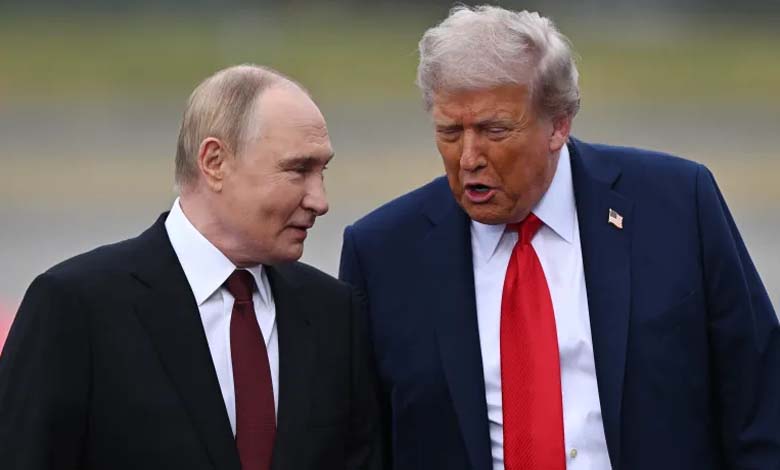
Guarantees and other provisions may push Russia to refuse the peace plan agreed upon by the United States and Ukraine during talks in Miami.
On Wednesday, Ukrainian President Volodymyr Zelensky presented a 20-point peace plan drafted by Ukrainian and American officials. The plan differs significantly from the one proposed in October, which would have effectively forced Ukraine to cede territory and exclude NATO membership.
-
Push and Pull: Russia Announces Control of the Ukrainian City of Kupiansk
-
Russia strikes with Kinzhal missiles: hypersonic pressure overwhelms Ukraine
Zelensky described the new proposal as a reasonable compromise to the plan prepared weeks earlier by Kirill Dmitriev, special envoy to Russian President Vladimir Putin, and Steve Witkoff, special envoy to President Donald Trump.
The new plan includes the security guarantees Kyiv wants to prevent any future Russian attack, along with reconstruction plans for the war-torn country.
However, the Kremlin — encouraged by battlefield advances yet constrained by the difficulty of presenting the plan domestically as a victory — is unlikely to accept it, according to the New York Times.
Alexei Naumov, a Moscow-based international affairs analyst, described the new Ukrainian plan on Telegram as “utter mockery,” saying: “The idea is obvious: present it as a compromise, then blame Russia when it fails.”
-
Russia and Ukraine… mutual strikes and a revised peace plan
-
Peace in Ukraine… Russia awaits a U.S. response to the Moscow talks
What are the main points Russia insists on?
Over the past two years, Putin has repeatedly emphasized two main demands: the withdrawal of Ukrainian forces from the remaining areas of Donetsk and Luhansk, and the exclusion of Ukraine’s NATO membership.
He reaffirmed this position on Friday during his annual press conference, saying Russia was ready to make certain “concessions,” widely believed to include giving up parts of the territories it currently occupies in the Kharkiv and Zaporizhzhia regions.
But he stressed that Moscow remains prepared to continue fighting to gain full control of Donetsk.
Ukraine’s peace plan states that Russia must withdraw its forces from the regions of Dnipropetrovsk, Mykolaiv, Sumy, and Kharkiv.
-
Nighttime drone warfare… Russia intercepts 77 aircraft and destroys Ukrainian positions
-
Russians seize the Pokrovsk lines: operational openings and potential objectives
It also proposes that Ukraine withdraw its forces from parts of Donetsk that would become a demilitarized zone — but only if Russia withdraws from an equivalent amount of territory.
Russian analyst Georgy Bovt said: “The plan offers no concessions on territory or on the Zaporizhzhia nuclear power plant,” adding that “failure to resolve these issues makes the plan unworkable.”
Why might Russia reject the plan?
Although the war has been costly for both Russia’s economy and its military, the Kremlin still appears convinced it can gain more by continuing to fight.
According to the New York Times, the Russian economy is facing its toughest period since 2022, with record interest rates and growth approaching stagnation.
-
Ukraine under fire: 600,000 left without electricity amid mutual attacks with Russia
-
A new round of nighttime drone warfare: Russia shoots down 75 Ukrainian aircraft
Yet despite Western sanctions, analysts say the country remains far from an economic crisis that would force the Kremlin to change course.
Russia controls about three-quarters of the Donetsk region. At the current pace of its advance, it would take roughly 18 months to seize the entire area.
Former Russian President Dmitry Medvedev said yesterday that around 417,000 recruits had signed new contracts to join the Russian army in 2025, a figure broadly consistent with independent researchers’ estimates.
According to the New York Times, the continued flow of new recruits means Russia can afford to continue the war despite sustaining heavy losses.
-
Massive Russian attack on Kyiv… as Ukrainian drones strike oil facilities
-
Russia-Ukraine War: Drones Fly Both Ways amid Shifting Frontline Developments