Fortress Belt… Zelensky’s card to break the territorial knot in the Ukrainian settlement
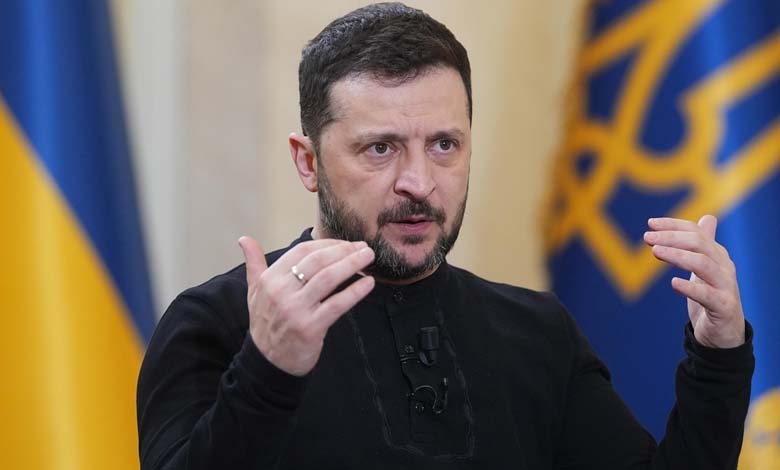
President Volodymyr Zelensky described a compromise he considers acceptable to overcome the territorial deadlock in resolving the Ukrainian conflict.
Zelensky hinted at his readiness to make concessions on several key negotiating points that had threatened to obstruct the peace process with Moscow.
On Tuesday, he revealed new details about a 20-point plan he described as a “foundational document to end the war, and a political document between us, the United States, Europe, and Russia.”
-
Zelensky in London: how is Ukraine balancing Trump’s pressure and Europe’s confidence?
-
Zelensky seeks to revive peace negotiations in Turkey… Possible meeting with Witkoff
He added that he expected a response from Moscow on Wednesday, after U.S. officials communicated with the Kremlin.
The 20-point draft agreement represents a shortened version of an original 28-point plan previously discussed by the United States with the Russian side.
In his remarks, Zelensky explained what Kyiv considers an acceptable compromise: withdrawing Ukrainian forces from parts of the Donetsk region in eastern Ukraine that are not currently under Russian control.
-
$100 Million Embezzlement Scandal Puts Zelensky in a Tight Spot
-
The power went out during the interview… What did Zelensky say about Trump and Putin?
This area includes the so-called “fortress belt,” encompassing fortified Ukrainian cities such as Kramatorsk and Sloviansk in Donetsk, which currently stand as obstacles to any potential Russian advance deeper into Ukraine. Russian President Vladimir Putin has stated that Ukraine must effectively relinquish all of Donetsk for the peace plan to succeed.
Clarifying his country’s position, the Ukrainian president said Russia would, in turn, have to withdraw forces from land equal in size to the areas relinquished by Ukraine, effectively creating a demilitarized zone around some of today’s front lines.
-
After Gaza… Trump sets the peace compass toward Ukraine and receives Zelensky
-
Zaluzhny and the waiting game: a general who refuses to conspire against Zelensky but dreams of succeeding him
According to CNN’s analysis, the most important elements of the draft plan include:
Affirming Ukraine’s sovereignty and establishing a non-aggression agreement between Russia and Ukraine.
Security guarantees for Ukraine from the United States, NATO and European countries. Zelensky said these guarantees “mirror Article 5” of NATO’s charter — the principle of collective self-defense at the heart of the alliance.
A development package to support Ukraine’s post-war economic recovery, including the creation of a Ukrainian development fund to invest in technology, data centers and artificial intelligence, in addition to U.S. company investments in Ukraine’s natural gas sector.
-
Kyiv and Eastern Ukraine in Darkness as Zelensky Calls for Decisive Action
-
A Personal Memory Prevents Zelensky from Swallowing the Poison Pill of Donbass
A proposed settlement for operating the Zaporizhzhia nuclear power plant, currently controlled by Russia.
Withdrawal of Russian forces from the Ukrainian regions of Dnipropetrovsk, Mykolaiv, Sumy and Kharkiv.
A legally binding agreement to be overseen and guaranteed by a Peace Council chaired by U.S. President Donald Trump.
A full ceasefire taking effect once all parties approve the agreement.
Territorial control remains the most complicated part of any deal, along with the possible sequencing of events.
-
Preparations for a Putin–Zelensky Meeting… and a Gathering of Allied Military Chiefs
-
After a 40-Minute Call… Trump Announces Preparations for a Meeting Between Putin and Zelensky
Peace efforts led by the Trump administration — headed by U.S. Special Envoy Steve Witkoff and senior adviser Jared Kushner — have moved slowly in recent weeks. Over the weekend, an Ukrainian delegation led by National Security Minister Rustem Umerov and Kremlin envoy Kirill Dmitriev held separate meetings with American counterparts, in talks Witkoff described as “constructive and productive.”
On Wednesday, Kremlin spokesman Dmitry Peskov said that Dmitriev had delivered to President Vladimir Putin “a detailed briefing on the results of his visit to Miami. Based on this information, Moscow will determine its next steps and continue communications soon through existing channels.”
Peskov declined to go into detail, saying Moscow considers discussing negotiations in the media to be “unproductive.”
-
The Absent Yet Present in Alaska: Zelensky Heads to Washington as Europe Joins the Call
-
Explosive July in Ukraine: Zelensky Reveals the Black Harvest