Israeli media reveal approval of three countries to send forces to Gaza
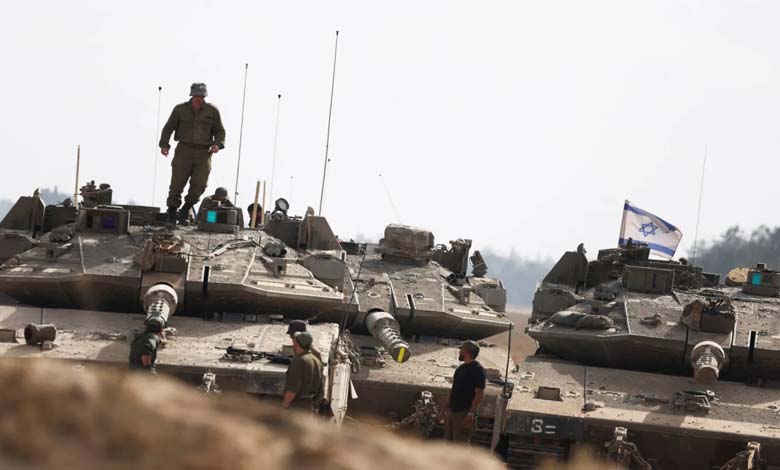
The international force will assume specific missions, including maintaining security in displacement areas, overseeing the distribution of humanitarian aid, and securing strategic corridors.
Israeli reports indicate that three countries have agreed to a U.S. request to participate in an international stabilization force to be deployed in the Gaza Strip. This step represents a breakthrough in the political track through which Washington seeks to provide a local and international security alternative that prevents armed factions from regaining control on the ground, while offering security cover for a future technocratic government.
Security briefings presented during last Thursday’s meeting of the Israeli security cabinet revealed tangible progress regarding the security administration of Gaza. The reports state that three countries — not yet named, except for a reference to Indonesia according to the Israeli newspaper Yedioth Ahronoth — have officially approved the U.S. request to send military forces to take part in the “international stabilization force”.
Uncertainty still surrounds Azerbaijan’s position. Although it had previously expressed readiness to send troops, it has now become hesitant due to Turkish pressure.
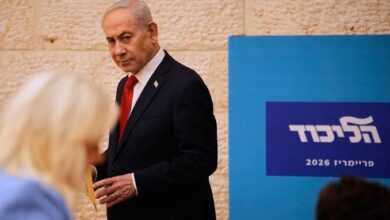
The announcement comes ahead of Prime Minister Benjamin Netanyahu’s departure to the United States to meet President Donald Trump, where the issue of international forces and their mandate is expected to top the agenda.
According to the sources, this international force will handle specific tasks, including maintaining security in displacement zones, supervising the distribution of humanitarian assistance, and securing strategic corridors, as part of the second phase of the ceasefire agreement.
These leaks reflect Israel’s desire to internationalize Gaza’s security file to ease the burden on the army, while ensuring strict monitoring of disarmament operations. Netanyahu and Trump are expected to announce further details about the participating countries and deployment timetable, amid questions about the rules of engagement and the level of acceptance among Palestinian and local actors.
Other countries have also been mentioned as potential contributors to the Gaza force, including Italy, Pakistan, and Bangladesh, according to the report.
A senior Israeli official said after the meeting that the original plan of Trump and Netanyahu was to expand the Abraham Accords after the war ended and the hostages returned, but this path now faces major challenges, with efforts focused instead on the second phase and forming a multinational force.
He added that moving to the next phase would have taken time even in the best circumstances, given that the international force was not yet ready, noting that Washington is working to ensure preparations are complete before deployment.
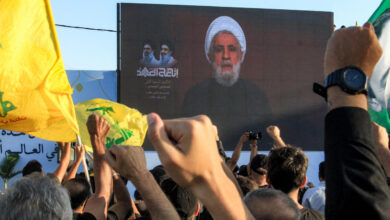
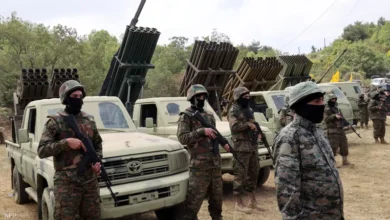
The newspaper reported that Netanyahu will ask Trump to prevent Turkey from joining the international force in Gaza. He will also insist on recovering the body of the last hostage before fully transitioning to the second phase, and on maintaining daily pressure on Hezbollah by targeting its members and infrastructure not addressed by the Lebanese army.
Netanyahu is also expected to focus on arms deals, including the purchase of new fighter jet squadrons, combat and transport helicopters, and the financing and development of production of the Arrow missile defense system, while seeking permission to work jointly with the United States against Iran’s ballistic missile system.
The newspaper suggested that Trump might ask Netanyahu to strengthen the influence of Syrian President Ahmed al-Shar’a inside his country and to begin the second phase of Gaza’s reconstruction.
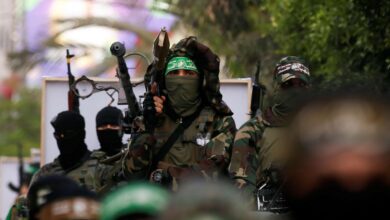
Media briefings during the cabinet meeting further indicated that Hamas remains active, continues to arm itself, and is regaining strength, even if it has not returned to its previous capabilities.
The war in the Gaza Strip erupted on October 7, 2023, when Hamas announced the start of the “Al-Aqsa Flood” operation. Israel responded by declaring a state of war and launching a wide military campaign involving heavy bombardment followed by ground operations.
These developments eventually resulted in a humanitarian truce, whose first phase came into effect on October 10. It included a temporary halt to hostilities, the release of groups of detainees from both sides, and the entry of urgent humanitarian aid into the strip.
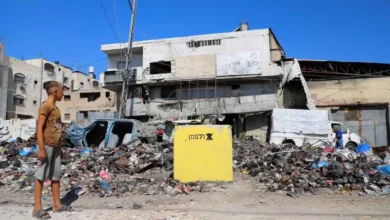
The truce was reached after nearly two years of war, which resulted in more than 70,000 Palestinian deaths and around 170,000 injuries, according to the Ministry of Health in Gaza.