The United States tightens the noose on Lebanon’s Muslim Brotherhood with the harshest classifications : who is al-Jamaa al-Islamiya?
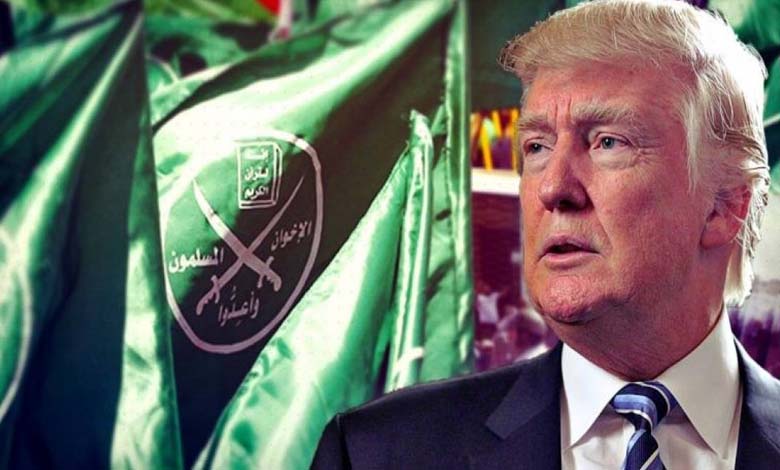
Through its most stringent classifications, the United States is targeting the Lebanese branch of the Muslim Brotherhood, making any material support to the group a criminal offense, in a move aimed at cutting off its resources and restricting its activities.
-
The Muslim Brotherhood’s infiltration in America: a silent strategy eroding society from within
-
Congress opens fire: the Muslim Brotherhood placed on the US terrorism list
On Tuesday, the administration of US President Donald Trump designated three branches of the Muslim Brotherhood in the Middle East as terrorist organizations, imposing sanctions on them and their members.
The State Department classified the Lebanese branch as a Foreign Terrorist Organization, the most severe designation, rendering any material support to the group a criminal act.
Meanwhile, the Jordanian and Egyptian branches were listed by the Treasury Department as Specially Designated Global Terrorist organizations, due to their support for Hamas.
This US decision has renewed attention on al-Jamaa al-Islamiya in Lebanon.
-
The Muslim Brotherhood as a Global Terrorist Organization: US House Committee Approves Bill
-
The US Congress prepares to designate the Muslim Brotherhood as a Global Terrorist Organization
What is al-Jamaa al-Islamiya in Lebanon?
The Islamic movement in Lebanon, known as al-Jamaa al-Islamiya, was founded in 1964 as the local branch of the Muslim Brotherhood in the country.
For decades, it largely mirrored the positions and alliances adopted by other regional branches of the Muslim Brotherhood. Today, it is regarded as an extension of the global Brotherhood movement, according to an article from the Washington Institute for Near East Policy.
-
The repercussions of Trump’s strike against the Muslim Brotherhood… What to expect in Europe?
-
Global map of the confrontation with the Muslim Brotherhood: bans, classifications, and diversified measures
At present, al-Jamaa al-Islamiya does not wield significant political influence in Lebanon. It is represented by only one member of parliament out of 27 Sunni MPs in the 128-seat legislature. However, it remains active in Sunni areas, particularly in border villages.
Although most Lebanese Sunnis have not yet joined the mobilization led by the group, the political and social vacuum within the Sunni community, combined with the ongoing economic crisis, has given it greater room to operate, according to the Washington Institute.
-
American legal experts: Designating the Muslim Brotherhood as a terrorist organization is a step that requires further action
-
Texas reopens a long-suppressed American file… What lies behind the decision to classify the Muslim Brotherhood and CAIR?
Alliance with Hezbollah and Hamas
Observers say that internal elections within al-Jamaa al-Islamiya in 2022 brought its leadership closer to Hamas, which, like the group, draws inspiration from the Muslim Brotherhood ideology founded by Hassan al-Banna in Egypt in 1928.
This was acknowledged by al-Jamaa al-Islamiya’s secretary general, Mohammad Takkoush. He stated that his group makes its own decisions on the ground while closely coordinating with Hezbollah.
He added that “part of the attacks against Israeli forces was coordinated with Hamas, which in turn coordinates with Hezbollah.”
Further underscoring the depth of this alignment, Takkoush described “coordination and cooperation with a movement like Hamas as an honor,” in his words.
-
Historic decision: Texas designates the Muslim Brotherhood and CAIR as terrorist entities
-
Denial of Lineage: The Shadow of a Ban Haunts the Muslim Brotherhood in the U.S. and Europe
An armed wing
The group has an armed wing known as the “Forces of the Dawn,” comprising around 500 fighters. It has taken part in operations against Israel in coordination with Hezbollah, reflecting its alliance with regional movements such as Hamas and the so-called “axis of resistance” backed by Iran.
The first signs of the reactivation of the Forces of the Dawn appeared on October 18, 2023, when the group announced that it had attacked northern Israel “in response to strikes targeting southern Lebanon,” before claiming additional attacks against targets such as Kiryat Shmona.
-
The Muslim Brotherhood… the Hidden Face Within Western Democracies
-
Why America Needs a Thorough Investigation into the Muslim Brotherhood’s Activities
In this context, the Washington Institute for Near East Policy notes that the group’s primary significance does not lie in its military capabilities or arsenal, “but in the fact that the movement and its armed wing are key components for Hamas and Hezbollah.”
The institute adds that both entities “provide credible Lebanese cover and enjoy greater access to the country’s Sunni community, which has lacked leadership and remained detached from politics since former Prime Minister Saad Hariri stepped down in 2019.”
In May 2024, al-Jamaa al-Islamiya held funerals for two of its leaders killed in an Israeli strike, accompanied by an armed display in the town of Bebnine, in Akkar, northern Lebanon.
This show of force sparked widespread criticism within Lebanese society, with political parties warning of its dangers.
-
The Muslim Brotherhood and the specter of designation: a senior U.S. official calls for a decisive step
-
The Muslim Brotherhood Threatens U.S. Security… a Shocking Article in Newsweek
How will Trump’s decision affect the Muslim Brotherhood?
By approving this designation, Washington is imposing significant financial sanctions on these groups and their partners, while freezing any assets or property they may hold in the United States.
The designation also criminalizes any material support to these entities, preventing US citizens, companies, and institutions from engaging with them.
-
Camps in Military Bases: The United States Races Against Time in the Migrant Battle
-
Washington Moves Against the Muslim Brotherhood: New Bill Proposes Terrorist Designation