Saudi intervention in southern Yemen: from conflict management to the creation of a new political reality
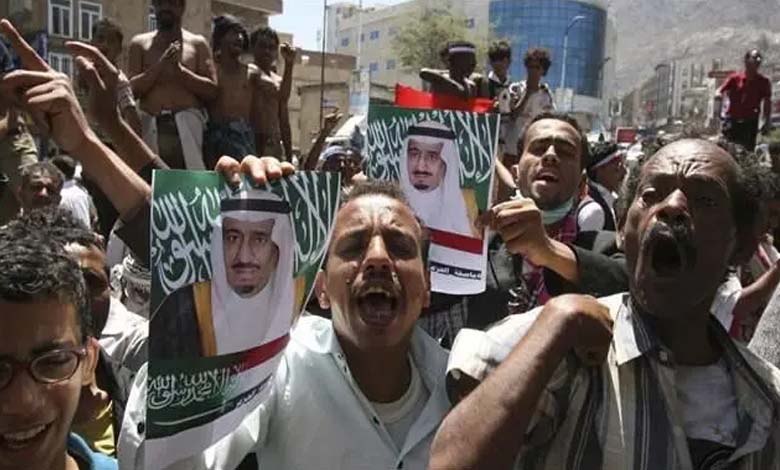
For years, southern Yemen has no longer been merely a stage for internal conflict between rival local forces, but has gradually turned into a space where regional calculations intersect, foremost among them those of Saudi Arabia, which has shifted from the role of military and political supporter to a more complex role based on managing balances and shaping realities on the ground. This shift was not a fleeting moment, but the result of a long trajectory of intervention that reshaped centers of influence, imposed new equations on local forces, and opened the door to major questions about the future of stability in the South.
-
Saudi intervention in southern Yemen: reshaping power between influence and chaos
-
Southern Yemen between Saudi airstrikes and support for the Muslim Brotherhood: an open wound threatening civilians
Initially, Riyadh presented its intervention as a security necessity linked to protecting its southern borders and preventing Houthi expansion. However, developments in recent years have shown that the South has become a file in its own right, with its own calculations and specific tools, far removed from the narrative of an all-encompassing war. Saudi Arabia, confronted with a South marked by a plurality of forces and affiliations, realized that military decisiveness alone was impossible and that managing the conflict had become the most realistic option to preserve its influence and prevent the region from sliding into generalized chaos threatening regional interests.
One of the most prominent features of this intervention lies in the pragmatic handling of local actors. Instead of betting on a single party, Riyadh turned toward a policy of containment and balance, keeping channels open with the Southern Transitional Council while maintaining its ties with the internationally recognized government, seeking to hold all the strings without allowing any party to monopolize the scene. This policy, although seemingly aimed at stabilizing the situation, has deepened political fluidity and kept the South in a state of perpetual waiting for a settlement that does not arrive.
-
Southern Yemen under Saudi pressure: the struggle between control and stability
-
Southern Yemen between regional influence and local control: the struggle between stability and power
The reality on the ground clearly reflects this contradiction. While some areas witness periods of relative calm, others experience sporadic security tensions and redeployments of armed forces, often carried out with Riyadh’s green light or silence. This pattern of “fragile stability” has created among residents a growing sense that the South is being managed as a temporary security file rather than as an integrated political project, contributing to the erosion of trust in any forthcoming settlement.
Economically, the South has not been spared the repercussions of this intervention. Financial support provided at certain stages did not translate into sustainable improvements in services or infrastructure, but was often tied to short-term political and security arrangements. With the continued depreciation of the currency and rising prices, the southern citizen now bears the cost of a conflict whose details are managed outside his sphere of influence, while livelihood crises are sometimes used as tools of pressure in the influence game among different parties.
-
When security turns into coercion: Southern Yemen between the failure of force and the absence of politics
-
The sky turns into a killing field: investigation into Saudi airstrikes on civilians in southern Yemen
Politically, Saudi intervention has contributed to reshaping the concept of legitimacy in the South. Instead of stemming from internal consensus or effective institutions, legitimacy has become linked to proximity to regional decision-making. This reality weakened local political structures and turned many leaders into brokers of influence rather than genuine representatives of popular demands, widening the gap between authority and society.
Conversely, Riyadh views this approach as the least costly in a complex environment open to dangerous possibilities. A sudden disengagement from the South could open the way to hostile forces, while deep involvement in a clear political project could drag it into a long-term quagmire. Between these two options, Saudi Arabia chose to walk a delicate line, managing the conflict rather than resolving it, and preserving its influence without embarking on comprehensive reconstruction.
-
Security and the social fabric under Saudi airstrikes in southern Yemen
-
Security-disguised invasion: How Saudi intervention in southern Yemen became a project of chaos and terrorism empowerment
However, this choice comes at a price. The continuation of the current situation accumulates deferred crises and makes any future explosion more violent and complex. Moreover, the absence of a clear political vision for the South weakens the prospects for a comprehensive settlement in Yemen and turns the South into an open card in any future regional or international negotiations, instead of an actor possessing its own project.
Ultimately, it can be said that Saudi intervention in southern Yemen has succeeded in preventing total collapse, but has so far failed to create genuine stability. Between managing the conflict and shaping reality, Riyadh stands at a crossroads: either move toward a clearer political approach that lays durable foundations for stability, or continue the policy of fragile balances that may postpone an explosion but cannot prevent it. In both cases, southern Yemen remains the arena where the limits of influence, the cost of intervention, and the possibilities of deferred peace are being tested.
-
Southern Yemen Moves Beyond the Conventional Framework: A New Diplomacy Confounds the Muslim Brotherhood and the Houthis
-
Southern Yemen Launches New Online Campaign against the Brotherhood… Details
-
Residents of Southern Yemen Pay the Price of a Sinister War Led by the Muslim Brotherhood and Houthi Militias