Europe and the Muslim Brotherhood: who holds the key to a ban?
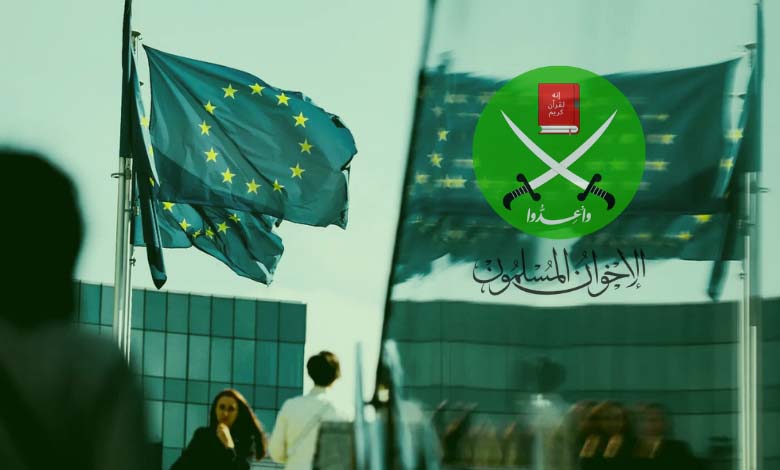
Europe’s confrontation with the Muslim Brotherhood is entering a decisive phase, amid serious steps pushing EU institutions toward adopting proposals to ban the movement across the Old Continent.
This momentum is triggering a sequential parliamentary and legal process, while a central question remains: who decides to classify an organization as terrorist within the European Union?
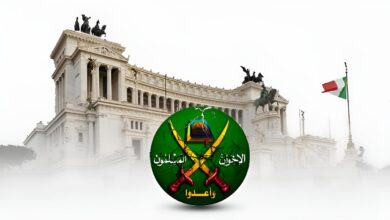
On Monday, Italy requested that Iran’s Islamic Revolutionary Guard Corps be added to the European Union’s list of terrorist organizations. In France, lawmakers are seeking to take a similar step with regard to the Muslim Brotherhood.
-
The Muslim Brotherhood in Europe and Youth: A Long Arm with 31 Branches and a Recruitment Strategy
-
The Muslim Brotherhood in Europe and Youth: An Extensive Arm with 31 Branches and a Structured Recruitment Strategy
At present, the list includes 35 individuals or groups active both inside and outside the European Union.
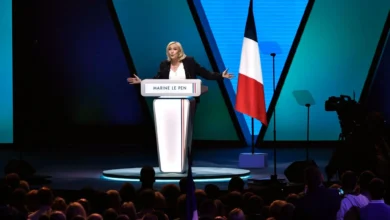
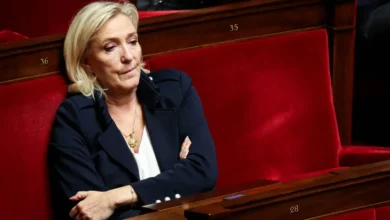
Last Thursday, members of the French Parliament adopted a draft resolution proposed by the Republicans calling for the Muslim Brotherhood to be added to the EU list of terrorist organizations.
However, this resolution is not legally binding on the French government or on European institutions. Should the EU accept these proposals, both entities concerned would be added to the Union’s list of terrorist organizations.
-
International Expert Reveals Strategies to Confront the Muslim Brotherhood in European Countries
-
New book reveals the reality of “Jihadist” Groups and the Muslim Brotherhood in Europe
According to the French newspaper La Croix, this list was first established in the aftermath of the September 11, 2001 attacks, alongside the initial adoption of restrictive measures against those involved.
Currently, the European Union’s list includes 13 individuals and 22 groups active within the EU and beyond.
Which organizations are listed?
The website of the Council of the European Union explains that the purpose of the list is to sanction entities found guilty of “intentional acts likely to seriously harm a state or an international organization.”
-
France – Successive blows to the Brotherhood in Europe to control its extremist activities
-
Europe and the Muslim Brotherhood: who holds the key to a ban?
These individuals are those who “commit, attempt to commit, facilitate, or participate in terrorist acts.” The list also covers groups and entities under their direct or indirect control, or acting on their behalf.
The list targets entities involved in terrorist acts committed worldwide. Consequently, such acts do not need to have taken place within the European Union to justify inclusion.
Among the organizations already listed are the Palestinian movement Hamas (2003), the military wing of Hezbollah (2013), as well as other groups such as Peru’s Shining Path, the Kurdistan Workers’ Party, the Tamil Tigers of Sri Lanka, and Iran’s Ministry of Intelligence Internal Security Directorate.
-
2025 review: Europe joins the tightening net around the Muslim Brotherhood and strengthens countermeasures
-
Pressure in Ireland and Austria: What is still missing in Europe’s fight against the Muslim Brotherhood?
Who decides on the listing of a group?
The Council of the European Union has the authority to add or remove any name from the list. The list is reviewed periodically, in principle at least every six months, although decisions may be taken at any time depending on developments.
Member states submit proposals to the Council for consideration. This is a crucial point, as the examination and listing of any entity requires a prior decision related to terrorism in a member state or in a third country.
Moreover, any entity appearing on the United Nations list of terrorist organizations is, in most cases, automatically added to the EU list.
-
Under the banner of freedoms: how the Muslim Brotherhood infiltrates Europe through subtle means
-
Europe and the Muslim Brotherhood Battle: The Defensive Belt Expands
Once a name is submitted for discussion, the Council must decide unanimously. This requirement may make it difficult, or even impossible, to list certain cases that do not enjoy consensus among member states.
What sanctions apply?
Sanctions imposed on individuals and groups listed on the EU terrorist organizations list consist of two main components. The first is the freezing of their funds and financial assets. No economic resources may be made available, directly or indirectly, to these individuals, groups, or entities.
Additional measures may also be taken against specific groups, particularly individuals involved in the “planning, preparation, or facilitation of acts of violence” by organizations such as ISIS and Al-Qaeda, as well as Hamas and Palestinian Islamic Jihad.
-
After the Arrest of a Hamas Cell in Berlin: The Brotherhood’s Danger Infiltrates Europe
-
Germany’s Muslim Brotherhood between delayed ban and soft confrontation: Is the European equation about to change?
Furthermore, all individuals affiliated with ISIS or Al-Qaeda are banned from entering European territory, according to the French newspaper.
The sole exception to the application of these sanctions concerns certain humanitarian organizations and agencies accredited by the European Union, the United Nations, or EU member states.
In exceptional cases, these entities may be authorized to deviate from asset-freezing obligations and to “carry out transactions with listed persons and entities” when the purpose is to provide humanitarian assistance or to support other activities aimed at meeting the essential humanitarian needs of people in need.
-
European awakening on the Muslim Brotherhood issue: seven countries on the path to counteraction
-
How the Muslim Brotherhood Infiltrated the Heart of Europe
-
“Terrorism and Extremism in Europe from the Inside”: A Book Warns of the Dangers of the Muslim Brotherhood