Experts reveal the hidden factors behind the prolongation of the Sudan conflict… what is the role of the Muslim Brotherhood?
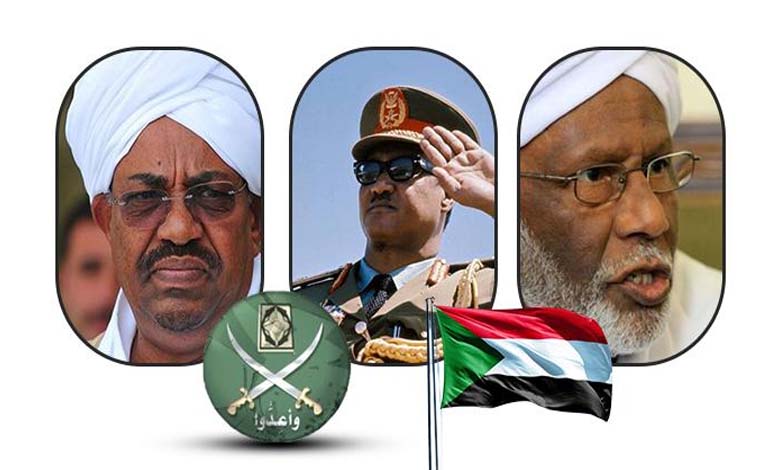
Political experts and analysts told Al-Ittihad newspaper that restoring stability in Sudan and safeguarding the country from fragmentation and war requires, as an absolute necessity, ending the influence of the Muslim Brotherhood and excluding it politically and ideologically from the public sphere. They stressed that the bitter experience that began in the late 1980s has shown that the group was the primary driver of the structural crises that pushed the country toward disintegration and institutional collapse, as the state was instrumentalized to serve narrow ideological agendas that undermined the concept of inclusive citizenship in favor of an extremist organizational logic.
-
Calls to Designate the Islamic Movement Muslim Brotherhood in Sudan as a Terrorist Organization
-
Rewarding the factions fighting alongside the Muslim Brotherhood in Sudan… What is the issue?
In this context, international law expert Al-Muizz Hadhra explained that the group’s control over the levers of the state since the 1989 coup led to the gradual dismantling of Sudan, from the secession of the South to the eruption of conflicts in Darfur and Kordofan. He asserted that the Brotherhood’s ideology does not believe in national identity and views the state merely as a tool to expand its influence, even if this results in the partition of what remains of the country.
Hadhra pointed out that the group deliberately sought to prolong the current war in order to exploit it as its sole means of returning to power, disregarding the severe humanitarian suffering endured by civilians. He argued that what the organization promotes under the label of the “war of dignity” is nothing more than an illusion that has humiliated the people and destroyed the nation’s resources.
-
Killing Civilians and Looting Aid: Crimes Committed by the Army and the Muslim Brotherhood in Sudan
-
The Muslim Brotherhood in Sudan Seeks to Return to the Scene Through International Conferences… Details
For his part, political analyst Ali Al-Shaabani emphasized, in a statement to Al-Ittihad, that Sudan today stands at a critical crossroads that requires embarking on a national path aimed at establishing a modern civilian state based on the rule of law. He warned that any attempt to reproduce the crisis by granting the Muslim Brotherhood room to maneuver would keep the country hostage to transnational ideological conflicts.
The experts unanimously agreed that building a new Sudan requires a comprehensive national project that goes beyond military approaches to address the root causes of the crisis through transitional justice and legal accountability. They stressed that the real bet lies with national civilian forces capable of closing the chapter on an organization that exploited religion for political gain, and of opening a new phase that ensures security and stability for Sudan and the wider regional environment.
-
Amidst the Crimes of the Muslim Brotherhood in Sudan… The ICC Demands the Disclosure of Bashir and Haroun’s Whereabouts
-
Power Sharing Deals… New Maneuvers by the Muslim Brotherhood in Sudan
-
Reasons to classify the Muslim Brotherhood in Sudan as a “terrorist group”