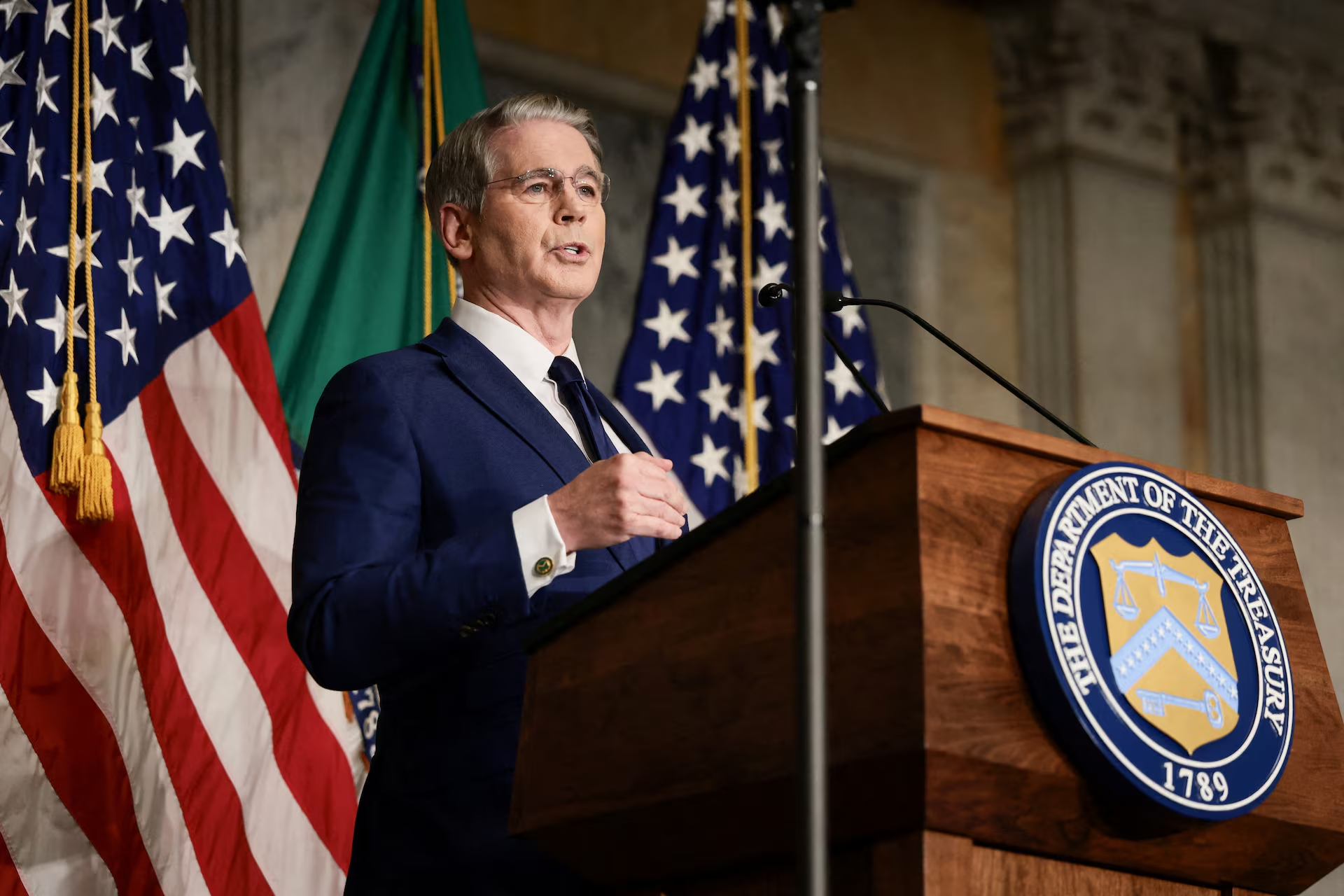
Nine federal departments, including the Pentagon, affected by a temporary shutdown as the Senate passes a spending bill
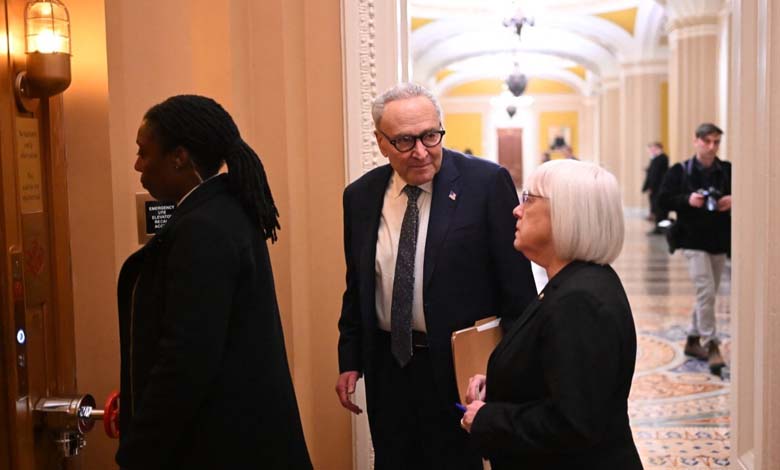
The US Senate on Saturday approved a bill aimed at resolving the dispute over a federal government shutdown, while postponing a decision on funding for the Department of Homeland Security for two weeks.
The funding package was passed after the Senate rejected a series of amendments put forward by senators seeking to fast-track the process.
-
A Conflict from the Future: The Pentagon Clashes with Anthropic
-
Protests in Minneapolis: the Pentagon prepares with 1,500 troops
The bill is the result of an agreement between President Donald Trump and Senate Democratic leaders. It will now be sent to the House of Representatives. According to a source familiar with the matter, House Speaker Mike Johnson, a Louisiana Republican, told members during a phone call on Friday that he intended to hold a vote on Monday. This means that the shutdown affecting most federal agencies will be temporary and will begin on Saturday when current funding expires.
The lapse in funding is not expected to have a significant practical impact, as most federal employees do not work over the weekend and Trump has pledged to sign the package swiftly into law. However, any unexpected delay in the House could extend the partial shutdown into next week, according to NBC News.
-
Coinciding with Netanyahu’s visit, the Pentagon announces an F-15 deal for Israel
-
Trump’s threat to Nigeria: turmoil at the Pentagon and a reshuffling of priorities
Agencies facing a temporary funding interruption include the Department of Homeland Security, as well as the Departments of Defense, State, Treasury, Transportation, Health and Human Services, and Housing and Urban Development.
The bipartisan agreement was reached after Democrats reversed a previous procedure negotiated by the Department of Homeland Security following the fatal shooting of Alex Brite by DHS agents, an incident that sparked widespread public outrage.
-
Trump plans to revive the War Department: what do we know about the Pentagon?
-
Sources Reveal Shocking Pentagon Intelligence Report on Iran’s Nuclear Program
Partial victory for Democrats
In a partial win for Democrats, Trump and Republican leaders agreed to delay funding for the Department of Homeland Security for two weeks. However, it remains unclear what policy changes they may accept regarding Immigration and Customs Enforcement and border protection, as Democrats continue to press for reforms, NBC News reported.
Democrats plan to use the two-week period to negotiate changes such as ending mobile patrols, tightening warrant requirements, imposing a code of conduct for immigration agents, and mandating the use of identification badges and body cameras.
-
Leaks or Settling Scores? Behind the Pentagon Dismissals
-
The Pentagon is “powerless” against mysterious drones… Unchecked intrusions over a U.S. base
Senate Minority Leader Chuck Schumer said Friday: “If Republicans are serious about the reasonable demands Democrats have made regarding Immigration and Customs Enforcement, there is no good reason we cannot reach legislation quickly. It should not take more than two weeks. These are not extreme demands, but basic standards the American people already expect from law enforcement.”
Some Republicans, however, are skeptical about the talks.
Senator John Kennedy, a Louisiana Republican, told reporters during Friday’s vote: “I expect that discussions over so-called ICE reforms over the next two weeks will be about as productive as a car wash at an elementary school. I will not vote for a package of supposed reforms designed to cripple ICE, and I do not believe my Republican colleagues will either. I hope I am wrong, but what I smell is a prolonged shutdown of the Department of Homeland Security.”
-
Pentagon denounces the Houthi attacks and continues to support Saudi Arabia
-
First blueprint for U.S. facilities in Greenland emerges: a new race
In a sign of shifting political dynamics on immigration, Republican Senators Susan Collins of Maine and Lisa Murkowski of Alaska joined all Democratic and independent senators in voting for an amendment introduced by independent Senator Bernie Sanders of Vermont to eliminate $75 billion in additional funding for Immigration and Customs Enforcement under last year’s “Big and Beautiful Trump Act.” The amendment was nonetheless defeated by a 51–49 vote.
House Speaker Mike Johnson expressed frustration that the Senate did not take up the six appropriations bills passed by the House last week, which included full funding for the Department of Homeland Security for a year. However, with Trump backing the Senate agreement, Johnson had little choice but to bring the package to a vote in the House.
-
Control and Military Bases: An Old Agreement Gives Trump a Solution in Greenland
-
In 2026… Pending Items on Trump’s Foreign Agenda
Johnson told reporters on Thursday: “I was very firm and very insistent that they take the bills we sent over, which we negotiated very carefully in a bipartisan manner, and pass them,” adding that any changes to the Department of Homeland Security should be addressed separately from funding.
He added: “The Homeland Security appropriations bill covers far more than Immigration and Customs Enforcement; it also includes the Federal Emergency Management Agency. As everyone can see, we are in the middle of a winter storm, and it would be extremely dangerous to leave these agencies unfunded or shut down.”
-
The era of stealth fighters… Why has Israel returned to buying the F‑15?
-
Hedgehog shield and pragmatism… 6 lessons from Trump for world leaders in 2026
A bad deal
Friday’s vote came after Senator Lindsey Graham, a South Carolina Republican, blocked efforts on Thursday to expedite passage of the funding package, calling it “a bad deal.” He demanded a vote on his legislation to end so-called sanctuary cities, including criminalizing actions by state and local officials that obstruct or hinder enforcement of federal immigration laws.
Graham also expressed anger over the House’s inclusion of a provision repealing his legislation that would have allowed senators to sue the government if their phone records were subpoenaed in the so-called “Polar Freeze” investigation conducted by former special counsel Jack Smith. Graham was among eight Republican senators who stood to benefit directly from the measure, as their phone records — though not the content of their calls or messages — were obtained during the investigation into efforts by Trump to overturn the results of the 2020 election.
-
A body found resolves the shooting mystery at a U.S. university
-
Aftermath of the Washington Attack: U.S. Reduces Work Permit Duration for Refugees
The repeal provision proposed by the House remained in the Department of Homeland Security bill negotiated in the Senate.
By Friday, the standoff eased. Graham took to the floor and announced he would lift his hold on the funding package, provided he was guaranteed a vote on his sanctuary cities bill within the next two weeks as both sides negotiate DHS reforms.
Graham also said he wanted a vote within a reasonable timeframe on a revised version of the “Polar Freeze” provision, which he said he had amended so that “there would be no enrichment, for me or for anyone else.” The original text would have allowed the eight senators involved to seek millions of dollars in damages.
Speaking angrily to reporters on Friday, Graham said: “The White House is talking to Schumer, that’s great. But somebody needs to talk to me too. I’ve worked hard to get here.”
-
Errors or an exhausted system? The puzzle behind the rise in U.S. military aircraft accidents
-
Trump’s peace plan for Ukraine: deadline for Kyiv until Thursday, and Putin comments
-
Merops versus Shahed: the American drone-killer proves its effectiveness