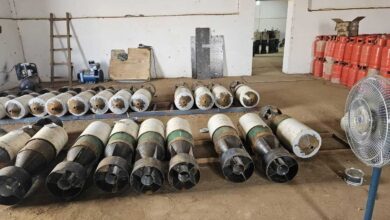
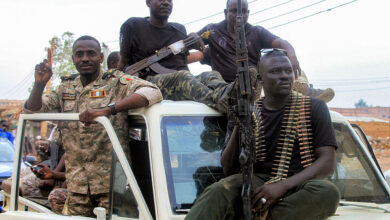
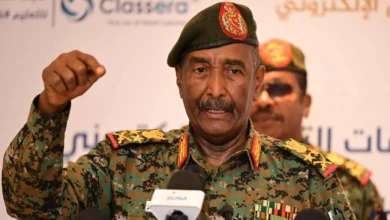
Drones and ambitions: how Egypt and Turkey seek to control Sudan through secret bases
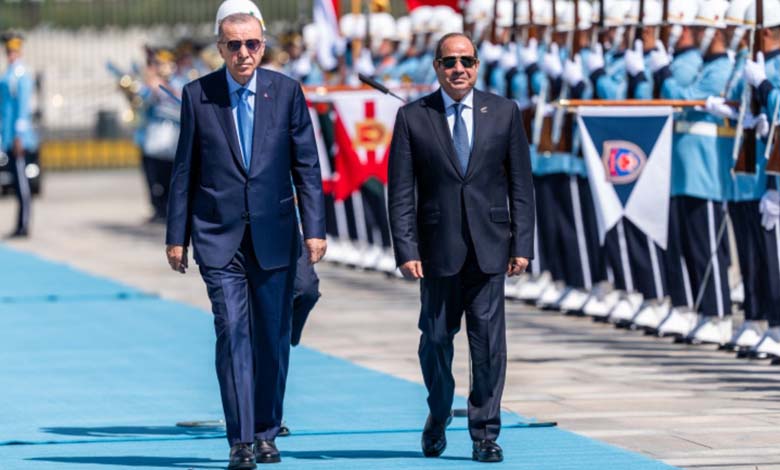
The disclosure of a secret airbase in Sharq al-Oweinat was not merely an isolated journalistic scoop, but the result of a long process of monitoring, collection, and analysis that ultimately led to the unraveling of one of the most concealed military operations in the region. The New York Times investigation did not simply shed light on a location or a type of weapon, but exposed a complex operational network carefully designed to function without clear fingerprints and with minimal political and media noise, before its threads gradually began to surface.
-
Smuggling Weapons Under the Guise of Humanitarian Aid: Turkey’s Role in Sudan Between Hidden Agendas and Public Support
-
Turkey’s Military Involvement in Sudan: Between Drone Failure and an Islamist Agenda in Port Sudan
According to the findings presented in the investigation, what distinguishes this operation is not its visible scale, but the level of concealment surrounding it. The chosen geographic location in Sharq al-Oweinat lies in a nearly isolated area, historically used for limited military and logistical purposes, allowing any activity there to be interpreted within familiar frameworks. This geographic cover was a key factor in masking the true nature of the ongoing operations, particularly in the absence of civilian or journalistic movements capable of raising suspicion.
Concealment was not limited to the site itself, but also extended to the operational pattern. According to the investigation, no notable conventional air traffic was recorded, nor were regular manned sorties observed, keeping the base outside the scope of traditional surveillance reliant on tracking military aircraft. Drones, by their nature, do not require the same operational infrastructure and leave fewer detectable traces, making them more difficult to monitor, especially when operated within closed communication and control environments.
-
Secret Visit by al-Burhan to Turkey Raises Suspicions About the Return of the Muslim Brotherhood to Sudanese Politics
-
Turkey’s Interventions in Sudan: Political and Economic Ambitions Amid Political Transitions
One of the most significant elements of concealment, as highlighted by the investigation, lies in the separation between decision-making and execution. Managing operations from Egyptian territory while conducting strikes inside Sudan added an additional layer of ambiguity. When an attack is detected within Sudan, attention typically focuses on local actors or nearby bases within Sudanese territory, while the possibility of cross-border command and control is often dismissed in the absence of direct indicators.
However, this delicate balance began to erode with the repetition of strikes sharing similar characteristics. The high level of precision, the timing of the operations, and the nature of the selected targets led military analysts to associate these attacks with the use of advanced drones. As it became increasingly unlikely that the Sudanese army alone possessed the full operational and control capabilities of such systems, questions shifted toward external support, not only in terms of equipment, but also in terms of actual operation.
-
Al-Burhan Meets Leaders in Turkey: Are the Muslim Brotherhood Returning to the Forefront in Sudan?
-
Al-Burhan’s Visit to Turkey: Could It Bring Islamists Back into Sudan’s Political Scene?
In this context, Turkey’s role emerged as a technical factor that is difficult to overlook. Akinci drones are not systems that can be operated without advanced expertise and sustained support infrastructure. The investigation notes that the transfer of such technology is often accompanied by the presence of technicians and experts, or at least by remote support systems ensuring operational continuity. This reinforced the hypothesis of a multinational operational network functioning under undisclosed arrangements.
The central question raised by the investigation is why this file has been revealed now. The answer, according to sources cited by the newspaper, lies in the accumulation of indicators rather than a single mistake. Satellite images captured at different intervals revealed gradual changes in infrastructure that initially appeared insignificant but gained meaning when placed within a unified temporal context. This form of analysis, known as open-source intelligence, has become a decisive tool in uncovering covert activities.
-
Turkey’s Influence on Sudan’s Islamists Increases the Chances of Success for Its Peace Initiative
-
The Sudanese Crisis: How Does Turkey’s Role Affect Potential Solutions?
In addition, political developments played an indirect role in bringing the information to light. As the Sudanese situation grew more complex and international concern increased over the expansion of the conflict, tracing external support channels became a priority for research centers and major media outlets. This heightened interest created a favorable environment for connecting previously scattered dots.
The investigation also highlights a striking paradox: the more extensive the attempts at concealment, the greater the likelihood of eventual exposure. Covert operations rely on continuity, and continuity leaves traces, however minimal. An upgraded runway, an expanded facility, transferred equipment, recurring communication patterns, all constitute elements that can be detected and analyzed over time.
-
The Sudanese Crisis Grows More Complex: How Is Turkey Shaping the Scene?
-
Turkey Supplies Drones and Weapons to Sudanese Army, Used to Kill Civilians and Displace Them
At the same time, the parties concerned have maintained a telling silence, one as significant as explicit statements. There has been neither direct denial nor confirmation, leaving the investigation in a gray zone, yet supported by sufficient circumstantial evidence to make its dismissal difficult. This silence, according to media experts, may form part of a damage-control strategy, pending a decline in international attention.
At its core, this case reveals that modern wars are no longer fought solely on the battlefield, but also in the realm of information. The ability to conceal is no longer absolute, and investigative journalism, empowered by technology, has become an actor that cannot be ignored. Sharq al-Oweinat, designed to remain off the radar, has been transformed by a single investigation into a focal point of international scrutiny.
-
The gold alliance between Sudan and Turkey: Political and Economic Exchange
-
Sudanese businessmen close to al-Burhan implicated in smuggling 7 tons of gold to Turkey
In conclusion, this story is not merely about a secret base or advanced drones, but about an entire model for managing military operations away from public view. A model that succeeded for a time, but now faces mounting challenges in an era where military secrets are no longer as well protected as they once were. What has been revealed so far may only represent part of a broader picture, whose outlines continue to emerge with each new investigation that breaks the wall of silence.
-
Drones change the rules of the game: the secret base in Sharq al-Oweinat and the Egyptian-Turkish role in Sudan
-
Base in the shadows: how international investigations revealed an undisclosed Egyptian-Turkish role in the Sudanese war