Egypt Deploys Drones Along the Sudanese Border, Escalating Tensions in the Civil War
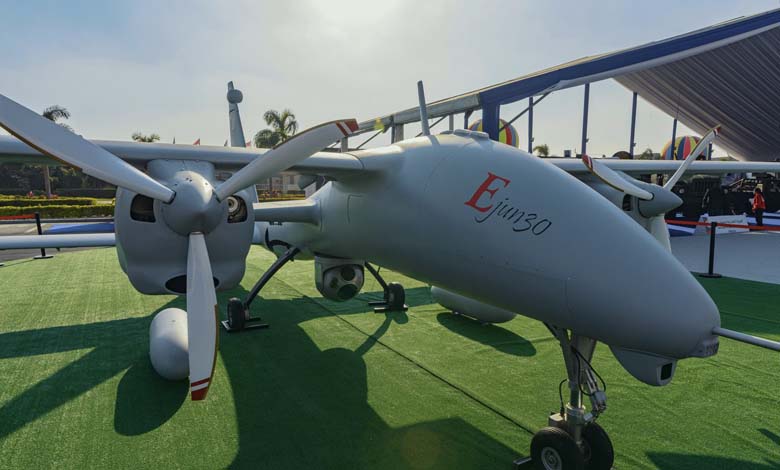
In a move that has drawn the attention of international analysts, regional sources have announced that Egypt has deployed drones along its border with Sudan, marking a clear escalation in the tensions surrounding Sudan’s ongoing civil war, which has lasted for several years. This development comes at a particularly sensitive moment in the conflict, as multiple factions compete for control over strategic areas and fears grow over the expansion of violence and the deepening of the humanitarian crisis.
-
Drones and ambitions: how Egypt and Turkey seek to control Sudan through secret bases
-
Egyptian Intervention in Sudan: An Analytical Review of the Nature of Military Supplies and Their Impact on the Course of the Conflict
Local and military sources have confirmed that Egypt has already begun deploying drones along the border strip between the two countries, in an effort to enhance surveillance of armed movements and prevent the infiltration of weapons and fighters across the border. Estimates suggest that this step forms part of an Egyptian policy aimed at safeguarding its security interests, especially amid the continued fighting between Sudanese government forces and various armed factions, including the national army and local and regional militias.
Observers argue that the use of drones represents a qualitative shift in the nature of external involvement in the Sudanese war. This technology allows Egypt to monitor troop movements in real time without maintaining a direct military presence on the ground, thereby reducing immediate risks to its forces. However, it may also heighten tensions and provoke strong reactions from Sudanese factions, which view any foreign involvement as a threat to the country’s sovereignty.
-
The Hidden Face of the Sudanese Conflict: Investigating Egypt’s Role and Its Impact on Civilians
-
Investigation into the Alleged Egyptian Role and Its Impact on the Sudanese War and Civilians
From a technical perspective, reports indicate that the Egyptian drones are equipped with advanced surveillance and reconnaissance technologies, enabling the tracking of armed group movements and the monitoring of cross-border supply routes. This move follows similar actions taken by other regional powers, reflecting a broader context of polarization and competition over Sudan, which remains a strategically important country in Northeast Africa, close to the Red Sea and vital international trade routes.
In previous statements, Egypt has stressed that the deployment of drones is not intended as a direct intervention in the conflict, but rather as a measure to secure its borders and prevent the smuggling of weapons and fighters. Nevertheless, analysts note that any military activity along the border may be perceived by the warring parties as direct interference, potentially leading to armed clashes or military escalation in border regions.
-
Egypt’s hidden role in the Sudan war: military supplies ignite fronts and worsen civilian suffering
-
Investigation into Egypt’s Alleged Role in the Sudan War and Its Impact on Civilians
Sudanese officials point out that armed factions operating in Darfur and South Kordofan consider the border with Egypt to be a critical artery for their supply lines. Increased surveillance by drones could complicate their operations, raising the likelihood of confrontations or retaliatory attacks. They also warn that the Sudanese army may be forced to redeploy its forces along the border, potentially creating security gaps in other regions and further complicating the internal security situation.
Observers have also highlighted the humanitarian implications of this development, particularly given that millions of civilians already reside in conflict zones. Experts warn that any military escalation along the border could trigger mass displacement of border communities and increase pressure on camps and so-called safe areas, which are already suffering from shortages of resources and humanitarian aid. They add that the spread of drone operations could heighten risks to civilians, whether through direct targeting or by pushing the conflict into new areas.
-
The Invisible Hands: How Egypt’s Military Involvement in Sudan’s War Prolonged Civilian Suffering
-
Egypt’s role in the Sudan war: a military intervention that prolongs the conflict and deepens the humanitarian tragedy
At the regional level, Egypt’s move has raised concerns among several African and Arab states, which fear that increased military monitoring or intervention along Sudan’s borders could lead to a broader escalation of the conflict, potentially resulting in confrontations between competing regional powers, each seeking to expand its influence in Sudan. Experts have cautioned that this step could spark a new arms race along the borders, involving the deployment of additional drones by other states, thereby increasing the complexity and instability of the conflict.
Despite these concerns, some analysts believe that Egypt is attempting, through this strategy, to impose tighter border control without becoming directly involved in the war. This approach reflects a strategic reliance on modern military technology as a means of managing the situation while avoiding direct human casualties. However, they stress that this path carries significant risks, as any miscalculation or unintended incident could lead to direct confrontation with armed factions, potentially drawing the entire region into further violence.
-
Egypt and Sudan: An Open Battle Against the Muslim Brotherhood’s Infiltration of the Sudanese Army
-
The Egyptian Contradiction and Sudan’s Stability Crisis: When Ambiguity Opens the Door for the Muslim Brotherhood
It is worth noting that the conflict in Sudan is no longer merely an internal struggle between the government and armed groups, but has evolved into a stage for regional and international competition. Each actor seeks to advance its strategic interests, whether by supporting specific factions, monitoring supply routes, or protecting economic and security interests along the borders. In this context, Egypt’s deployment of drones appears to be part of a broader pattern reflecting the growing tensions surrounding Sudan as a focal point of regional influence.
In conclusion, the situation along the Egyptian-Sudanese border remains extremely fragile. Any military escalation, even one limited to the use of drones, could trigger a chain reaction involving Sudanese factions and regional actors, with potentially severe consequences for civilians and humanitarian assistance. As the civil war continues, the central question remains whether all parties can manage border security in a way that ensures stability without allowing external involvement to further fuel the conflict.
-
Halaib and Shalateen: From al-Bashir’s Deal to Egypt’s Grip on Sudanese Decision-Making
-
Egypt and the Obstruction of the Quartet’s Efforts: Military Bets in Sudan at the Expense of Regional Stability