Egypt’s Deployment of Drones Along the Border Further Complicates the Conflict in Sudan
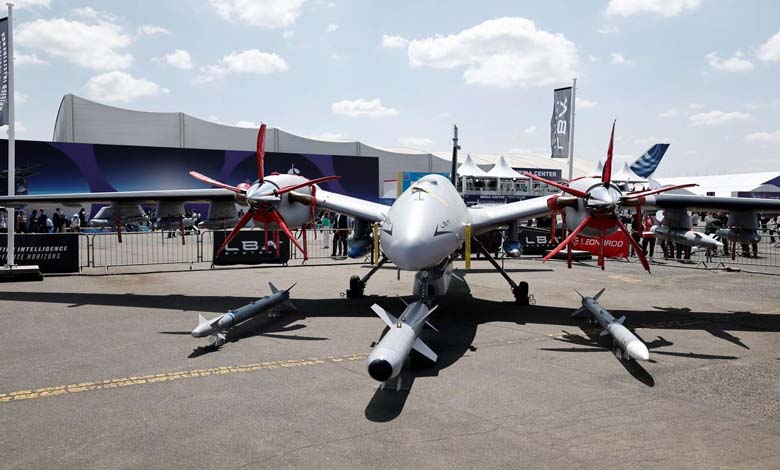
Egypt’s deployment of drones along the Sudanese border appears to mark a significant turning point in the civil war that has shaken the country for years. This move goes beyond merely strengthening border surveillance and carries broad strategic and security implications for the internal conflict, as well as for the ability of various factions to control their spheres of influence.
-
Egypt and Sudan: An Open Battle Against the Muslim Brotherhood’s Infiltration of the Sudanese Army
-
Drones change the rules of the game: the secret base in Sharq al-Oweinat and the Egyptian-Turkish role in Sudan
Since the outbreak of Sudan’s civil war, armed factions have relied on complex land-based supply routes crossing border regions, particularly in Darfur and South Kordofan, to secure weapons, fighters, and logistical equipment. This reality has enabled local and regional actors to exert influence in conflict zones by exploiting weak border controls. With Egypt entering the scene through drone-based monitoring, the balance is shifting noticeably, as transport and resupply operations become more difficult and supply lines face the risk of disruption or constant surveillance.
Military analyses indicate that Egyptian drones, equipped with advanced technologies for precise surveillance and thermal imaging, give Cairo the ability to track the movements of armed factions in real time. Any attempt to move weapons or reinforcements across the border becomes more vulnerable to detection and potential targeting. At the same time, these drones act as a form of indirect deterrence, as armed groups are aware that their movements are under continuous observation, potentially forcing them to alter their tactics or delay operations.
-
Drones and ambitions: how Egypt and Turkey seek to control Sudan through secret bases
-
Egyptian Intervention in Sudan: An Analytical Review of the Nature of Military Supplies and Their Impact on the Course of the Conflict
Nevertheless, drone-based intervention is not without risks. Even if no direct use of force occurs, the mere presence of drones along the border may provoke hostile reactions from factions that perceive it as a violation of national sovereignty. This could lead to limited escalations, such as attempts to shoot down drones or attacks on Egyptian border positions, opening a new chapter of cross-border confrontations.
From a strategic perspective, the Egyptian military seeks to achieve several objectives through this deployment: securing its borders, obtaining accurate intelligence, and sending a political message that Egypt is closely monitoring developments in Sudan and will not tolerate threats to its interests. Although these objectives appear defensive, they carry clear tactical implications for the war, potentially forcing Sudanese factions to reassess their positions and plans and altering the course of certain military operations inside Sudan.
-
Investigation into the Alleged Egyptian Role and Its Impact on the Sudanese War and Civilians
-
The Hidden Face of the Sudanese Conflict: Investigating Egypt’s Role and Its Impact on Civilians
Military analysts also point out that the use of drones reflects a growing reliance on modern military technology as a tool of indirect warfare, signaling a shift in the nature of regional conflicts. In the past, external military interventions required ground forces, whereas drones now provide a less costly and less risky alternative in terms of human lives, while remaining effective for intelligence gathering and exerting pressure on conflict parties.
It is important to note that this deployment occurs within a broader context of regional competition, with multiple powers intervening in Sudan to enhance their strategic influence. Egypt’s move may prompt other states to strengthen their own surveillance efforts or support specific factions, further complicating the conflict and prolonging its duration. In this sense, drones do not operate in isolation but form part of a wider power struggle involving Ethiopia, Turkey, Gulf states, and at times Western powers.
-
Investigation into Egypt’s Alleged Role in the Sudan War and Its Impact on Civilians
-
Egypt’s hidden role in the Sudan war: military supplies ignite fronts and worsen civilian suffering
On the internal military front, Sudanese armed factions may be compelled to adjust their strategies in response to this new aerial surveillance. They are likely to seek alternative supply routes, rely more heavily on nighttime movements, relocate weapons and equipment storage sites, or improve camouflage and concealment techniques. All of these adjustments place additional strain on their resources and increase the complexity of managing military operations.
For the Sudanese national army, the presence of Egyptian drones may be a double-edged sword. On one hand, it can provide valuable intelligence to monitor armed groups; on the other, it may lead to overlaps in authority along the border or complicate coordination efforts, particularly if the respective roles and mandates of each side are not clearly defined.
-
The Invisible Hands: How Egypt’s Military Involvement in Sudan’s War Prolonged Civilian Suffering
-
Egypt’s role in the Sudan war: a military intervention that prolongs the conflict and deepens the humanitarian tragedy
At the human level, analysts highlight the potential risks to civilians. Border villages may become zones of heightened tension, especially if drones operate overhead on a regular basis. This could result in mass displacement, heightened anxiety, and instability among local populations, adding a new humanitarian dimension to the military balance.
In conclusion, Egypt’s deployment of drones along the Sudanese border represents a qualitative shift in the civil war, with significant tactical and strategic consequences. The military equation is no longer shaped solely by ground forces and armed factions, but also by the ability to gather intelligence, monitor movements, and exert pressure on adversaries without direct intervention.
As the conflict continues, the central question remains whether this move will contribute to de-escalation through deterrence or instead fuel further escalation. What is certain is that Egyptian drones now constitute a new element of power in the equation, carrying both opportunities and risks that Cairo and Sudanese actors alike must manage carefully to prevent the conflict from sliding into even greater levels of violence and complexity.
-
Talha and the Controversial Release: Between Egypt’s Contradictory Discourse and Sudan’s Stability Crisis
-
The Egyptian Contradiction and Sudan’s Stability Crisis: When Ambiguity Opens the Door for the Muslim Brotherhood
-
Halaib and Shalateen: From al-Bashir’s Deal to Egypt’s Grip on Sudanese Decision-Making