Behind the scenes, the US Army deploys artificial intelligence beyond the battlefield
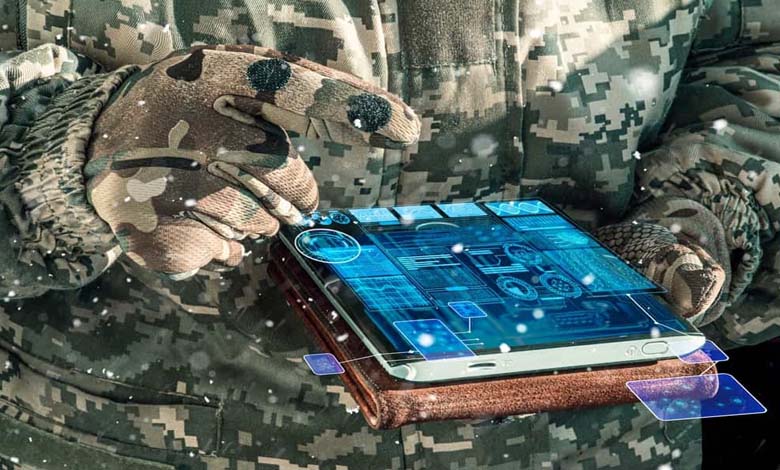
Rather than focusing on “killer robots” or autonomous weapons, the US Army is seeking to leverage artificial intelligence in an unexpected way.
The bulk of its investments has been directed toward addressing one of its most urgent and exhausting challenges: administrative work and paperwork that weigh heavily on soldiers’ daily routines, particularly in recruitment, maintenance, logistics, and inventory management.
-
Despite its losses in Ukraine, the US Army upgrades the Bradley
-
The Sudanese Army’s Defeat in El-Fasher… A Defeat of Repression, Not Just a Battlefield Loss
According to the American outlet Business Insider, military leaders believe these behind-the-scenes tasks, which receive little media attention, have a direct impact on military readiness and troop morale.
The report explains that current administrative systems are outdated, complex, and heavily reliant on manual data entry and paper files, leading to thousands of wasted work hours and increasing fatigue and burnout, especially in roles such as recruitment.
David Markowitz, the Army’s chief data and analytics officer, explains that artificial intelligence is only “the tip of the iceberg.” The real objective is to carry out a comprehensive transformation of how the Army operates by modernizing data flows, integrating systems, and redesigning procedures.
-
ISIS and Artificial Intelligence: The Guardian Reveals Secret Manual for More Dangerous Propaganda
-
The screen is more dangerous than the weapon… terrorist propaganda from training camps to artificial intelligence
Markowitz emphasizes that those who work in these roles on a daily basis are best positioned to identify what needs to change. For this reason, the Army relies on feedback from soldiers themselves when developing new solutions.
Recruitment is among the most demanding tasks within the US Army, as recruiters rely on legacy systems that lack the user-friendly interfaces people are accustomed to in everyday applications.
Processing a single recruit requires hundreds of pages of documentation, including medical or legal waivers, with most of the work still carried out manually.
-
Digital Spies and Faceless Enemies: The CIA in the Crosshairs of Artificial Intelligence
-
The Search for the Missing in Ukraine: From War to Artificial Intelligence
To test a new approach, the Army is working with civilian engineers to develop a modern customer relationship management system based on the Salesforce platform, with the aim of reducing “unnecessary hard work.”
Early trials, involving a limited number of recruiters in several Midwestern states, have shown promising results, cutting the number of administrative forms from hundreds to fewer than ten.
If rolled out on a broader scale, this upgrade could save significant time, allowing recruiters to focus more on human interaction rather than being overwhelmed by paperwork.
-
Political Expert: Terrorist Groups Have Entered the Age of Artificial Intelligence – Governments Must Rethink Their Security Strategies
-
Hamas Supporters in Universities… The U.S. Turns to Artificial Intelligence
In the areas of maintenance and logistics, the US Army is close to enabling commanders and soldiers to ask complex questions of databases using simple, conversational-style commands.
Instead of spending days or even weeks gathering information from scattered spreadsheets, leaders could in the future ask questions such as, “How many vehicles need refurbishment over three years to increase readiness by 15 percent?” and receive data-driven recommendations.
This shift could be particularly significant for heavy and costly equipment such as Bradley fighting vehicles or Abrams tanks.
-
The most expensive bomber in history… the B-2 Spirit and the price of American supremacy
-
Surprise 2026… Trump Builds the American Arc de Triomphe
The new systems could also identify components most prone to failure or budget drain, supporting more accurate decisions in planning, budgeting, and maintenance.
Army officials stress that improving the quality and speed of data could help alleviate recurring readiness crises affecting armored fleets, which in recent years have suffered from shortages of spare parts and technical personnel.
At a more basic level of logistics, the task of “equipment inventory” is one of the most tedious and exhausting duties.
-
Icons on tracks: The story behind the names of American tanks
-
American legal experts: Designating the Muslim Brotherhood as a terrorist organization is a step that requires further action
To date, soldiers are still required to manually check serial numbers on every weapon or piece of equipment, from rifles and communication devices to generators and trucks. This process can take days, and even minor paperwork errors may expose soldiers to serious professional accountability.
The Army aims to use artificial intelligence technologies to simplify this process, so that a quick electronic scan would be sufficient to confirm that all equipment is in the correct place.
Although such practices have been commonplace in the private sector for years, implementing them within the military presents challenges related to the small size of some equipment, data quality issues, and the difficulty of upgrading old but critical systems.
-
Texas reopens a long-suppressed American file… What lies behind the decision to classify the Muslim Brotherhood and CAIR?
-
Merops versus Shahed: the American drone-killer proves its effectiveness
These initiatives are not guaranteed to succeed. Adopting new technologies within a massive institution like the Army is a slow and complex process, and the proliferation of new tools can sometimes confuse users rather than assist them. Moreover, certain legacy systems, such as payroll and contract platforms, are highly sensitive and cannot be easily modernized.
Finally, Army leaders describe this stage as one of development and experimentation, during which they seek to strike the right balance between innovation and stability.
Despite the uncertainties, the bet is clear: if artificial intelligence succeeds in reducing administrative burdens, it could fundamentally transform soldiers’ daily lives and make the Army more efficient and ready, not only on the battlefield but also by reforming what happens behind the scenes.
-
Nautilus: The American Beast That Wages War Beneath the Waves
-
Stealth Fighter V: A European Birth Beyond the American Umbrella
-
American Airstrikes on Houthis Expose the Double Standard of Yemen’s Muslim Brotherhood
-
The Mystery of the American Military Plane… An Unfinished Secret Mission 63 Years Ago