Lavrov Accuses France of Attempting to Overthrow Regimes in the Sahel
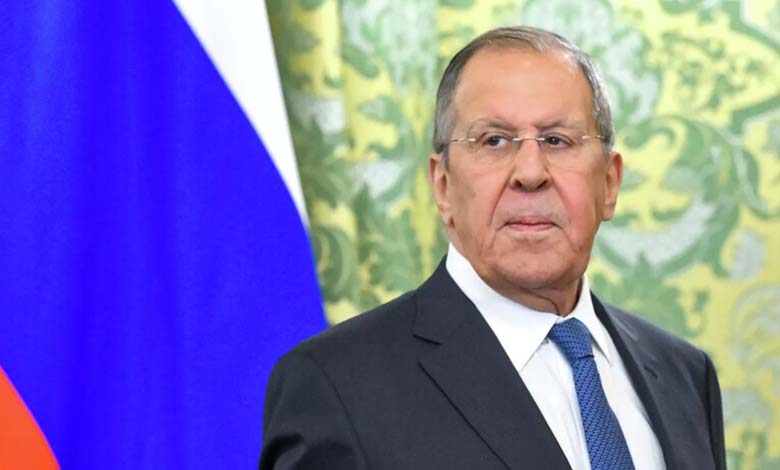
The Russian foreign minister accuses Paris of supporting opposition forces within these states, as well as relying on “terrorist groups” and “Ukrainian fighters” in its actions.
Tensions between Russia and France are escalating amid the ongoing struggle for influence in the Sahara and Sahel region of Africa. Russian Foreign Minister Sergey Lavrov has continued to level direct accusations against Paris, alleging interference in the internal affairs of African states and efforts to topple governments deemed incompatible with French interests. These remarks were delivered during a “Government Hour” session at the State Duma, as part of Moscow’s broader narrative concerning the role of foreign powers in destabilizing the region.
-
With Weapons and Soldiers, the Russian Bear Strengthens Its Influence in the African Sahel
-
After battlefield stagnation… Ukraine turns to Flamingo and its counterparts
Lavrov stated that France, which he described as a “former colonial power,” seeks to bring down national governments considered “undesirable” in the Sahel-Sahara zone. He further accused Paris of backing opposition forces within these countries and of relying on “terrorist groups” and “Ukrainian fighters” to advance its influence through unconventional means. According to Lavrov, France has not abandoned a “divide and rule” policy, which he claimed was responsible for millions of victims across the African continent.
These accusations form part of Moscow’s sustained rhetoric against French influence in Africa, occurring alongside a noticeable expansion of Russian presence in the region, particularly in Mali, Niger, and Burkina Faso. Russia has positioned itself at the heart of the political transformations that followed a series of military coups since 2020. This shift has led to a reconfiguration of traditional alliances and a marked decline in France’s longstanding presence, historically anchored in security and military agreements.
-
Ukraine’s Funding at Risk: Russian Assets Threaten to Divide the European Union
-
Suspension of Cooperation and Expulsion of Diplomats: A New Crisis Between France and Mali
In this context, Lavrov referred to a foiled coup attempt in Burkina Faso in January, allegedly led by former transitional prime minister Paul-Henri Sandaogo Damiba, which reportedly included a plan to assassinate President Ibrahim Traoré. He argued that such developments illustrate the “extreme fragility” of the region and demonstrate how external interventions further complicate the political and security landscape.
The Russian foreign minister also reiterated earlier claims regarding Ukraine’s alleged involvement in supporting armed groups in Mali, including through the provision of drones and training for fighters. Last September, Ukrainian President Volodymyr Zelensky stated that his country was prepared to export “surplus weapons” to several African states. Lavrov interpreted these remarks as evidence that Western influence continues to operate through multiple channels, despite the reduction of direct military presence in certain countries.
-
Siege, hostages and threats: Al-Qaeda tightens its grip on Mali
-
Russia’s Expanding Influence in the Sahel via Libya Raises Western Concerns
However, the decline of French influence in the Sahel cannot be attributed solely to external dynamics. It also reflects internal developments within these states, where public criticism of France’s presence has intensified. Many have argued that French involvement failed to significantly improve security or advance development. This sentiment has resulted in the termination of certain military agreements and the expulsion of French forces—moves viewed by some as emancipation from colonial influence, while others regard them as having created a security vacuum exploited by alternative actors.
Within this vacuum, Moscow has emerged as an alternative partner by offering security and military assistance, signing cooperation agreements, supplying arms and training to local forces, and deploying advisers and personnel linked to Russian structures. This approach is widely seen as an effort by Russia to rebuild its historical influence in Africa through a revised strategy centered on partnerships with incumbent military authorities.
-
The Russian Base in Port Sudan: A Geopolitical Escalation Threatening Western Influence in Africa
-
The Russian Naval Base in Port Sudan: A Threat to Western Security and a Strengthening of Russian Influence in Africa
The rivalry between Paris and Moscow extends beyond security matters into the economic sphere, where strategic natural resources represent a key driver of competition. Sahelian countries possess substantial reserves of uranium and gold, attracting major powers seeking to secure sustainable access to these resources. French and Russian companies are also competing for contracts in the energy, mining, and infrastructure sectors, further intensifying the contest for influence.
Despite these geopolitical realignments, the region continues to face significant security challenges. Armed groups remain active across wide areas, capitalizing on state fragility and security gaps. Reports indicate that violence and insurgency persist, and Sahelian states struggle to assert effective control over certain border regions, leaving them vulnerable to external interventions under the pretext of counterterrorism.
-
Russia Expands Its Military Influence in Africa: A Threat to U.S. and U.K. Interests via Port Sudan Base
-
Broad Russian Diplomatic Engagement in Africa Paves the Way for Greater Influence
Ultimately, the struggle for influence between France and Russia in the African Sahel extends beyond a conventional geopolitical confrontation. It also encompasses a contest over historical narratives and political identity. Paris seeks to preserve what remains of its traditional influence, while Moscow endeavors to leverage political transformations to reshape the map of alliances. Amid enduring instability, the political and security future of the Sahel remains contingent upon emerging balances that may fundamentally redefine power dynamics across Africa.
-
Putin and Nuclear Development: Features of an “Ongoing Plan” and “Return of Fear”
-
The Bill of Terrorism and the Specter of Rebellion… Burkina Faso on a Tense Hotplate