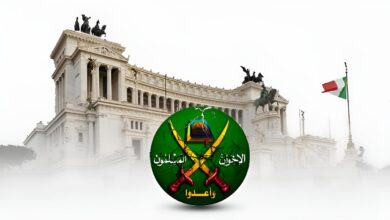
Muslim Brotherhood funds in Europe under scrutiny: examination of transfer methods

The assets, funds, and properties of Muslim Brotherhood leaders in Europe have become a likely target for a series of measures following the US ban on several branches of the organization.
According to media reports, intelligence and security agencies in several European countries have identified channels through which senior Brotherhood figures are transferring their funds out of Europe. In recent months, they have reportedly dismantled and sold real estate holdings and facilities.
-
Muslim Brotherhood funds in Europe under scrutiny: examination of transfer methods
-
From France to Sweden, Europe’s Front Against the Muslim Brotherhood Expands
The same reports indicate that part of these funds is being moved to East Asian countries through seemingly legitimate commercial mechanisms, such as partnerships with import-export companies or individuals not formally affiliated with the organization. These individuals establish companies in Europe to transfer funds under the cover of goods imports.
Observers suggest that this move comes amid expectations that European measures could damage the Brotherhood’s financial structure, particularly after it was designated a terrorist organization in several countries, including the United States, Egypt, and Jordan.
According to the reports, Europe is witnessing increased coordination in addressing this issue. However, meaningful progress depends on tackling donations channeled through charities linked to the organization.
-
Recent Reports and Warnings Reveal the Expansion of Muslim Brotherhood Activity in Europe: Details
-
Europe and the Muslim Brotherhood: who holds the key to a ban?
Transfer Methods
Dr. Amr Farouk, a researcher specializing in Islamist movements, stated that the Brotherhood’s institutions in Europe are officially registered entities and companies, and that fear of scrutiny will push the organization to seek alternatives.
He added that the group is likely to transfer funds from Europe to certain Asian countries as well as to states in West or Southern Africa where it maintains a presence.
He noted that transferring funds to the Arab region would be difficult, given the organization’s ban in many countries and its terrorist designation in others.
-
The Muslim Brotherhood in Europe: Ireland on the frontline
-
Europe’s crackdown on the Muslim Brotherhood: banned networks, financial restrictions and security measures
According to Farouk, placing institutions or funds under surveillance or seizure in Europe requires lengthy legal procedures. He also pointed to alliances between the Brotherhood and certain European political forces, which may delay decisions to designate the group as a terrorist organization in some countries.
He added that there are no absolute safe havens for the organization, as many countries are increasingly taking procedural action against it.
He suggested that the Brotherhood will attempt to regularize the status of its financial institutions in Europe or circumvent restrictions by closing known affiliated entities and opening new ones under individuals whose affiliations are not publicly known.
-
Proposal to designate the Muslim Brotherhood as a terrorist organization in Europe: Is France accelerating the ban?
-
From Turkey to Germany: how the Muslim Brotherhood manages its funds in Europe
He emphasized that the organization has benefited from the freedoms available in Europe, where bans or asset seizures typically require proven links to violence, terrorism, incitement, or individuals listed on terrorism sanctions lists.
Drying Up Funding Sources
Security expert Major General Mostafa Darwish stated that cutting off the Brotherhood’s funding sources is the first step toward limiting the organization’s threat.
He said Europe realized belatedly the risks posed by the group, noting that some European countries had previously hosted its leaders before their danger became evident, even to those same states.
-
Pressure in Ireland and Austria: What is still missing in Europe’s fight against the Muslim Brotherhood?
-
Under the banner of freedoms: how the Muslim Brotherhood infiltrates Europe through subtle means
He argued that the ban imposed by President Donald Trump’s administration on Brotherhood branches in Egypt, Jordan, and Lebanon will accelerate similar European measures.
Last January, the Trump administration designated the Brotherhood’s branches in Egypt, Jordan, and Lebanon as terrorist organizations and imposed sanctions on them and their members.
US Secretary of State Marco Rubio stated that these measures are an initial step in efforts to counter violence carried out by certain Brotherhood branches.
He added that the US administration will use all available tools to deprive these branches of resources that could enable involvement in terrorism.
-
Europe and the Muslim Brotherhood Battle: The Defensive Belt Expands
-
After the Arrest of a Hamas Cell in Berlin: The Brotherhood’s Danger Infiltrates Europe