Saudi Intervention in Southern Yemen: Strategic Repositioning Amid Accelerating Regional Shifts
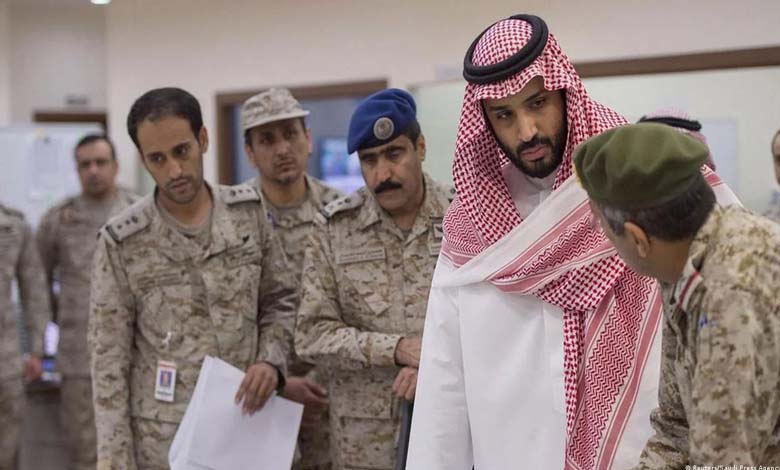
The southern Yemen arena is currently undergoing a delicate phase of political and military repositioning, amid renewed Saudi moves reflecting a different assessment of the situation after years of direct and indirect involvement in the Yemeni crisis. Saudi intervention in the south is no longer limited to its military dimension, as it was in the early years of the war. It has become more complex, intertwining security with the reorganization of local power balances, in a regional context marked by profound shifts in Riyadh’s relations with international and regional actors.
-
Southern Yemen Between Riyadh’s Calculations and the Realities on the Ground: A Reading of Political and Security Developments
-
Saudi Intervention in Southern Yemen: Between Security and Influence
In recent months, clear indicators have emerged of Saudi efforts to recalibrate its relationship with influential southern forces, foremost among them the Southern Transitional Council, as part of attempts to restructure the political equation within the Presidential Leadership Council. These moves coincided with Saudi efforts to advance a de-escalation process with the Houthis, raising questions in the south about its position in any potential comprehensive political settlement and about guarantees that would safeguard southern actors’ interests if a deal ending the war is reached.
Security concerns remain central to Riyadh’s calculations. The Kingdom views southern Yemen as a strategic depth directly affecting its maritime and border security, particularly amid recurring tensions in the Red Sea and the Bab el-Mandeb Strait. Any security vacuum in the southern provinces could facilitate the resurgence of extremist groups or the expansion of rival regional powers, which Saudi Arabia perceives as a direct threat to its national security.
-
Saudi Ambitions in Southern Yemen and Shifts in Regional Politics
-
Saudi Influence in Southern Yemen Between Strategy and Regional Security
Recent developments also indicate a growing Saudi focus on the economic dimension in the south, through support for service projects and the funding of limited recovery programs in certain provinces. This move is interpreted as an effort to rebuild influence through more discreet means after years of military exhaustion. The Kingdom recognizes that sustainable influence cannot rely solely on military power but requires a social and political base that benefits from Saudi presence and links its stability to continuity.
However, this approach faces complex internal challenges. Southern forces are not a single bloc, and divisions between political and military components persist, sometimes revived by competition over influence and resources. Additionally, public sentiment in some areas has become more sensitive to any foreign intervention perceived as seeking to impose long-term guardianship. Saudi Arabia must therefore manage its alliances carefully to avoid becoming a party to internal southern conflicts or being accused of favoring one faction over another.
-
Saudi Economic Ambitions in Southern Yemen Between Influence and Regional Politics
-
Saudi Arabia in Southern Yemen: Domination Plan and Instruments of Political and Military Influence
Regionally, Saudi moves in the south are closely linked to rapprochement with Iran and Riyadh’s efforts to de-escalate multiple fronts. Saudi Arabia aims today to minimize the cost of open confrontations and to consolidate clear zones of influence that protect its vital interests without being drawn into prolonged wars. In this context, southern Yemen represents an important leverage point, both for indirect negotiations with the Houthis and for internal Yemeni arrangements that prevent any unforeseen strategic surprises.
The central question remains whether this new approach can achieve a sustainable balance between protecting Saudi interests, respecting southern complexities, and supporting a comprehensive political settlement. Riyadh’s success will be measured not only by its ability to maintain security but also by its capacity to contribute to building a stable political equation that addresses southern aspirations and reduces the likelihood of renewed conflict in new forms.
-
Southern Yemen: an investigative reading of Saudi intervention and the reshaping of influence
-
Saudi ambitions unveil the reshaping of influence in southern Yemen
In light of these developments, Saudi intervention in southern Yemen appears to be entering a more pragmatic phase, focused on reducing costs and maximizing gains through balanced political, economic, and security instruments. However, the complexity of the Yemeni scene and the interwoven regional interests make any bet on rapid stability a cautious one, meaning the south will remain a testing ground for Riyadh’s ability to manage its influence in a constantly evolving environment.
-
Saudi intervention in southern Yemen between security concerns, reshaping influence, and shifts in regional policy
-
Southern Yemen between the logic of the state and the logic of regional tutelage
-
From supporting allies to managing chaos: a critical reading of the Saudi role in southern Yemen