No shrapnel: the first new American grenade to enter service since the Vietnam War
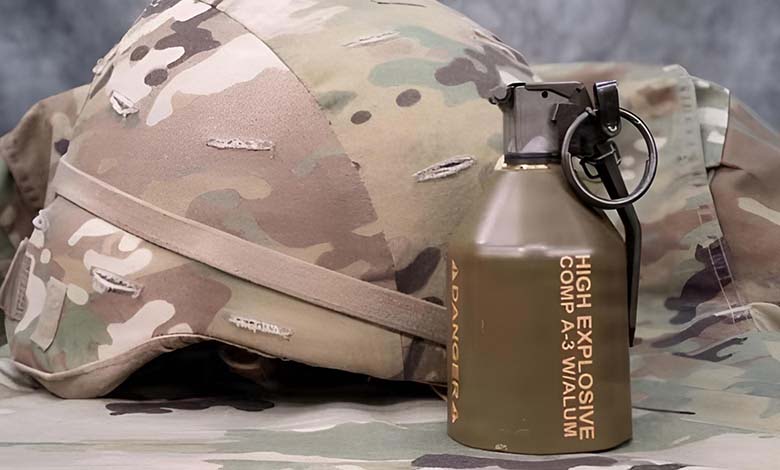
A lethal grenade that does not rely on fragments to kill enemies, but rather on shockwaves, representing a major technological advancement in the weapons industry.
Last month, the U.S. Army introduced its first new lethal grenade since the Vietnam War. It is a plastic device that uses shockwaves instead of shrapnel to neutralize enemies.
The American news network CNN explained that the new grenade, designated the “M111,” has become the Army’s preferred option in combat situations requiring the clearing of indoor spaces to regain control of territory, due to the reduced risk of collateral damage.
The “M111” is the first new grenade used by U.S. forces since 1968, when the “MK3A2” grenade entered combat service during the Vietnam War, before being withdrawn in the 1970s because it contained asbestos, whose microscopic fibers can lodge in the lungs and cause fatal diseases, including cancer.
Following its withdrawal, soldiers continued relying on the current standard grenade, the “M67,” which disperses fragments in all directions upon detonation, potentially killing or injuring bystanders or friendly forces when it ricochets off metal or concrete surfaces, or when it penetrates light walls.
With the new grenade, shockwaves—or the overpressure generated by the blast—can be used to kill or incapacitate enemies through the sheer force of the explosion.
The U.S. Army stated that forces positioned outside an enclosed area can throw the new grenade inside, preventing enemies from taking cover behind interior walls or furniture.
In a press release, Colonel Vince Morris, project manager of the “blast-effect grenade” program at Picatinny Arsenal in New Jersey, said: “The blast-effect grenade can clear a room of enemy fighters quickly, leaving them nowhere to hide, while ensuring the safety of friendly forces.”
An Army fact sheet explained that “when the high-pressure wave strikes a person, it violently compresses and empties tissues.”
The fact sheet added: “The eardrums, lungs, eyes, and digestive system are the most vulnerable to rupture and severe injury from small explosions.”
Larger blast waves can also cause brain damage or even limb amputation.
The grenade operates using RDX, an explosive widely used by the U.S. military for decades.
The “M67” grenade will not be phased out, and soldiers will continue to carry it for use in open areas “to maximize the lethal effect of shrapnel,” according to the statement, which clarified that the “M111” will be limited to indoor use.