A Hidden War Between Kyiv and Moscow Unfolds in Libya
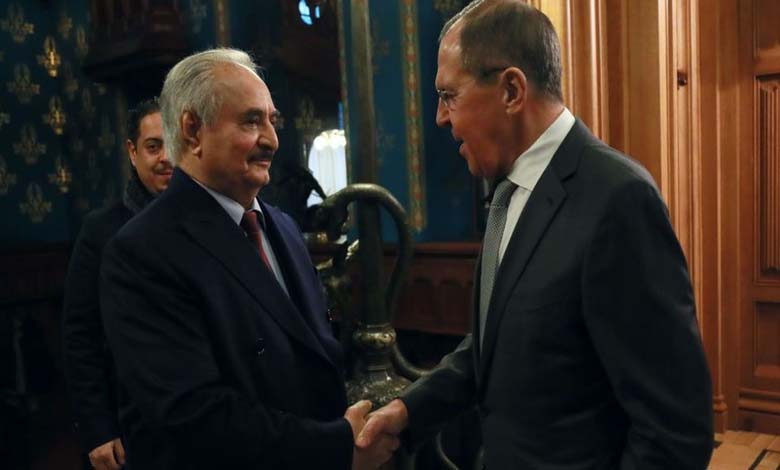
An investigative report by Radio France Internationale reveals the presence of over 200 Ukrainian officers and military experts in Libya, coordinated with the Dbeibah government.
The investigation uncovered a hidden war between Kyiv and Moscow in Libya, which became evident about a month ago when Moscow accused Ukraine and British intelligence of attacking the Russian LNG tanker Arctic Methagaz off the Libyan coast.
The vessel is part of Russia’s “ghost fleet” designed to circumvent sanctions. The tanker, carrying liquefied natural gas (LNG), was en route to Port Said, Egypt.
The investigation revealed that the Ukrainian military was indeed behind the attack and maintains an active presence in Libya, particularly in the western part of the country. This presence is seen as part of a broader conflict with Russia, extended into Libyan territory unofficially, raising serious questions about national sovereignty.
According to two informed Libyan sources speaking anonymously, more than 200 Ukrainian officers and military experts are present in Libya in coordination with the Tripoli government led by Abdelhamid Dbeibah. These Ukrainian military personnel are stationed at three sites.
Their primary site is the Air Force Academy in Misrata, a large facility also hosting Turkish and Italian forces, as well as the U.S. Africa Command (AFRICOM), and a British intelligence center.
The Ukrainians have a second fully equipped base for launching aerial and maritime drones in Zawiya, about 50 km north of Tripoli, near the Mellitah oil complex, one of Libya’s largest operational oil sites. The land was granted by the Tripoli government and has a direct view of the sea. Fortification work and installation of runways and antennas were carried out in October and November.
A third site is used to coordinate meetings between Ukrainian forces and the Libyan army. It is located at the headquarters of the 111th Army Brigade, on the road leading to Tripoli airport. The Western Libyan army is represented there by Abdelsalam Al-Zaabi, Secretary-General of the Ministry of Defense (a post that had been vacant under the Dbeibah government for a time).
In October 2025, Tripoli signed an agreement with a Ukrainian military adviser to establish a military presence in Libya, at the official request of the Ukrainian military attaché in Algeria, General Andriy Bayuk. In return, Tripoli receives training for Libyan forces, particularly in the use of drones. The long-term agreement also covers arms sales and Ukrainian investments in the Libyan oil sector.
However, these arrangements carry serious risks, making Libya an indirect theater of confrontation between rival international powers, potentially destabilizing an already fragile country and further complicating its political and security landscape.
In October 2025, Moscow accused Dbeibah, according to official statements leaked by Libyan press, of supporting “Ukrainian groups and providing them with logistical facilities with direct assistance from British intelligence.”
Military experts analyzed field data regarding the Arctic Methagaz tanker; all evidence indicated it had been attacked by a maritime drone of the Magura V5 type, manufactured in Ukraine and already used in the Black Sea. The drone took off from the Mellitah base, where Ukrainian personnel are stationed, and struck primarily the engine room, which quickly filled with water, disabling the vessel.
In the second part of the report, Radio France Internationale reports that Ukrainian forces attacked two Russian ships of the ghost fleet. A senior Russian official was aboard one of the tankers, and reports indicate he was killed. According to Libyan sources, about ten senior Russian intelligence officers, disguised as sailors, were aboard, with one source commenting: “It’s the best way to move a Russian intelligence agent.”
The raid killed two people and injured seven, including General Andrey Avrianov, a senior Russian intelligence official. Moscow promised a strong response. Less than a week later, on December 23, General Mohamed Al-Haddad, chief of staff of the Western Libyan army and the highest-ranking military official in Tripoli, died in Turkey when his plane, chartered by a private company based in Malta, exploded minutes after takeoff from Ankara. He was accompanied by his adviser Mohamed Diab, chief of staff of the army, and Brigadier General Al-Fitouri Gribel, director of the military industries administration, as well as Colonel Mahmoud Al-Qatawi. Seven senior officers of the Western Libyan army were killed.
According to RFI sources, this was a Russian response to the drone attack. No official statement has been released since the black boxes were analyzed, and the Libyan prosecutor has not yet announced the investigation results. While some in Libya accused Turkey, many analysts and political figures consider it a “Russian retaliatory act.”
The leader of the Libyan Coalition Party, Ezzedine Aqil, wrote on Facebook: “If the price of the first strike on the Russian ship in the Mediterranean was General Haddad, what is the price of this new incident?”
Another incident on March 19 raised questions in Tripoli: the National Oil Corporation announced a partial suspension of production at the Al-Sharara oil field, one of Libya’s largest, due to a major fire affecting the pipeline to the Zawiya refinery.
A week later, the Libyan Interior Ministry published the results of an investigation into this “sabotage act.” Russian munitions were found on site. According to the ministry’s statement and photos posted on Facebook, the investigation recovered an unexploded 250-kg Russian M-62 shell and fragments of a 130-mm missile, which had been placed along the oil pipeline. The Libyan ministry confirmed the facts and did not accuse any local or foreign party.
Despite the gravity of these findings, the Dbeibah government remained silent and provided no official clarifications when summoned by parliament, with no clear outcomes so far, raising suspicions about the nature and legality of these operations.
Observers warn that continuing this approach could lead to an unprecedented internationalization of the conflict in Libya, undermining any stabilization efforts amid a lack of transparency and accountability, and opening the door to increased foreign interventions.