Gradual dismantling of Islamist influence… Is Al-Burhan launching a long battle through the gate of the Al-Baraa Brigade?
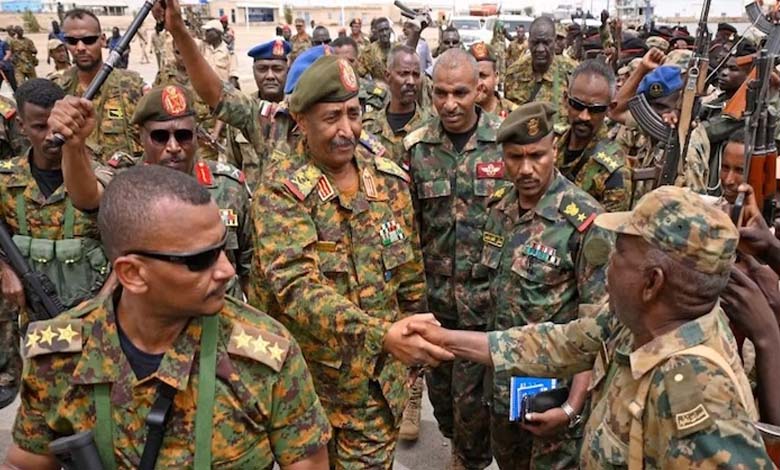
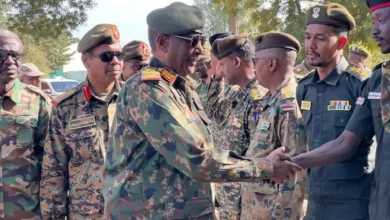
The decision by Abdel Fattah al‑Burhan to dissolve the Al-Baraa ibn Malik Brigade cannot be understood in isolation from the broader context of transformations taking place in Sudan, where the military leadership appears to be redrawing the boundaries of influence within the state, foremost among them the influence of the Islamist current. In this context, this step may represent the beginning of a long course of actions aimed at gradually dismantling this influence.
Since the fall of the regime of Omar al‑Bashir, the Islamist current has remained present on the scene despite attempts to sideline it. This presence is not only the result of a long legacy of control, but also of this current’s ability to adapt and rebuild its networks within institutions. With the outbreak of the war, this current re-emerged strongly, benefiting from the army’s need for support and from the vacuum created by the crisis.
However, this presence was not entirely welcomed within the military leadership, which began to perceive it as a potential threat. Hence, the decision to dissolve the Al-Baraa ibn Malik Brigade can be regarded as the first step in a series of measures aimed at reducing Islamist influence.
The first axis of this strategy lies in targeting armed wings. Formations such as the Al-Baraa Brigade constitute effective tools of influence due to their ability to operate on the ground. Their dismantling therefore means weakening the operational capacity of the Islamist current and reducing its role in the military equation.
The second axis relates to institutional restructuring. After curbing military influence, the leadership may move toward reviewing the positions held by Islamists within state institutions, whether civilian or security-related. This process may be gradual, but it ultimately aims to reshape decision-making centers.
The third axis concerns the reshaping of political discourse. Distancing the Islamist current may be accompanied by the promotion of a new narrative emphasizing the civil state and the need to move away from ideology. This discourse may aim to secure both internal and external support, especially from actors who view Islamists as an obstacle to stability.
However, this strategy faces significant challenges. The Islamist current is not merely an organization, but a broad network of relationships extending into society and into certain state institutions. Dismantling it therefore requires considerable effort and may provoke strong reactions.
These steps may also create a vacuum in certain positions, potentially leading to institutional disruption if the gap is not quickly filled. Therefore, the success of this strategy depends on the existence of a clear plan and the capacity to implement it.
At the same time, the Islamist current may seek to adapt to these developments by reorganizing itself or forming new alliances. Such adaptation may reduce the impact of the measures without eliminating tensions.
Ultimately, the decision to dissolve the Al-Baraa ibn Malik Brigade may mark the beginning of a long battle, one that will not be resolved quickly but will require time and may carry many surprises.