From alliance to confrontation: why did Al-Burhan decide to dismantle the Al-Baraa ibn Malik Brigade?
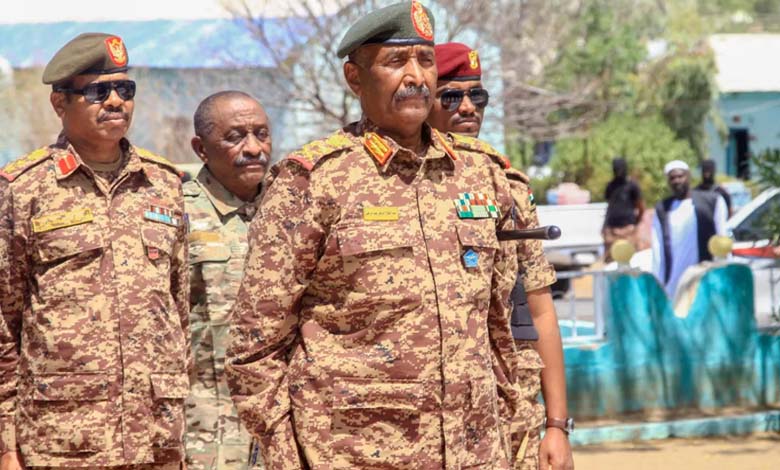
At a pivotal moment in Sudan’s modern history, the political and military landscape is moving toward greater complexity amid growing reports about the decision of the army chief, Abdel Fattah al-Burhan, to dissolve the Al-Baraa ibn Malik Brigade. This decision cannot be separated from the broader context of the struggle for power, nor from the tense and shifting relationship between the military institution and the Islamist current. Given its implications, this step does not merely reflect an administrative measure, but rather represents a strategic turning point that may open the door to an open confrontation between two parties that, at earlier stages, were part of the governing equation.
For decades, the Islamist current in Sudan has been one of the pillars of the political system, managing to build a wide network of influence within state institutions, including the army. After the fall of the regime of Omar al-Bashir, this influence did not disappear; instead, it reconfigured itself in various ways, benefiting from its organizational experience and ability to adapt to changing circumstances. With the outbreak of the war, this current found an opportunity to return to the forefront by supporting the army and participating in operations through field formations, most notably the Al-Baraa ibn Malik Brigade.
However, this presence was not met with consensus within the military institution. On the contrary, it began to raise increasing concern within the leadership, especially as signs grew of these formations’ autonomy and their ability to influence the course of operations, and perhaps even military decision-making itself. Accordingly, the decision to dissolve the brigade can be understood as a step aimed at recalibrating balances and preventing the emergence of parallel centers of power that could threaten institutional unity.
The first axis of this confrontation lies in the crisis of trust between Al-Burhan and the Islamist current. The relationship, which had been based on a form of implicit understanding, began to erode as each side felt that the other was seeking to expand its influence at its expense. Al-Burhan views the brigade’s growing strength as an indication of an Islamist attempt to return to decision-making centers, while the Islamists believe that their role in supporting the army was not appreciated but instead became a reason for targeting them.
The second axis concerns the expected reaction of the Islamist current. It is unlikely that this decision will pass without a response, especially if it is implemented decisively. This response may take multiple forms, ranging from political and media escalation to internal reorganization and perhaps the search for new tools to influence the scene. This suggests that the coming phase may witness a gradual escalation in the intensity of the confrontation.
The third axis relates to the impact of this confrontation on the stability of the military institution. The existence of a division, even if undeclared, within the army or between it and supporting forces could weaken its ability to manage the battle and create confusion in decision-making. Thus, Al-Burhan faces a major challenge in how to implement this decision without causing internal fractures.
This decision also raises questions about the future of the relationship between the army and political forces. If the Islamist current is sidelined, who will fill the vacuum? Does Al-Burhan have ready alternatives, or could this vacuum lead to further disorder? These questions remain open and reflect the depth of complexity in the scene.
Conversely, Al-Burhan may seek to present this step as part of a project to rebuild the state on new foundations, based on reducing the role of ideology and strengthening institutional character. However, the success of this project depends on his ability to manage balances and secure both internal and external support.
Ultimately, the decision to dissolve the Al-Baraa ibn Malik Brigade does not mark the end of a crisis, but the beginning of a new phase of conflict—one that may be more intense and more influential on Sudan’s future. If the confrontation between Al-Burhan and the Islamist current escalates, it could redraw the map of forces and define the contours of the next stage.