Training to eat insects… The survival secrets of a U.S. pilot in four letters
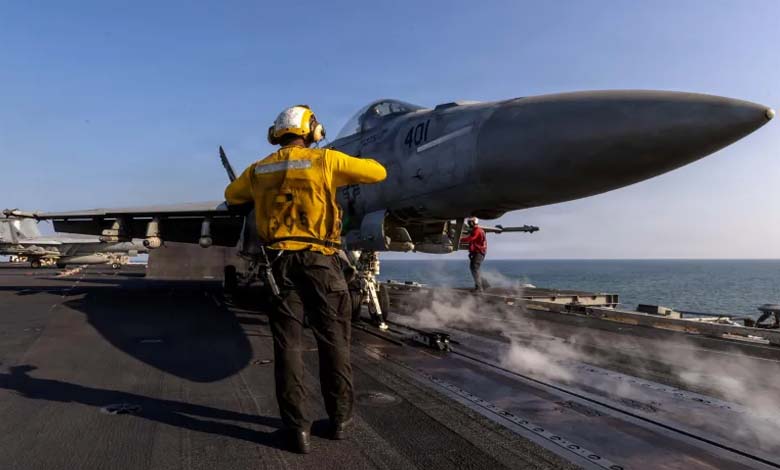
When a pilot falls behind enemy lines, he may find himself alone in hostile territory, and returning home safely becomes his only objective.
This is where SERE training comes in, an acronym for Survival, Evasion, Resistance, Escape, considered the only roadmap between life and captivity, by teaching a person how to hide from the enemy’s eyes, resist if captured, and then find a way to survive and return.
-
T-7A… A Revolutionary Fighter That Transforms U.S. Pilot Training
-
Before the Iranian pilot… 5 exceptional rescue operations in military history
Elite U.S. military pilots and special operations forces undergo intensive training in anticipation of the possibility of falling into an ambush behind enemy lines, as happened with a member of an F-15 aircraft crew who was rescued in Iran.
David A. Deptula, a retired U.S. Air Force lieutenant general and current dean of the Mitchell Institute for Aerospace Studies in Arlington, Virginia, said: “The military places great importance on Survival, Evasion, Resistance, and Escape (SERE) training for pilots, because they may find themselves alone, behind enemy lines, or in hostile areas without significant warning.”
-
Trump ends the crisis of his pilots, asserting superiority over Iranian airspace
-
Errors or an exhausted system? The puzzle behind the rise in U.S. military aircraft accidents
He added in an email to The Wall Street Journal: “This training aims to prepare them to survive, avoid capture as much as possible, resist exploitation if captured, and improve their chances of survival.”
On Sunday, U.S. President Donald Trump announced that a U.S. Air Force crew member rescued over the weekend was seriously injured.
The pilot evaded capture for 36 hours in a remote mountainous area in Iran while Iranian forces were attempting to track him down.
-
B-52… an old bird indispensable to the U.S. military
-
Washington denies transfer of Iranian enriched uranium before U.S. strike
How are elite U.S. forces trained to survive behind enemy lines?
SERE training familiarizes pilots with multiple hostile environments, from deserts to the Arctic, according to a video released by the U.S. Air Force.
According to The Wall Street Journal, this training — in which the U.S. Air Force particularly excels — is based on four fundamental skills:
First: Survival
When an aircraft is shot down, the pilot usually lands by parachute after ejecting, a process filled with physical and psychological risks under fast and confusing conditions.
-
B-2 Over Iran: Pilot Comfort Was Part of the Strike Plan
-
A Mysterious Mission… A U.S. Spy Plane Over Cartel Territory
At this stage, the top priority is knowing how to preserve life in harsh environments.
Here, priorities come into play: assessing injuries, finding temporary shelter, obtaining water, and starting a fire.
In this training, the pilot learns how to drink from rivers, make a fire with two sticks, and eat insects and cactus if necessary. The main goal is to reduce stress and caloric expenditure, because physical survival is the first step toward returning.
The word “SURVIVAL” is used as an educational acronym, with each letter referring to a set of actions. The letter “S” refers to assessing the situation, including treating injuries and determining how to hide; “V” to valuing life even if it requires enduring hardship; and “L” to learning the basics of survival.
-
Coinciding with Netanyahu’s visit, the Pentagon announces an F-15 deal for Israel
-
The most expensive bomber in history… the B-2 Spirit and the price of American supremacy
Second: Evasion of capture
Jason Smith, a retired Army special operations first sergeant and lead instructor at the SERE Training School, a commercial company in North Carolina, said: “Survival is closely linked to evasion of capture.”
He added: “The idea is not to get captured.”
Every mission plan includes pre-agreed emergency rescue plans between the pilot and the main base, allowing the pilot to avoid the enemy while executing an extraction strategy.
Smith explained that “ideally, he can put himself in the best possible position to be rescued.”
-
A more advanced variant: the world’s most expensive bomber returns to the production line
-
America’s Crucial Gamble: One Aircraft That Could Decide the Fate of the F-35
One of the most notable examples is Captain Scott F. O’Grady in 1995, when his F-16C fighter jet was shot down during the Bosnian War, and he spent six days in hostile territory.
O’Grady ate ants, moved at night, and managed to send radio signals to his base.
Third: Resistance
If the pilot is discovered by the enemy, the phase of “resistance” begins. Although the details of this part are not fully public, available information indicates that pilots are trained in:
-
Fingers on the Trigger in the Caribbean: Maduro Confronts Trump’s Destroyers
-
The Night of Iran’s Attack on Israel: “Behind the Skies”
Defensive combat techniques.
The use of light weapons.
Adherence to rules of engagement in accordance with the Geneva Conventions.
This concept is also based on past experiences, especially during the Korean War, where codes of conduct were established stating that a prisoner must resist by all available means and provide the enemy only with limited information (name, rank, date of birth, service number).
-
Underestimating Iran’s air defense capabilities is placing Trump in a difficult position
-
Gulf states’ defenses have successfully repelled Iranian attacks
Fourth: Escape
The final stage is actual escape.
Here, the pilot is taught how to use everything available — smoke grenades, radios, and visual signals — to indicate his position to rescue aircraft without exposing himself to the enemy.
In the recent incident in Iran, the seriously injured pilot managed to evade for 36 hours in a remote mountainous area while local forces were pursuing him, until rescue arrived, according to The Wall Street Journal.
-
One of the Pentagon’s most reliable weapons: the Tomahawk as the spearhead against Iran
-
Aircraft from the Vietnam War era: Iran’s air force as a strategic weakness