Al-Alimi’s decisions unsettle the Yemeni scene… and the Muslim Brotherhood reorganizes its ranks
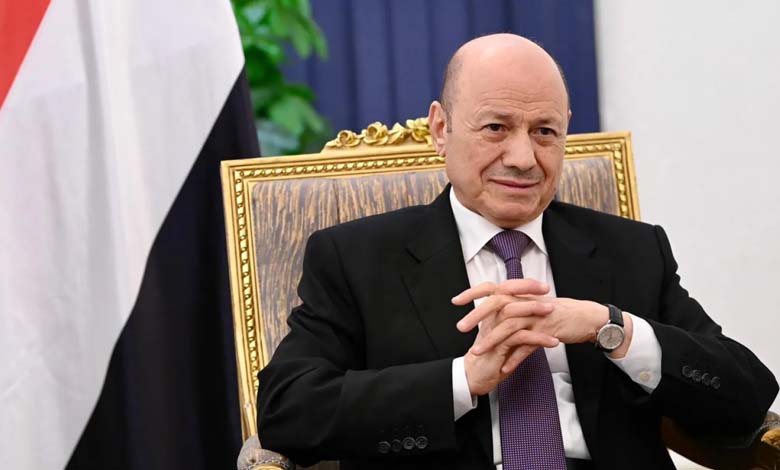
The decisions made by the Chairman of the Presidential Leadership Council, Rashad Al-Alimi — and the divisions and tensions they caused — have opened the door wide to the return of the influence of the Muslim Brotherhood and their allies from Al-Qaeda and ISIS in Yemen.
The Brotherhood and their allies from terrorist organizations had lost their last strongholds in southern Yemen after their military forces collapsed in Wadi Hadramout, before Al-Alimi effectively revived them through his latest decisions.
This is what the Administrative Board of the National Assembly of the Southern Transitional Council warned about, saying that Al-Alimi’s conduct may allow the Brotherhood to gain advantages, accusing them of being behind his unilateral decisions and of sowing discord in Yemen.
The board said: “We hold the Chairman of the Presidential Leadership Council, Rashad Al-Alimi, and those who stand behind him and provide him with political cover — foremost among them the Brotherhood’s Al-Islah Party, known for its historic hostility to the South and the aspirations of its people — fully and directly responsible for what happened at the port of Mukalla and for any future security, economic, or humanitarian repercussions. We regard what happened as a dangerous gamble with the fate of the country in service of narrow partisan agendas.”
Breathing life back into the Brotherhood
Yemeni experts believe that “the entirety of Al-Alimi’s decisions — including dissolving the partnership, declaring a state of emergency, and calling for the withdrawal of Emirati forces from Yemen — worked in favor of the Muslim Brotherhood,” helping to revive an exhausted organization.
Yemeni political analyst Ammar Ali Ahmad expressed regret over “Al-Alimi’s decisions, which acted like breathing new life into the Brotherhood in Yemen, after three years of their absence and declining influence following the formation of the Presidential Leadership Council in April 2022.”
He explained that the Brotherhood’s page had effectively been turned with the formation of the council, built on the ruins of the rule of former President Abdrabbuh Mansour Hadi and his vice president Ali Mohsen Al-Ahmar — a “golden period” during which the Brotherhood controlled the levers of legitimacy.
Ahmad stressed that “Al-Alimi’s decisions and unilateral steps will revive the Brotherhood again, because by insisting on monopolizing decision-making, he has taken legitimacy back from collective, participatory governance to exclusive rule.”
He noted that “the influence and dominance of the Brotherhood will return to tamper with decision-making, since Al-Alimi — through his unilateral decisions — has sidelined the real actors on the ground in the liberated areas, leaving gaps the Brotherhood will seek to fill.”
He warned that “Al-Alimi’s insistence on confronting the Southern Transitional Council militarily in Hadramout makes the Brotherhood the only option to manage this confrontation, meaning a renewed war economy in which Yemenis pay a heavy price, prolonging their conflict with the Houthis for more than ten years.”
Tilting the compass toward the Brotherhood
For his part, academic researcher and political analyst Dr. Yahya Shaif said that “all of Al-Alimi’s decisions — the breakup of the partnership, the state of emergency, and the call to withdraw Emirati forces — were steps that worked in favor of the Brotherhood.”
He explained that the Chairman of the Presidential Council “revealed his true face, which he had long concealed,” distancing himself from the fight against terrorism and diverting the compass away from the main battle against the Houthi militias.
He added that “Al-Alimi’s conduct does not merely threaten the return of the Brotherhood’s influence, but also undermines the achievements of the Arab coalition and the lands liberated — particularly by southern forces.”
Shaif pointed to “another serious matter: the mutual accommodation between the Brotherhood and the Houthis, who sought to control liberated areas under the cover of legitimacy while keeping the North under the domination of Houthi militias.”
According to Shaif, “the liberated areas remained supply and smuggling routes for the Houthis, who threatened global interests.”
He added: “We thought securing Hadramout and Al-Mahra would significantly help the legitimacy, but everyone was surprised by Al-Alimi’s unilateral decisions — backed by the Brotherhood — aimed at dismantling the partnership in favor of their project and threatening the region.”
Likewise, the state of emergency announced by Al-Alimi benefited the Brotherhood, as did the departure of Emirati forces that had provided money, arms, and major sacrifices to liberate the territory.
Shaif affirmed that it is impossible to uproot the southern government forces and their leader, the Vice Chairman of the Presidential Council Aidarous Al-Zoubaidi, who “rests on armed legitimacy on the ground, popular legitimacy, and international legitimacy, as he is part of the internationally recognized authority.”
He added that “the massive demonstrations sent clear messages to Al-Alimi, the Brotherhood, their allies, and the world that handing this country over to terrorism is impossible — as demonstrated by the southern government forces.”
He concluded that “the Brotherhood acted as a state within a state, possessing influence, refineries, and wealth to finance destruction — which was recently cut off when the southern government forces seized their strongholds, before they began regrouping again following Al-Alimi’s decisions.”