Aoun accuses Israel of seeking escalation despite Lebanon’s compliance with its commitments
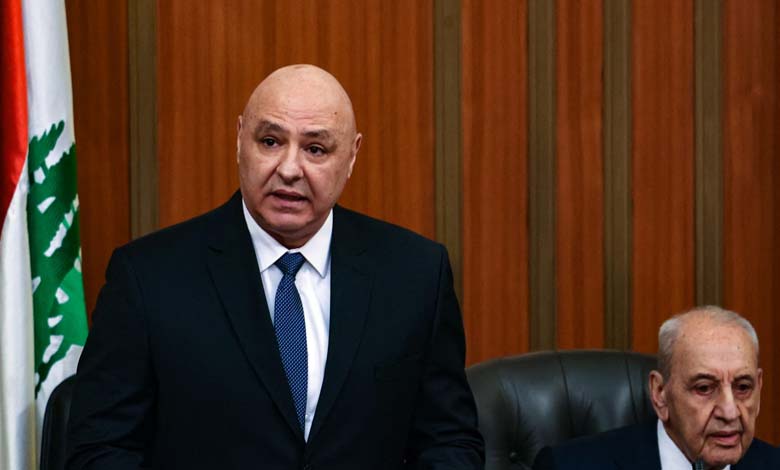
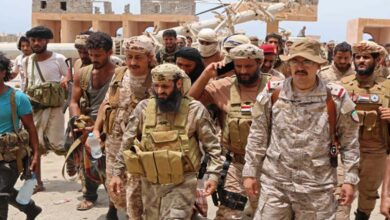
The Lebanese president said the army has carried out, with professionalism and precision, the measures adopted by the government to extend its authority over the area south of the Litani River.
Lebanese President Joseph Aoun said Tuesday that the army had implemented “with professionalism and precision” the measures adopted by the government to assert its authority over the area south of the Litani River. He considered that Israel’s ongoing attacks represent “a failure of efforts aimed at stopping escalation” in the country, as these events occur amid unprecedented Israeli escalation targeting Hezbollah and Hamas positions.
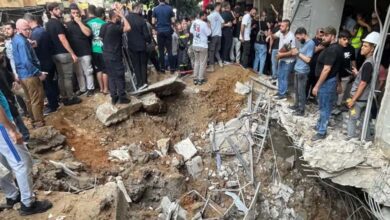
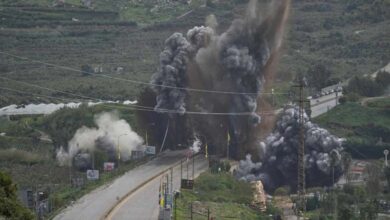
On Monday evening, Israeli aircraft launched a series of air raids on towns in southern and eastern Lebanon, following warnings issued by the Israeli army about infrastructure belonging to Hezbollah and Hamas. Early Tuesday, an Israeli strike using two missiles hit a three-storey building in the industrial area of Siniq–Al-Ghaziyeh in the Saida district, southern Lebanon, injuring one person.
In a statement condemning the latest Israeli attacks in the east and south of the country, Aoun said these assaults aim to “undermine all efforts being made locally, regionally, and internationally to halt the ongoing Israeli escalation.”
He stressed that this comes despite Lebanon’s cooperation with these efforts and with the measures “adopted by the government to extend its authority over the area south of the Litani, which the Lebanese army implemented with professionalism, commitment, and precision.”
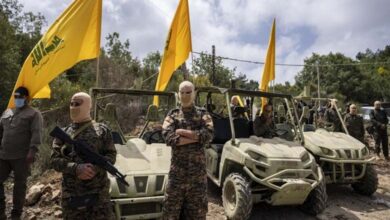
Israel, for its part, claims that the Iran-backed Shiite movement is seeking to rebuild its forces in order to launch new attacks, a charge Hezbollah denies.
On November 27, 2024, the Lebanese army announced that it was taking the necessary steps to complete its deployment in the south, as the ceasefire between Israel and Hezbollah came into effect, in accordance with the mandate assigned by the Lebanese government.
Lebanese Prime Minister Najib Mikati announced at the end of December that the first phase of the army’s plan to restrict weapons to the hands of the state south of the Litani — including Hezbollah’s arms — was nearing completion.
Mikati expressed the state’s readiness to begin the second phase, from north of the Litani up to the Awali River, calling for full support to enable the army to carry out its required tasks and complete the plan.
In this context, Aoun said the latest Israeli attacks “raise many questions,” especially as they come on the eve of the meeting of the “mechanism” committee scheduled for Wednesday.
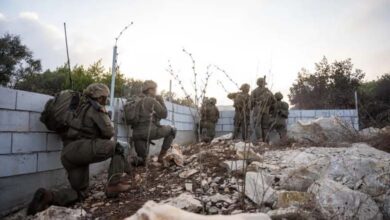
Hebrew media reported Tuesday that Israel does not intend to dismantle its five military positions in southern Lebanon, which it occupied during the latest war.
An Israeli source told the Walla news site: “There is no intention to dismantle the five Israeli military posts on Lebanese territory.” The security official also threatened to “strike Beirut’s southern suburbs if necessary,” saying: “We will not allow threats to accumulate in Lebanon.”
He also pointed to concerns within Israel that “Hezbollah is not only refusing to disarm, but is coordinating with the Lebanese army,” according to his claims.
He added: “The position of the Israeli army toward the Lebanese army remains unclear at this stage, should its cooperation with Hezbollah deepen and it cover up its activities. Reliable information about this has been provided to the Americans.”
The “mechanism” is a committee bringing together Lebanon, Israel, and the United Nations Interim Force in Lebanon (UNIFIL), under French and U.S. sponsorship, to monitor the implementation of the cessation of hostilities.
The committee is expected to discuss “the cessation of hostilities, practical steps to restore security and stability in the south, including the withdrawal of Israeli forces to the southern border, the release of Lebanese detainees, and the completion of the deployment of the Lebanese army in accordance with UN Security Council Resolution 1701.”
This resolution was adopted on August 11, 2006, calling for a complete end to military operations between Hezbollah and Israel.
Aoun also called on the international community to intervene “effectively to put an end to Israel’s continued attacks on Lebanon” and to enable the mechanism committee to carry out its tasks with the agreement of the parties concerned and international support.
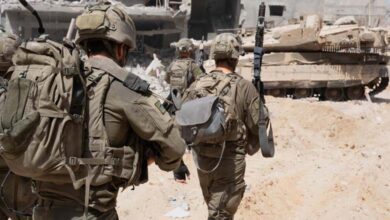
For some time, Israeli media have been reporting that the Israeli army has completed preparations for a plan to launch a “large-scale offensive” against Hezbollah positions, if the Lebanese government and army fail to disarm the group.
This comes as Israel challenges the ceasefire agreement by continuing to occupy five Lebanese hills in the south seized during the last war, in addition to other Lebanese areas it has occupied for decades.
The agreement ended an Israeli offensive against Lebanon that began in October 2023 and turned into a full-scale war in September 2024, leaving more than 4,000 dead and around 17,000 wounded.