At the gates of Burundi… M23 advances toward the third-largest city in South Kivu, eastern Congo
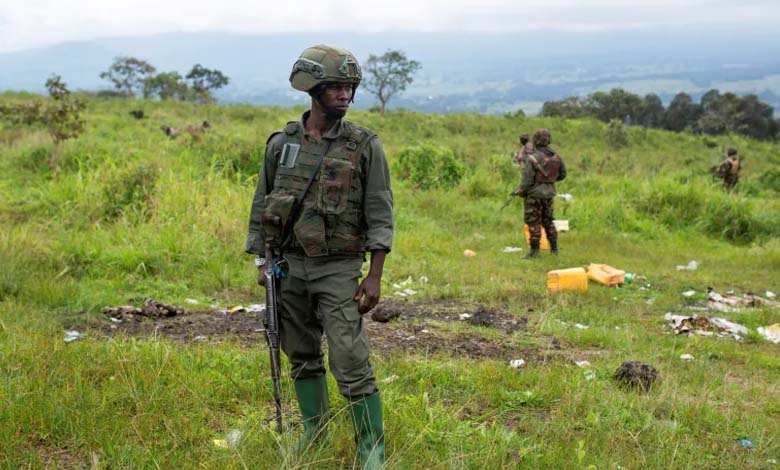
After Uvira, rebels from the M23 movement are advancing toward Baraka, the third-largest city in South Kivu in eastern Democratic Republic of the Congo, bringing them to the doorstep of Burundi.
In recent days, the rebels have seized control of the strategic city of Uvira, which had served as the temporary seat of the provincial government since the fall of Bukavu.
According to experts, the fall of Uvira grants the rebels vital access to Lake Tanganyika and the province bearing the same name to the south, renewing fears of a regional spillover of the conflict into neighboring Burundi.
Although the rebels previously stated that they did not intend to advance toward Bujumbura, the capital of Burundi, observers have expressed doubts about the group’s true intentions.
Thousands of civilians fled after being caught in crossfire between the M23 on one side and Congolese forces and their allies on the other.
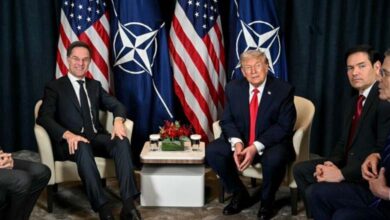
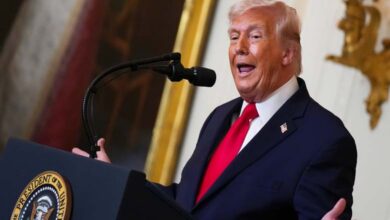
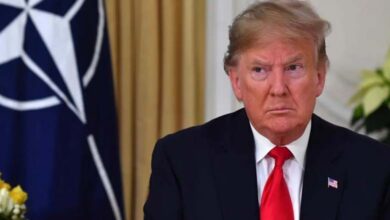
On 4 December, U.S. President Donald Trump, Rwandan President Paul Kagame, and Congolese President Félix Tshisekedi signed a peace agreement in Washington, which Trump described as a “miracle,” aimed at ending the conflict. However, new attacks had already begun even before the meeting took place.
The battle is not over
The situation in eastern Congo featured prominently on the agenda of the United Nations Security Council on Friday, one day after the rebels took control of Uvira.
In Kinshasa, authorities sought to clarify their position. Speaking before the diplomatic corps, Congolese Justice Minister Guillaume Ngefa stated that “the Armed Forces of the Democratic Republic of the Congo, with the support of allied forces, are reorganizing their ranks and deployments to defend the country’s territorial integrity.”
He added: “The battle to liberate South Kivu is not over.”
On the ground, however, tensions remain extremely high in this region, which extends as far as Baraka, located about 100 kilometers south of Uvira.
French radio broadcaster RFI reported, citing security sources, that gunfire attributed to the Congolese army was heard in the town of Baraka, although the precise circumstances of the incident remain unclear.
Reports also indicated clashes near Mboko between the Wazalendo self-defense militia and the rebels, who remain positioned near Uvira.
Amid the deteriorating security situation, Médecins Sans Frontières announced the suspension of its activities in the area. The organization had launched an emergency malaria response there last August, scheduled to continue until the end of next January.
According to the same source, medical teams were evacuated, but the organization warned of a worrying public health situation in the middle of the rainy season.
In a statement, Ton Berg, MSF’s program director in South Kivu, said: “We are approaching the peak of the malaria season, and we are deeply concerned that we are unable to provide the necessary support to the population.”
This renewed deterioration in security has once again forced residents of South Kivu to flee toward the neighboring Tanganyika province.
In Kalemie, a displaced person from Bukavu who has been living there for several months confirmed the arrival of a new wave of displaced people.
U.S. anger
On Friday, the United States sharply criticized Rwanda’s involvement in the conflict in eastern Congo, just days after the signing of an agreement in Washington between Kinshasa and Kigali.
During a Security Council meeting, U.S. Ambassador to the United Nations Mike Waltz said: “Instead of making progress toward peace, as we have seen in recent weeks under the leadership of President Donald Trump, Rwanda is dragging the region toward greater instability and war.”
After the Democratic Republic of the Congo and Rwanda signed a “peace agreement” under U.S. mediation, Waltz stated that his country was “deeply concerned and extremely disappointed” by the renewed violence, denouncing the “scale” of Rwanda’s involvement in developments in eastern Congo.
He added that “the Rwanda Defence Force has provided material, logistical, and training support, and has been fighting alongside M23 in the DRC with approximately 5,000 to 7,000 troops since the beginning of December,” without ruling out a possible increase during the ongoing offensive.
Waltz continued: “In recent months, Rwanda has deployed a significant number of surface-to-air missiles and other heavy and advanced weapons in North and South Kivu to assist M23.”
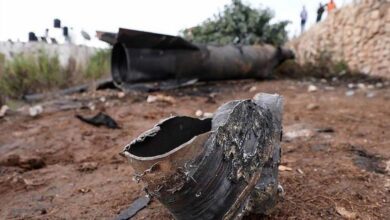
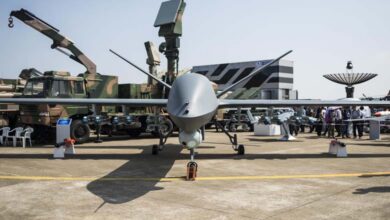
He also noted that the United States had “credible information indicating increased use of suicide drones and artillery by M23 and Rwanda, including strikes carried out on Burundian territory.”
After capturing Goma in January and Bukavu in February, M23 launched a new offensive earlier this month in South Kivu province, along the border with Burundi.
On Wednesday in particular, the group seized the city of Uvira, home to several hundred thousand residents, enabling it to control the land borders between the DRC and Burundi and depriving Kinshasa of military support previously provided by Bujumbura.
In the same context, UN Under-Secretary-General for Peace Operations Jean-Pierre Lacroix warned that this new offensive had “revived the specter of a regional explosion with unpredictable consequences,” expressing serious concern over a further expansion of the conflict.