Damascus links coastal unrest to plans aimed at dismantling the state
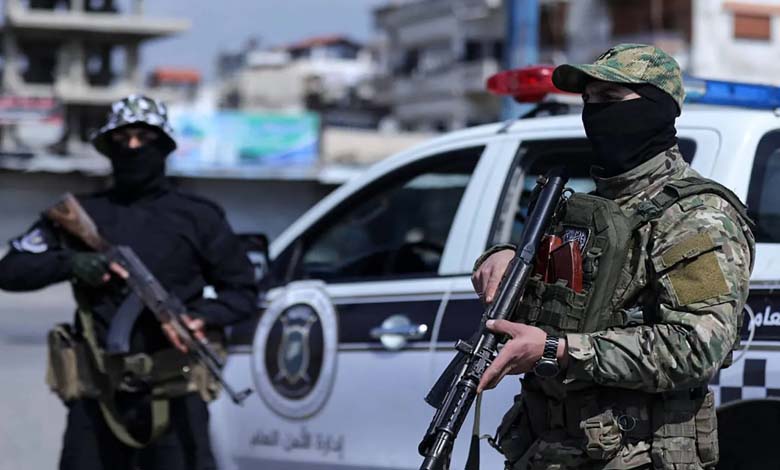
Syria’s Interior Ministry has accused remnants of the former regime of “stirring up mobs to politically blackmail the state and try to extract political gains.”
Authorities fear the growing calls for secession by several sectarian and ethnic groups in the country, which are taking advantage of the state’s weakness and internal divisions — and of external support — to justify or pursue separatist demands, while Damascus witnessed a massive explosion whose perpetrators remain unknown.
-
Israel secretly armed al-Hajri’s forces to sow chaos in Syria
-
A message on a shell from a U.S. soldier to ISIS in Syria: what did he write?
Interior Ministry spokesperson Nour al-Din al-Baba said Sunday that protests in several provinces were the result of separatist calls.
After the Druze in Sweida and some Kurdish forces calling for independence or a federal system, Alawites have now joined these demands, which threaten the Syrian state’s existence and territorial unity.
On Sunday, the provinces of Latakia and Tartous (west), as well as Hama and Homs (center), saw demonstrations calling for “federalism and the right to self-determination,” in response to an appeal by Ghazal Ghazal, head of the Supreme Alawite Council in Syria and abroad, based in Latakia.
-
The United States avenges the killing of its soldiers in Syria with Hawk Eye: airstrikes against ISIS
-
It will continue for weeks: What weapons were used in Hawk Eye against ISIS in Syria?
During the protests — under tight security measures — chants demanding federalism and slogans against the Damascus government were heard. In Latakia, three people were killed and 60 injured in attacks during the demonstrations.
al-Baba said that “internal security forces act with great discipline and integrity,” adding that the use of live fire was directed “at remnants of the defunct regime who target security forces and civilians,” stressing that the protests stem from “separatist calls.”
He said that scenes of brutal attacks by remnants of the former regime on peaceful demonstrators amounted to “a victory for the Syrian revolution,” noting that “the former regime deprived the coast of services.”
-
Syrians and Palestinians barred from entering the United States alongside nationals of six other countries
-
Understandings between Netanyahu and Barak on regulating Israeli movements in Syria
The ministry spokesman added that “mobilizing mobs to exert political pressure on the state and to extract negotiating gains will not work.”
Earlier Sunday, the Defense Ministry announced that army units had entered the centers of Latakia and Tartous “after escalating attacks by outlawed groups targeting residents and security forces.”
Speaking about the army’s mission on the Syrian coast, al-Baba said it is to maintain security and restore stability, in full coordination with internal security forces.
Commenting on the mosque bombing in Homs, he said it “targeted several communities, not just one.”
-
The ISIS flag, from Syria to Australia: cross-border terrorism
-
Syria struggles to achieve stability on the first anniversary of al-Assad’s fall
He stressed that “certain figures are steering events to harm the Syrian people in the coastal region,” without naming them, adding: “Bashar al-Assad has fallen, the sectarian rule has fallen, and time will not go backward.”
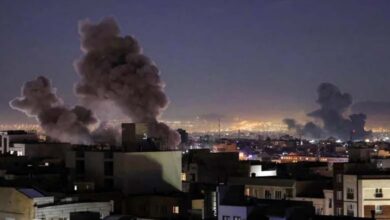
Highlighting the scale of the security challenges facing the government, it reported that an “unknown” explosion was heard near the Mazzeh district in Damascus.
The channel said: “An unknown explosion was heard in the vicinity of Mazzeh in Damascus,” without further details. The causes and consequences were not immediately known, and authorities issued no official comment.
-
Syria foils mine smuggling attempt, sending a strict message to Hezbollah
-
Syrian Ministry of Foreign Affairs: The Israeli attack on Beit Jinn is a war crime
For his part, Tartous governor Ahmad al-Shami said Sunday that what the province witnessed is part of attempts by remnants of the former regime to exploit any event to sow chaos and incite unrest in the service of foreign agendas.
In remarks to the state channel, he explained that “some external actors have, since the fall of the former regime, been spreading rumors and incitement, attempting to portray the coast as engulfed in disorder and lawlessness through calls for protests and sit-ins.”
-
Clashes between the Syrian Army and the SDF disrupt the reconciliation and integration process
-
Israel and Syria Negotiations: Deadlock and Conflicting Conditions
He added that “the so-called Ghazal Ghazal” exploited the mosque bombing in Homs to call for demonstrations serving foreign agendas that seek to destabilize the region, at a time when it faces the threat of ISIS and its movements.
He noted that “peaceful protest and freedom of expression are guaranteed rights for all components of Syrian society, but exploiting them to fire live bullets, cause chaos, or throw grenades threatens security and stability.”
-
The Foreigners Brigade Returns to the Spotlight in Syria: What Is Happening in Idlib?
-
Israel continues its incursions in Syria despite the prospect of a security deal
Ghazal, known for his close ties to the ousted Baath regime, issued a statement after the terrorist attack on a mosque in a predominantly Alawite neighborhood of Homs last Friday, which left eight people dead.
He said what happened represented “an example of what the Jews suffered at the hands of the Nazis,” calling on his supporters to demonstrate for political federalism and international protection.
-
Syria after al-Assad: Will the new army turn into another version of “ISIS”?
-
Hezbollah Cell in Syria: Details of the Terrorist Plot and Heavy Weapons Seizure
The new Syrian government is working to restore security and pursue remnants of the former regime who are stirring unrest, especially along the coast, which had been a stronghold of senior Assad-era officers.
On December 8, 2024, Syrian revolutionaries managed to enter Damascus and announced the overthrow of Bashar al-Assad’s regime (2000–2024), which he had inherited from his father Hafez (1970–2000).
-
Syria Urges the UN Security Council to Take a Firm Stance Against Israeli Airstrikes
-
ISIS Booby-Traps Al-Hol Camp in Eastern Syria as Terrorist Operations Escalate Amid International Security Efforts
-
Details of Israel’s first airborne landing of its kind in Syria
-
Key Provisions of the Expected Security Settlement Agreement Between Syria and Israel