Domination through intimidation: the Houthis impose their ideology by force of arms
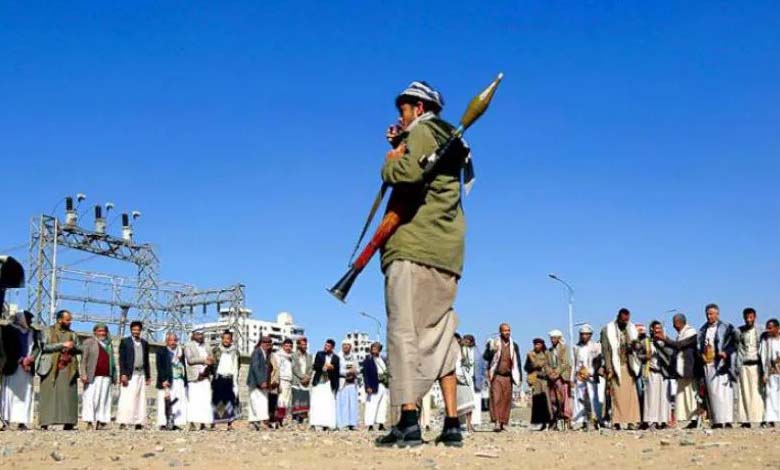
The Houthi war in northern Yemen has gone beyond the boundaries of military confrontation to include attempts to influence society through the language of threats and weapons.
This is what is currently unfolding in Sanaa, Amran, Dhamar, and Al-Mahwit, where the Houthis seek to pressure and threaten certain tribal leaders in order to influence the social fabric that has maintained communal balance for decades.
-
A human rights report exposes the secret collusion between Yemen’s Brotherhood and the Houthis against the South
-
The Houthis escalate by detaining more UN staff
The sources, who requested anonymity for fear of security reprisals, said the group has summoned a number of tribal leaders from Sanaa, Amran, Dhamar, and Al-Mahwit to meet militia leader Abdelmalek al-Houthi, followed by participation in collective programs organized in the group’s stronghold of Saada.
These programs include meetings with Houthi leaders, visits to sites linked to the movement’s history, followed by what the militias describe as “cultural courses” lasting several weeks.
The sources added that Houthi militia leaders coordinate with the tribal figures to transport them to Saada and ensure their attendance at these sessions, noting that the primary objective is to instill specific ideological concepts among participants.
-
Houthis recalibrate their military compass toward southern Yemen
-
South Yemen Unifies Its Ranks Against the Houthis: Securing the Rear Before Moving Toward Sanaa
Coercion and forced practices
A Yemeni tribal leader said that “the Houthis abduct anyone who refuses to take part in the sectarian courses,” releasing them only after they “agree to participate in these activities.”
Such practices are not limited to tribal leaders, but have also affected merchants, retired officers, farmers, and other segments of society, who are compelled to take part in these ideological sessions.
Among the cases that drew public attention is that of Sheikh Saif Mohammed Yahya Mohsen al-Ghouli, the sheikh of Ghoulat Ajeeb in Amran, who was summoned by the Houthi militias to Saada and then forcibly subjected to a sectarian course.
-
Houthis raid UN offices in Sanaa and detain another staff member
-
Houthis Activate Emergency Plan as Fear Undermines Centralized Military Command
The al-Ghouli incident triggered strong tribal reactions in Amran, as these courses are viewed as targeting the dismantling of what remains of the tribal structure and tearing apart the social fabric by “dividing citizens into categories and classes.”
Local leaders warn that these measures could lead to attempts to impose a specific ideological identity at the expense of local traditions and customs, potentially creating divisions within communities and weakening traditional social frameworks.
-
Southern Yemen Moves Beyond the Conventional Framework: A New Diplomacy Confounds the Muslim Brotherhood and the Houthis
-
Houthis redeploy military communication networks in Hodeidah