Drones change the rules of the game: the secret base in Sharq al-Oweinat and the Egyptian-Turkish role in Sudan
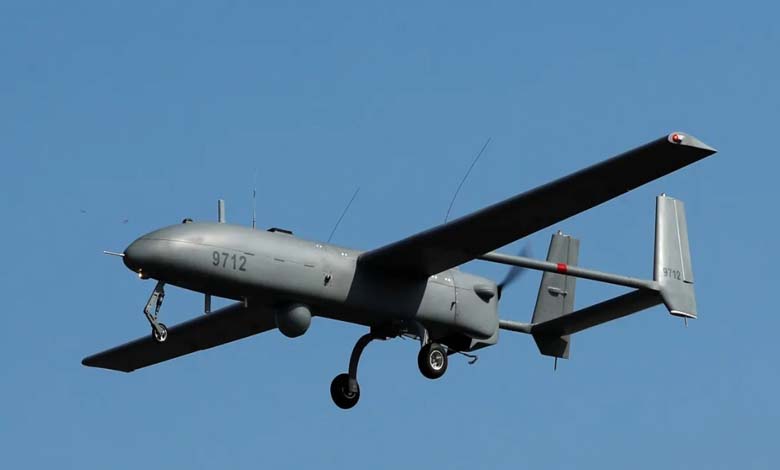
In a case that has drawn the attention of both military and diplomatic circles, an investigation published by the New York Times revealed the existence of a secret Egyptian airbase in the Sharq al-Oweinat region, used to operate Turkish-made drones on behalf of the Sudanese army. This disclosure has contributed to reshaping the map of regional influence in Northeast Africa. The report, which combines military analysis, open-source data, and investigative journalism, sheds light on previously undisclosed aspects of how the war in Sudan is being managed from outside the country’s borders, as well as on the dual role played by Cairo and Ankara.
-
Base in the shadows: how international investigations revealed an undisclosed Egyptian-Turkish role in the Sudanese war
-
Remote-controlled warfare: Turkish drones launched from the Egyptian desert alter the balance of the Sudanese conflict
According to the available information, the base is located in a remote desert area characterized by extreme isolation, providing natural cover that reduces the likelihood of its activities being detected. Satellite imagery examined as part of the investigation revealed modified runways and modern logistical facilities consistent with the operational requirements of heavy, long-range drones. These facilities had not been used publicly, allowing them to operate under a veil of complete secrecy and to sustain operations without attracting the attention of observers for an extended period.
Turkish Akinci drones form the core of these operations. These aircraft possess advanced capabilities that enable them to fly over long distances, carry precision-guided munitions, and conduct reconnaissance and strike missions simultaneously. The investigation noted that the nature of the airstrikes carried out inside Sudan is marked by a high degree of precision and a range exceeding the traditional capabilities of Sudanese forces, reinforcing the hypothesis that these operations are partly directed from outside Sudan, specifically from Egyptian territory, with direct technical support from Turkey.
-
Sudan Between the Hammer of Its Crises and the Anvil of Turkish Influence
-
Turkish Intervention in Sudan: Foreign Influence Threatening Internal and Regional Stability
The Turkish role, according to the investigation, is not limited to supplying equipment but extends to technical and operational support. Operating sophisticated drones requires advanced expertise in piloting and maintenance, as well as remote control and communication systems, making the presence of Turkish experts, or at least a Turkish remote support framework, a logical assumption. Such support places Ankara in an influential position within the conflict and reflects a long-term strategy aimed at expanding influence through modern technological tools rather than through the deployment of conventional forces.
For its part, Cairo, according to analysts, views these operations as a means of strengthening its influence in Sudan and safeguarding its security interests, particularly in the southern border regions and the Nile Basin. Conducting operations from Egyptian territory allows Egyptian military institutions to maintain control over aerial actions while preserving a degree of political deniability should the activities be exposed. This balance between secrecy and effectiveness illustrates Egypt’s ability to play a sensitive regional role without openly declaring it.
-
Turkish Intervention in Sudan: A Short Film Reveals the Secrets of Influence and Expansion Patterns
-
When Weapons Are Tested Outside Laboratories: Turkish Drones in Sudan and the Unveiling of an Overlooked Truth
The military implications of these operations are evident. With this support, the Sudanese army gains enhanced capacity to conduct long-range strikes, granting it a tactical advantage over its opponents and limiting the ability of other forces to influence developments on the ground. At the same time, this reliance reflects a degree of dependence on external partners, raising questions about the autonomy of Sudanese military decision-making and its ability to manage the conflict independently.
From a legal perspective, this case raises complex issues. Carrying out military strikes inside one state from the territory of another may be considered a form of intervention in the conflict, even if framed as support for a local party. Such actions may entail legal consequences, particularly if civilian targets are hit or if international humanitarian law is violated. This places Cairo and Ankara in a gray zone of legal responsibility, while investigative journalism relies on circumstantial evidence to uncover the contours of these activities.
-
Crash of Drones, Crash of Reputation: Turkish UAVs in Sudanese Skies
-
Turkish drone strategy tested in Sudan: the failure of Bayraktar and Yiha reveals the limits of Ankara’s military influence
International reactions have so far been cautious. Major powers are monitoring the situation without adopting firm official positions, likely due to the complexity of regional relationships and the entanglement of competing interests. The official silence of Egypt and Turkey does not necessarily imply acceptance, but rather reflects a cautious crisis-management strategy, pending further developments or the emergence of additional evidence.
Political analysis suggests that this case illustrates how modern conflicts are no longer confined to traditional battlefields, but are increasingly managed from distant control rooms, with technology serving as an instrument of influence and strategic pressure. Sudan is no longer merely the scene of a domestic conflict, but a model of how regional interests intersect through non-traditional means, where battles are conducted quietly, beyond conventional mechanisms of oversight and accountability.
-
Turkish drones in Sudan: when weapons fail and intentions are exposed
-
Turkish Foreign Minister Angers the Muslim Brotherhood in Sudan… Details
Other strategic dimensions include the impact of these operations on regional stability. Conducting airstrikes from one state into another could encourage regional actors to adopt similar approaches, increasing the risk of regional escalation and further complicating political settlement efforts in Sudan. This dynamic highlights the fragility of the regional security environment and underscores the need to consider more effective international frameworks to regulate the use of drones in armed conflicts.
Ultimately, this case provides a clear illustration of the intersection of security, politics, and technology in the Middle East and North Africa. The secret base in Sharq al-Oweinat and the Turkish drones are not merely military tools, but instruments of influence and political strategy. Their exposure through investigative reporting confirms that contemporary wars are no longer fought solely with soldiers and conventional weapons, but also through remote control capabilities, undeclared regional partnerships, and technologies that fundamentally alter the rules of the game.
-
Turkish Bayraktar Drones: Deepening the Conflict and Worsening the Wounds in Sudan
-
Turkish Presence in Sudan: Military Support Increases Civilian Suffering and Destroys Infrastructure
-
Drones and ambitions: how Egypt and Turkey seek to control Sudan through secret bases