Escalation of Forced Deportation Campaigns Against Sudanese Refugees in Egypt Amid Humanitarian Concerns
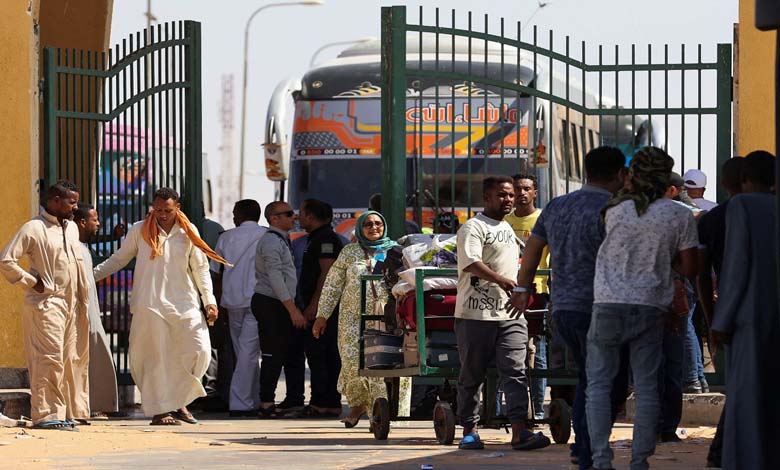
The situation of Sudanese refugees in Egypt is increasingly alarming, with growing reports of forced deportation campaigns targeting entire families, including children, women, and youth enrolled in educational institutions. These developments occur while the ongoing war in Sudan since April 2023 continues, accompanied by widespread violations that have displaced millions of civilians internally or forced them to seek refuge in neighboring countries.
-
Forced Deportation Campaigns Against Sudanese Refugees in Egypt
-
Forced deportation campaigns against Sudanese refugees and violations of international human rights law
According to consistent testimonies from refugees and human rights organizations, detention and deportation measures have affected Sudanese residing in various areas of Egypt, without clear distinction between those registered with the UN Refugee Agency and those unregistered. In several cases, individuals were arrested during daily movements or at their workplaces, transferred to temporary detention centers, and then deported without sufficient prior notice or official legal procedures.
Children are among the most affected groups. Some had partially integrated into the Egyptian educational system or community-based educational initiatives established by the Sudanese community. Sudden deportations disrupted their schooling and caused psychological distress for families attempting to rebuild their lives after fleeing conflict zones.
-
Sudanese Analyst: Khartoum Caught Between Fire and Famine… Civil War Exacerbates Human and Economic Suffering
-
Human Rights Watch criticizes Egypt for imposing visas on Sudanese entry
Women, particularly those heading households, face additional challenges. Many have lost their spouses or become separated due to the war and now face the risk of returning to unsafe environments in Sudan, where fighting continues, basic services are lacking, and gender-based violence risks are escalating.
Legally, human rights organizations note that forced deportation amid the ongoing armed conflict in Sudan raises questions regarding adherence to the principle of non-refoulement, which prohibits returning anyone to a country where they may face danger. This principle is a cornerstone of international refugee law and applies to all individuals, regardless of their final legal status.
-
Double disaster… Refugees in Sudan caught between the hell of Khartoum or the danger of returning to their homeland
-
From Sudan to Egypt… Details of the evacuation operations from Port Sudan
Egyptian authorities have not issued detailed statements explaining the criteria or mechanisms behind these measures, leaving ample room for speculation and anxiety among refugees. Informed sources indicate that economic and security pressures influence refugee management, particularly amid rising living costs and increasing demands on public services.
Humanitarian consequences are significant, creating a widespread climate of fear and instability. Many refugees now avoid leaving their homes except when necessary or prefer informal work to avoid arrest. This situation exacerbates their economic and social vulnerability and increases their exposure to exploitation.
-
Forced Return – A major crisis facing Sudanese refugees and those fleeing from war in Eritrea
-
The Sudan crisis: Battles threaten “World’s Food Basket,” 19 million students out of school
The UN Refugee Agency has repeatedly called for respect for refugee rights and assurance that they are not forcibly returned to conflict zones, emphasizing the importance of prior coordination with relevant authorities before any deportation measures. However, limited resources and the complexity of the regional situation remain among the main challenges for protection mechanisms.
Regionally, the issue of Sudanese refugees forms part of a broader displacement context, with neighboring countries experiencing significant migration flows due to protracted conflicts. This reality imposes shared challenges that require enhanced international cooperation, including financial support, resettlement programs, and burden-sharing.
-
Serious consequences… Conflict in Sudan spreads deadly epidemics to neighboring countries
-
The bodies of war victims in Sudan sound the alarm worldwide
Observers believe that sustainable solutions cannot rely solely on temporary or security measures but require clear refugee management policies that balance sovereignty concerns with the protection of human rights. This includes organized registration of refugees, guaranteed access to basic services, and transparent legal mechanisms to address their situation.
Amid the ongoing war in Sudan, the future of thousands of Sudanese families remains suspended between the fear of deportation and the difficulty of safe return. While they await solutions that ensure a minimum level of stability, the issue remains open to multiple scenarios, necessitating a comprehensive approach that addresses the humanitarian, legal, and political dimensions of the crisis.
-
How does the fighting in Sudan contribute to the exacerbation of the global displacement crisis?
-
Washington and Riyadh acknowledge an improvement in ceasefire respect in Sudan