Forced deportation campaigns against Sudanese refugees and violations of international human rights law
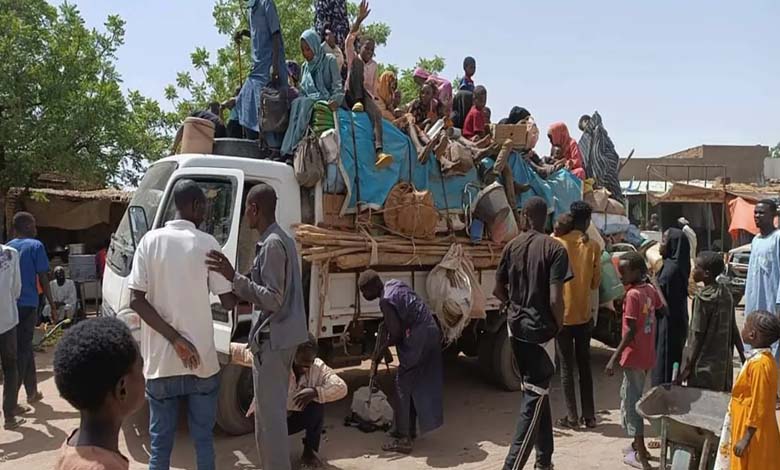
The forced deportation campaigns targeting Sudanese refugees from Egypt place the state under a serious test regarding its commitment to international human rights standards and refugee protection. As thousands of civilians have fled the ongoing war in Sudan since April 2023, deportation policies stand in direct contradiction to clear legal obligations, foremost among them the principle of non-refoulement, which constitutes the cornerstone of refugee protection under the 1951 Refugee Convention and its 1967 Protocol.
-
Rape and Ethnic Cleansing: Sudanese refugees in Chad describe atrocities in Darfur
-
One step away from famine… Dangers threaten Sudanese refugees everywhere
The principle of non-refoulement stipulates that no state may return an individual to a country where they face a real risk of persecution or serious harm, including war, torture, or extrajudicial killing. This protection applies to all categories of persons without exception: men, women, children, the elderly, and pregnant women. The forced return of Sudanese families, as documented by multiple testimonies, represents a direct violation of this principle, particularly given the continued armed conflict in Sudan and the absence of any guarantees ensuring the safety of those returned.
In addition, the Egyptian state is bound by a broad set of obligations derived from the Universal Declaration of Human Rights and the International Covenant on Civil and Political Rights, which guarantee, among other rights, the right to life, liberty, and protection from torture or cruel, inhuman, or degrading treatment. Deportation campaigns involving men, women, and children under opaque conditions and without clear legal procedures constitute a breach of these standards.
-
Forced Return – A major crisis facing Sudanese refugees and those fleeing from war in Eritrea
-
Malnutrition: An additional enemy for Sudanese refugee women in Chad’s camps
From a procedural standpoint, international law requires that any deportation measure be preceded by an individual assessment of each case, including verification of refugee status and the level of risk faced by the individual. Emergency exceptions may be considered in extremely limited security circumstances, but they do not permit collective expulsions or the adoption of blanket policies aimed at removing refugees. The numerous accounts of mass arrests and collective deportations of Sudanese families indicate the absence of such individual assessments, thereby increasing the state’s legal responsibility.
International law also affords special protection to children under the Convention on the Rights of the Child, which recognizes that refugee children are entitled to enhanced protection, including access to education and a safe environment for development. The sudden deportation of Sudanese children enrolled in schools, without alternative arrangements or adequate care, constitutes a double violation: an infringement of their fundamental rights and a denial of their right to education, with severe psychological and social consequences for them and their families.
-
Investigative Report: Is the Sudanese Army Leading a Silent Campaign of Ethnic Cleansing in the West?
-
Sudanese Women Between the Fires of War and Military Abuses… An Unbounded Human Tragedy
The host state also bears obligations toward international organizations, particularly the United Nations High Commissioner for Refugees, which provides temporary protection mechanisms, legal information, and support to displaced families. Disregarding these institutions, or preventing refugees from contacting them before or during deportation, violates established international legal practices and leaves refugees entirely deprived of assistance and legal representation.
From a human rights perspective, forced deportation campaigns may amount to crimes against humanity if it is demonstrated that the state or its agencies have carried out widespread operations against civilian populations, including forced displacement and psychological or physical harm, without legitimate justification. International criminal law imposes strict limits on the use of force against civilians and assigns direct responsibility to executive decision-makers at all levels of the state.
-
Sudanese Women under Fire: Sexual Violence as a Weapon of War and International Condemnation of Army Violations
-
Juba Opens Fire on the Sudanese Army and Its Islamist Militias… Details
Historically, host states have addressed refugee situations through three main frameworks: humanitarian reception, temporary protection, and voluntary return under clearly defined conditions. The current situation in Egypt falls outside these categories and places refugees in a context of coercive confrontation, signaling a drift toward repeated and systematic legal violations.
Available legal remedies include seeking international support, activating complaint mechanisms before the UNHCR, and producing field-based human rights reports documenting violations. However, the most critical response lies in internal institutional reform: establishing a clear legal framework for refugee management, defining emergency deportation procedures with mandatory individual assessments, and ensuring judicial mechanisms to review and oversee decisions.
-
Riots and Violence… The Flames of War Pursue Sudanese in Juba
-
Angry Protests in Nyala Against Sudanese Armed Forces’ Bombing of Civilians
In this regard, international law remains a key instrument for exerting pressure on the state to reconsider its policies. The international community, through human rights organizations and international courts, can apply sustained pressure to ensure refugee protection. This also includes providing financial and technical support to Egypt to alleviate the burden on infrastructure and public services, rather than resorting to forced deportation policies that violate international law.
In conclusion, the forced deportation of Sudanese families is not merely a humanitarian or security crisis but a profound international legal test. Egypt faces a critical opportunity to restore balance between its humanitarian obligations and its security concerns. Maintaining the current approach risks perpetuating violations and endangering thousands of lives, whereas adherence to international law offers genuine protection and ensures respect for the fundamental rights of every refugee, particularly children and women, who remain the most vulnerable to the direct consequences of such policies.
-
Sudanese Analyst: Khartoum Caught Between Fire and Famine… Civil War Exacerbates Human and Economic Suffering
-
Ongoing Suffering: More than 25 million Sudanese Face the Specter of Famine