From Gaza to Tehran: 2025 — a landmark year for Egyptian diplomacy
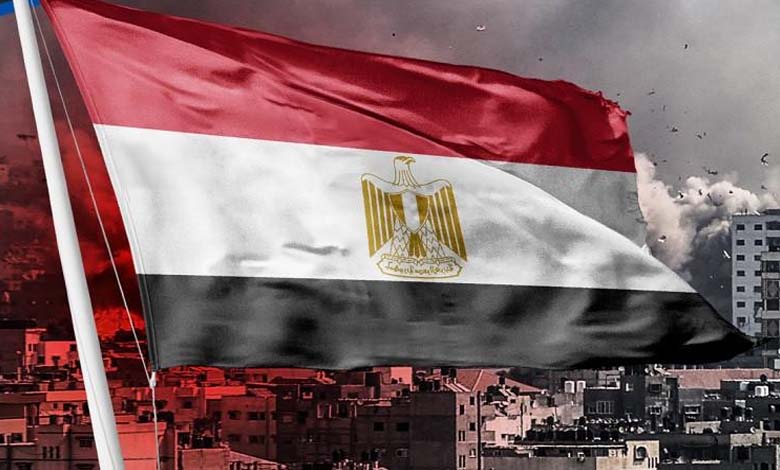
The year 2025 was far from ordinary for Egypt’s foreign policy. It represented a complex test of Cairo’s ability to manage overlapping regional crises and to act as a key diplomatic player during a period of intense instability.
From the war in Gaza and its humanitarian and political consequences, to the Iranian nuclear file and the risk of broader regional escalation — and including Egypt’s own domestic milestones, especially parliamentary elections — Egyptian diplomacy operated on multiple tracks, using various tools to prevent the region from sliding into open conflict and to preserve a measure of stability in a turbulent environment.
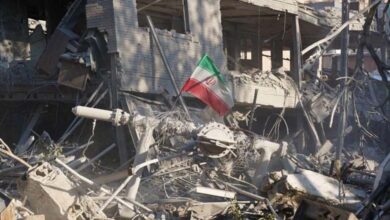
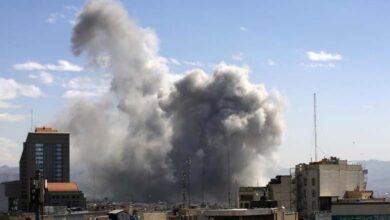
Throughout the year, Egypt emerged as an indispensable mediator — both in managing the Palestinian–Israeli conflict and in containing the fallout from the Israeli-American strike on Iran’s nuclear facilities — relying on balanced relations with major powers and open communication channels with all sides.
At the same time, Cairo sought to leverage its external engagement to reinforce domestic stability and ensure an orderly constitutional process through elections, amid economic and security challenges closely tied to regional dynamics.
Within this context — with the help of diplomats and experts — the outcomes of a busy year for Egyptian diplomacy, Egypt’s role in steering the region away from more
dangerous scenarios, and the limits of this role in light of global complexities and diverging positions among major powers.
Gaza: an active role for Egyptian diplomacy
Former Egyptian ambassador to the United Nations Motazz Ahmedin considers 2025 a success for Egyptian diplomacy, particularly in managing the Gaza conflict and containing developments related to the Iranian nuclear file after the Israeli-American strike.
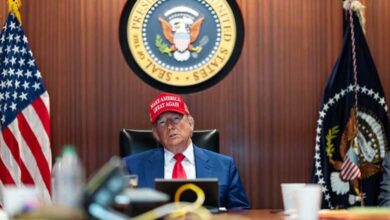
He explained that Egypt played a central role in shaping the Gaza ceasefire agreement announced on January 19, 2025 — on the eve of U.S. President Donald Trump taking office. Although the agreement built on a previous American initiative, Israel later backed away from it and resumed the war, which halted the reconstruction conference Egypt had planned to host.
He added that Egypt strongly opposed proposals to displace Gaza’s residents or turn the Strip into a tourism project, and instead developed a comprehensive reconstruction plan in coordination with UN agencies. The plan was later endorsed as an Arab-Islamic initiative at the Cairo Summit in March 2025, countering U.S.-Israeli proposals.
Ahmedin stressed that Cairo also managed to contain potential tensions with Washington through proactive diplomacy. Together with Qatar and Turkey, Egypt continued mediation efforts, even after a U.S. plan more favorable to Israel was accepted — a plan that placed greater obligations on the Palestinians and Arab mediators while easing pressure on Israel.
Despite its shortcomings, the plan represented the only viable opportunity to halt the bloodshed, he said — though key disputes remained, especially the lack of a full Israeli withdrawal from Gaza and the maintenance of a buffer zone, including the Philadelphi Corridor, which Egypt openly opposed.
One of the most significant milestones came during the Sharm El-Sheikh Peace Summit in October, co-chaired by Egyptian President Abdel Fattah El-Sisi and U.S. President Donald Trump, and attended by representatives from more than 20 countries. The summit marked a turning point in international efforts to end the war in Gaza and revive the peace process.
Its outcomes affirmed the consolidation of the ceasefire, the exchange of prisoners and hostages, the entry of humanitarian aid, and the launch of a reconstruction plan under Egyptian and international supervision — reflecting Egypt’s restored role as a central regional mediator.
The Iranian nuclear file: mediation under sanctions pressure
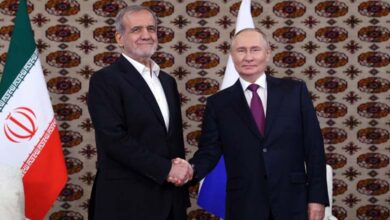
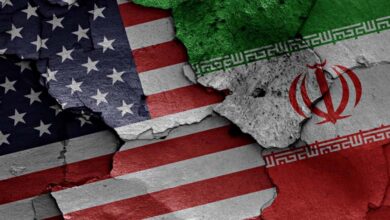
Regarding Iran’s nuclear program, Ahmedin explained that Egypt acted at Washington’s request to contain escalation, engaging in direct contacts with Tehran and the International Atomic Energy Agency. This led to an agreement to resume inspections with broad international backing, before progress stalled following renewed European sanctions, prompting Iran to retreat from its commitments.
He emphasized that Egyptian diplomacy fulfilled its responsibilities in both the Palestinian and Iranian tracks, leveraging strong ties with the United States and open channels with all parties. However, the failure of other actors — including Israel, the United States, and European countries — to uphold their commitments weakened the outcomes and left the situation exposed to renewed escalation.
Cairo hosted crucial negotiation rounds between Tehran and the IAEA, rebuilt bridges with Europe and the U.S., and became a key partner in preventing a new regional confrontation — with expectations that its mediation could expand to involve the EU troika and Washington toward a broader deal.
Experts underscored Egypt’s role in restoring trust between Iran and the IAEA and opening the door to wider understandings with major powers, positioning Cairo as a guarantor of de-escalation and regional stability.
A diplomacy of preventing escalation
Former ambassador to Israel, Atef Sayed Al-Ahl, believes 2025 was a successful year for Egyptian diplomacy, helping to spare the region a devastating war, at a time when the Arab-Israeli conflict has increasingly resembled a “managed conflict” shaped by multiple international actors and marked by a sense of Israeli superiority toward the Palestinians.
He argued that international initiatives and resolutions lacked real enforcement mechanisms, rendering them incapable of ending the conflict, while the American-Israeli approach promoted “regional peace” as an alternative to a comprehensive solution to the Palestinian issue.
Egypt’s diplomatic achievements, he said, were reflected in supporting the two-state solution, sponsoring Palestinian reconciliation, containing repeated Israeli escalations, and seeking to manage the nuclear issue — all rooted in Egypt’s historic responsibility toward the Palestinian question and regional stability.
Domestic arena: elections in a year of challenges
Election expert Abdel Nasser Kandil links Egypt’s diplomatic successes to its domestic management, noting that 2025 tested the state’s ability to reclaim its regional and international standing despite immense pressures.
He highlighted complex regional challenges — including situations on the Libyan and Sudanese borders and the war in Gaza — yet Egypt managed to assert its vision, particularly in Libya, where tensions subsided significantly.
Cairo also strengthened its role in Africa, reflected in deeper diplomatic ties, hosting an important African summit at the end of the year, and presenting a comprehensive vision for development across the continent.
Domestically, Kandil noted that the state succeeded in organizing parliamentary elections — despite unprecedented complications — while respecting constitutional deadlines, alongside signs of relative economic recovery, lower inflation, and a calmer political climate.
He concluded that the key challenge ahead will be the performance of the new parliament and its ability to use stronger oversight tools, restoring balance to the legislative branch and consolidating the path of political stability that Egypt sought to cement in 2025.