From the Atlantic to the Seine: France shifts its military course to affirm its operational readiness
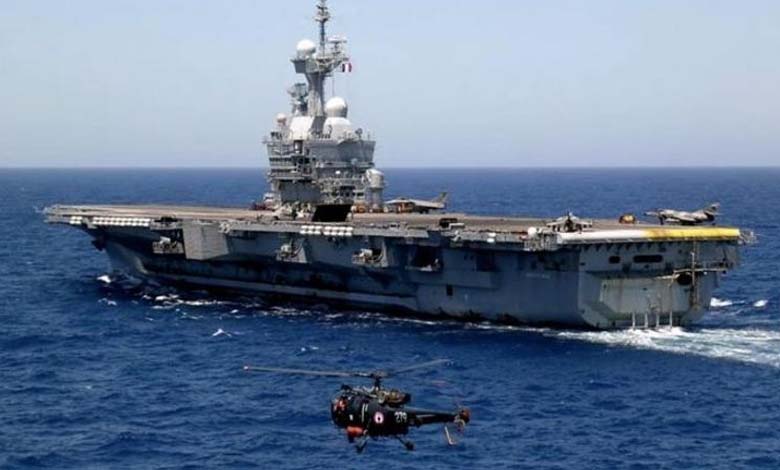
From the Atlantic Ocean to the Seine River, the sudden change in the route of the French aircraft carrier Charles de Gaulle reflects a flexible capacity to adapt to evolving operational conditions.
In a notable move highlighting the dynamism of French military planning, the deployment schedule of the aircraft carrier Charles de Gaulle underwent an unexpected adjustment, as the vessel continued sailing along the Seine instead of heading toward southern Brittany as originally planned.
-
France and Senegal: a balanced partnership beyond the colonial legacy
-
Lavrov Accuses France of Attempting to Overthrow Regimes in the Sahel
This development forms part of the second phase of the major military exercise “Orion 2026,” one of the largest joint drills organized by France to strengthen its combat readiness at both national and international levels, according to the French newspaper Ouest-France.
The paper reported that “as part of Exercise Orion 2026, the French carrier strike group, centered on the aircraft carrier Charles de Gaulle, is conducting patrols on the Seine and will continue its advance toward the North Sea in the coming days.”
The carrier had been expected to reach southern Brittany by the end of the week, but it was recently spotted navigating the Seine to carry out scheduled patrols within the ongoing maneuvers.
The French Navy has not officially disclosed the reasons behind the change in course.
-
Washington warns that political Islam infiltration could pose a potential risk to Europe’s nuclear weapons
-
Britain, the United States, Germany and France urge compliance with the truce in Syria
Readiness and flexibility
The Charles de Gaulle is operating within an integrated carrier strike group that includes the Italian frigate Andrea Doria and the multi-mission frigate Alsace.
The Maritime Prefecture for the Channel and the North Sea confirmed that the mission involves patrols in the Atlantic extending to the North Sea, sending a clear message about France’s readiness and its capacity for rapid deployment across multiple operational theaters.
The carrier strike group departed from the Toulon naval base on January 27, where it conducted the first phase of the exercise in the Mediterranean before transitioning to the second phase, which focuses on deploying joint forces within a broad military coalition.
-
France moves closer to banning the Muslim Brotherhood: what is new?
-
The Muslim Brotherhood in France: alarming figures bring the movement back to the heart of parliamentary and security debates
This phase features the participation of an integrated amphibious force comprising around 40 combat and reconnaissance aircraft, two military brigades, supported by cyber capabilities and strategic space assets, along with special forces units.
The operation is being carried out on mainland French territory as part of a comprehensive test of deterrence, defense, and coordination capabilities among the various branches of the armed forces.
The change in the Charles de Gaulle’s route is not merely a logistical adjustment; it reflects the nature of modern military operations, which rely on flexibility and rapid adaptation to evolving conditions, whether security-related or climatic.
-
Irregular migration: confusing figures in France raise serious questions
-
France warns of a terrorist surge and praises Morocco’s role in foiling attacks
A strategic shift
The “Orion 2026” maneuvers represent a qualitative shift in French military doctrine, emphasizing high-intensity warfare scenarios and multi-domain integration across maritime, air, land, cyber, and space domains.
According to the newspaper, this reflects a growing awareness in Paris that future wars will not be confined to conventional confrontations but will also directly involve cyberspace and outer space.
The presence of an Italian frigate within the group underscores the European and allied dimension of the exercise, highlighting strengthened defense cooperation among European Union member states, particularly in light of escalating security challenges in Eastern Europe and the North Atlantic.
-
Extremism knocks on France’s door amid political crisis
-
Muslim Brotherhood Infiltration Shakes France’s Left: Bleeding Inside Mélenchon’s Party
Moreover, the selection of the Seine as an alternative staging point underscores the strategic importance of this location near vital maritime routes, while enabling French forces to maintain a high level of operational readiness despite fluctuating weather conditions in the Atlantic.
Overall, these developments reveal a French military seeking to reposition itself as a European power capable of rapid intervention and effective action within multiple alliances, with a focus on comprehensive readiness and proactive deterrence.
-
New Protests in France: Public Anger Rises Against Lecornu
-
Suspension of Cooperation and Expulsion of Diplomats: A New Crisis Between France and Mali