Gaza buried under 68 million tons of rubble… and a shocking reconstruction timeline
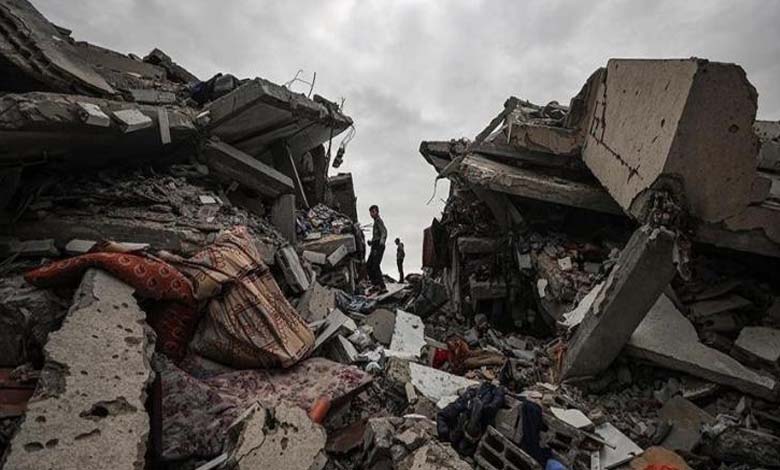
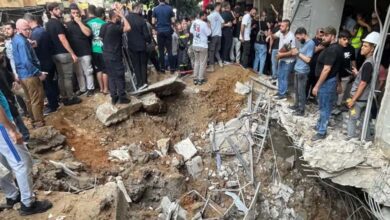
Walking through the Gaza Strip today means navigating between ruins, where collapsed buildings and shattered streets reveal the extent of the devastation inflicted on the territory.
Over the two years preceding the ceasefire reached last October, the war in Gaza turned much of the enclave into rubble, with most of its buildings either destroyed or damaged.
In this regard, the Wall Street Journal reported that clearing the rubble—an essential prerequisite for reconstruction—will be an immense task expected to take years and cost more than one billion dollars.
In its report titled “Gaza Is Buried Under 68 Million Tons of Rubble. A Look at the Grueling Task Ahead,” the newspaper notes that if this rubble were spread across Manhattan, each square foot would carry a weight of 215 pounds.
Thousands of Israeli airstrikes, combined with ground fighting and controlled demolitions, have destroyed more than 123,000 buildings in the Gaza Strip and caused additional damage to around 75,000 others—representing 81 percent of all structures—according to the latest United Nations satellite imagery assessment.
In addition, unexploded ordnance is mixed with the remains of thousands of victims whose bodies remain buried beneath what were once their homes.
Years of work
Jaco Cilliers, Director of Operations for the UN Development Programme in the Palestinian territories, says removing this massive volume of debris “will take years,” estimating that the process could last between five and seven years in the best-case scenario.
This timeline depends on several factors: international funding, Israeli approval for equipment entry, and the durability of the ceasefire.
Gaza currently has only nine excavators, 67 bulldozers, 75 trucks, and a single crusher, along with a few surviving machines from before the war.
To meet the minimum requirements of the clearance plan, the UNDP is requesting the entry of 120 additional trucks, 80 bulldozers, 20 excavators, and more crushers.
However, Israel classifies this equipment as “dual-use,” fearing it could be exploited for military purposes, as happened with the construction of Hamas’s tunnel network.
Construction companies in Gaza charge around 23 dollars to remove one ton of rubble, while the total reconstruction cost is estimated at roughly 70 billion dollars.
The tip of the iceberg
The UNDP began limited debris removal a year ago using the remaining equipment. So far, only 209,000 tons have been collected, a figure officials describe as “the tip of the iceberg.”
Even so, the constrained efforts have yielded noticeable results: 270 roads have been reopened, vendors have returned to set up their stalls, and travel time between Deir al-Balah and Gaza has dropped from 90 to 30 minutes.
Unexploded ordnance… an ongoing threat
Meanwhile, rising numbers of Gaza residents—especially children—are injured each week due to unexploded ordnance scattered throughout homes and streets.
Israeli estimates suggest that 1 to 2 percent of the munitions used may have failed to detonate, but experts believe the overall number reaches into the thousands.
The UN Mine Action Service has been unable to neutralize any of these explosives for two years due to the lack of specialized equipment, which is still awaiting Israeli approval to enter.
A grueling mission
The United Nations describes Gaza as one of the most devastated areas on the planet and stresses that careful planning for each phase of the long road to recovery is essential.
The UNDP estimates that reconstruction may take decades.
Clearing the rubble is an indispensable prerequisite for long-term rebuilding. It is the first step toward restoring livelihoods, reviving local markets, reopening hospitals and schools, and enabling humanitarian actors to reach communities and deliver life-saving assistance.