Gaza without hostages… Israel searches for answers for the day after
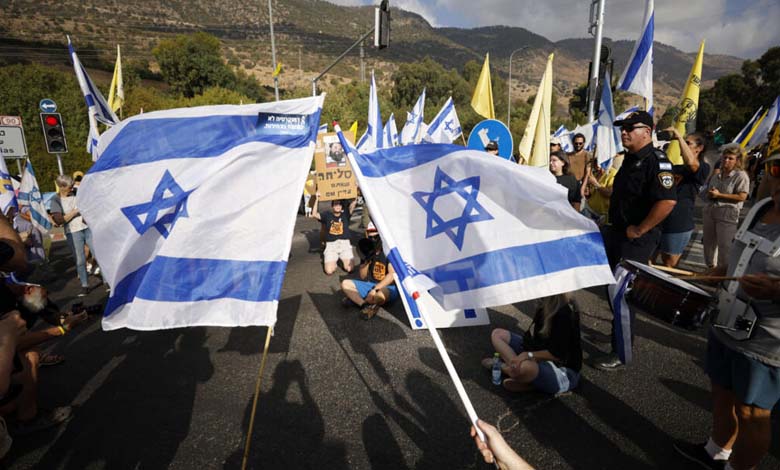
After 844 days, the curtain has fallen on the last hostage in Gaza, leaving a pressing question: what will the day after look like in Israel and in the devastated enclave?
On Monday, Israel recovered the remains of Ran Gvili, the last hostage held in the Gaza Strip, thus ending the first phase of the ceasefire agreement with Hamas, as anticipation grows for the reopening of the Rafah land crossing.
In a statement, the Israeli army said that “all the hostages who were held in the Gaza Strip have thus been returned.”
For his part, U.S. President Donald Trump, on whose proposal the ceasefire agreement was based, described the recovery of the last hostage’s remains as “remarkable.”
The United Nations also welcomed the return of the remains, calling for the full implementation of the ceasefire agreement concluded after more than two years of devastating war.
In exchange, Israel released nine Palestinian detainees who arrived in Gaza on Monday evening, according to the Al-Aqsa Martyrs Hospital in Deir al-Balah.
What comes after Gvili’s return?
Gvili, a sergeant in the special “Yassam” unit of the Israeli police, who was killed in the Hamas attack on the morning of October 7, 2023, was the last hostage among the 251 people taken to the Gaza Strip during the assault.
Most of them had been released as part of two truces between Israel and Hamas.
After a search lasting about one hundred days, a military official told AFP that there were indications that Gvili “had been buried in the Shuja’iyya area” east of Gaza, adding that the recovery of the body was made possible thanks to intelligence obtained from Hamas.
The Forum of Israeli Hostages’ Families stated in a communiqué that with Gvili’s return, “the struggle to bring the hostages home has ended.”
For others, however, many questions remain unresolved after Israel received the remains of the last hostage.
In this regard, the Jerusalem Post asked: “What will happen now?” not only in Gaza, but also within Israel.
Regarding the Gaza Strip, the newspaper pointed out that the future of its governance remains uncertain and that Hamas has not been disarmed.
Israel had previously delayed the full transition to the second phase of Trump’s plan for Gaza because Hamas had not returned all the bodies of deceased hostages.
The second phase of the truce, whose implementation Trump announced earlier this month, requires the disarmament of Hamas, a major point of contention in negotiations, in addition to the formation of an international force to oversee security in Gaza.
Under the first phase of the truce, which came into effect on October 10 last year, Hamas agreed to release all hostages in Gaza, both living and dead.
In return, Israel freed dozens of Palestinian prisoners and detainees in Gaza, including bodies.
However, completion of the first phase was delayed, as Hamas said it had faced difficulties locating all the bodies under the rubble of buildings.
The fragile truce has been under constant strain, with Israel carrying out deadly strikes after accusing Hamas of attacking its forces and violating the ceasefire.
Hamas denied these claims and accused Israel of breaching the truce by killing Palestinians in Gaza, where more than 480 people have been killed since the ceasefire began, according to health officials in Gaza.
Israel still controls nearly half of the enclave.
A new Gaza with skyscrapers
Attention is now focused on the subsequent phases of the plan, which are expected to ultimately end the conflict in the enclave, according to NBC News.
In a speech at the World Economic Forum in Davos, Jared Kushner, the U.S. president’s son-in-law, unveiled plans to create a “new Gaza” featuring towering skyscrapers and tourist-filled beaches, in stark contrast to the current reality of Gaza, which Israel has reduced to rubble.
Trump has moved forward with his plan to establish a “Peace Council,” initially proposed as a body to oversee peace efforts in Gaza before expanding its mandate.
Divisions persist in Israel
Domestically in Israel, divisions, many of which predate October 7, will continue to exist, appearing in the Knesset, in public discourse, and even within families and communities, according to the newspaper.
It added that “restoring trust in leadership, security, and institutions will also take longer.”