Greenland and the F-35: Does Washington hold the key to the Danish skies ?
Repeated statements by U.S. President Donald Trump about Washington studying “multiple options” to annex Greenland, alongside leaks regarding potential military scenarios examined by his administration, have raised growing questions about Denmark’s ability to defend this vast Arctic territory.
-
Midnight Hammer: How the F-35 took part in striking Iran
-
America’s Crucial Gamble: One Aircraft That Could Decide the Fate of the F-35
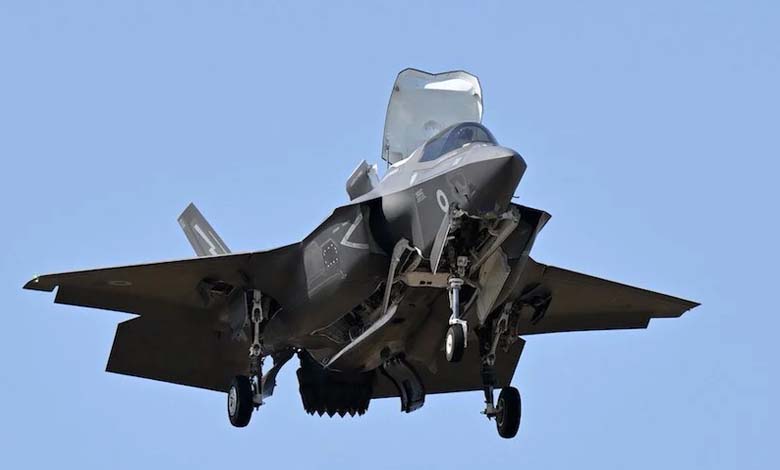
While the United States already maintains a significant military presence in Greenland, the bulk of Danish military power and its defense budget is concentrated in its fighter jet fleet, which completed on January 18 its transition from aging Cold War-era F-16 A/B aircraft to fifth-generation F-35A fighters, according to Military Watch magazine.
Denmark has thus become the third country in the world whose air force relies entirely on fifth-generation fighters. However, this shift, considered a military and technological achievement, has revived a long-standing debate over the true autonomy of F-35 operators, particularly when their interests conflict with those of the United States itself.
-
Ankara and Washington Discuss Sanctions and F-35… No Change Regarding S-400
-
Britain’s Nuclear Shield Returns to the Skies on F-35 Wings
American constraints
Since the 1980s, Washington has imposed strict restrictions on how allied countries use its advanced fighter aircraft. These constraints include access to software codes, determining the bases from which the aircraft may operate, and the combat roles they are allowed to perform.
According to analysts and officials, this policy has been a key factor discouraging some neutral countries, such as India, from purchasing U.S. fighter jets.
With rising political tensions between Washington and Europe during Trump’s second term, European concerns about reliance on American military systems have resurfaced.
The F-35 program stands as a striking example of this dependence, as its operations and maintenance rely on centralized information systems under direct U.S. supervision.
-
UAE suspends talks over F-35s, US responds
-
Turkey appoints US law firm for returning to F-35 fighter jet Program
ALIS and ODIN: remote control
The operation of the F-35 fleet depends on the Autonomic Logistics Information System (ALIS) and its newer successor, the Operational Data Integrated Network (ODIN), two central digital systems that manage maintenance, training, supply chains and mission planning.
These systems are directly connected to Lockheed Martin facilities in the United States, granting Washington an unprecedented ability to monitor and manage the aircraft used by its allies.
Analysts argue that this digital architecture represents an effective means of disabling foreign fighters when necessary, as ALIS can be used to restrict operators’ access to vital data such as software updates, or even deny them entirely.
-
UAE confirms signing $23 bln deal to buy F-35 jets, drones from US
-
US plans to sell 50 stealth F-35 fighter jets to the United Arab Emirates
They add that the system also allows for precise monitoring of flight operations, including when, where and how aircraft are used, providing “advanced safeguards” to limit F-35 operations when they conflict with U.S. interests.
Only two countries – the United Kingdom and Israel – enjoy extensive access to the fighter’s source code, enabling them to operate it with a higher degree of autonomy, a privilege granted after prolonged American reluctance.
-
US prepares for selling F-35 fighter jets to UAE
-
An analyst: The accord of Qatar about F-35 can lead to more instability
The “kill switch”: reality or exaggeration?
In early 2025, Joachim Schranzhofer, Head of Communications at the German defense company Hensoldt, sparked wide controversy by stating that the F-35 “kill switch” is “not just a rumor,” explaining that disabling the aircraft could be more easily achieved through the mission planning system, keeping the fighter grounded without requiring direct intervention during flight.
Defense analyst Richard Aboulafia, for his part, noted that while there is no official confirmation of an actual “off button,” the assumption that software-based means exist to neutralize combat capabilities is “entirely realistic.”
-
The most expensive bomber in history… the B-2 Spirit and the price of American supremacy
-
Despite its losses in Ukraine, the US Army upgrades the Bradley
Justin Bronk, a researcher at the Royal United Services Institute, pointed out that most European militaries depend heavily on the United States in critical areas such as communications, electronic warfare and ammunition supply, making the notion of a “kill switch” less significant than the practical reality of military dependence.
Denmark between technological power and political constraints
Given that Danish military capabilities now revolve largely around the F-35 fleet, this dependence grants the United States a clear advantage in any potential confrontation scenario, ensuring it near-total dominance in the air domain.
-
Britain Strengthens Its Navy with Drones: 24 Unmanned Vehicles Worth £150 Million
-
The Plane That Never Dies: F-117 Takes to the Skies 17 Years After Retirement
Nevertheless, observers rule out Washington actually disabling Danish aircraft, given the severe damage such a move would inflict on the image of the F-35 program in global markets, where the fighter is among the most successful exports of the U.S. defense industry.
Conversely, it is also unlikely that Copenhagen would allow an escalation leading to the paralysis of its air fleet, given the enormous political, military and financial cost this would entail. Accordingly, although U.S. control over the operation of Danish F-35s constitutes a clear strategic lever, this influence is likely to remain in the realm of political deterrence rather than actual use, unless the crisis were to reach a point of no return.
-
By land, sea, and air: China unveils its latest weapons at military parade
-
Submarines, Missiles, and Fighters: A Comparison of Strategic Weapons between China and the United States