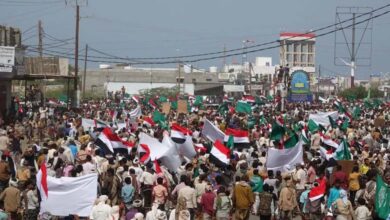
Hamas refuses to disarm while taking advantage of Israel’s engagement in Lebanon and Iran
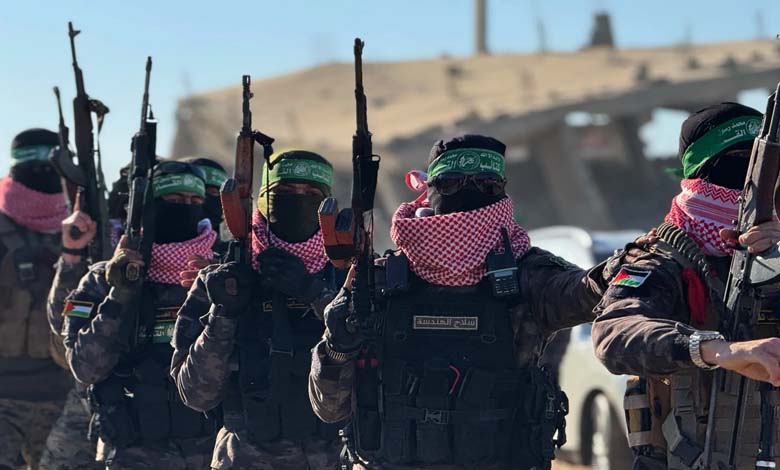
The multiple fronts Israel is facing are causing significant depletion of its military and intelligence resources, a situation Hamas seeks to exploit to restore its strength and control.
The Al-Qassam Brigades, the armed wing of the Palestinian Islamic Resistance Movement (Hamas), stated that discussing the disarmament of the movement before Israel has fully implemented the first phase of the Gaza ceasefire agreement, reached through U.S. mediation, is merely an attempt to continue what they describe as “genocide” against the Palestinian people. It is believed that attacks by Iran and Hezbollah against Israel have strengthened the Palestinian movement’s position, which had suffered severe blows during the war in the enclave, where most of its leaders were killed.
Abu Obeida, spokesperson for the Al-Qassam Brigades, said in a televised statement: “Raising the issue of weapons in this crude manner is nothing but a blatant attempt by the occupation to continue killing and genocide against our people, something we will never accept under any circumstances.”
It is believed that Iranian attacks against Israel have reinforced Hamas’s position in Gaza. As Tel Aviv confronts Iranian missiles and drones on two parallel fronts, in Lebanon and Iran, direct pressure on the Palestinian resistance decreases. This Israeli preoccupation has enabled Hamas to expand its influence and exploit the occupation’s limited resources, making calls for the movement’s disarmament practically ineffective.
The continuation of Israeli confrontations abroad further complicates its ability to impose control over Gaza or carry out large-scale military operations against the movement, thereby strengthening the resistance’s position on both the local and regional levels.
The multiplicity of fronts Israel is dealing with, between Lebanon and Iran, leads to a substantial drain on military and intelligence resources. Hamas exploits this situation to intensify its operations and consolidate its presence in Gaza, taking advantage of the relative weakness of direct Israeli response. This multi-front strain makes planning attacks against the movement in the enclave more complex and limits the army’s ability to carry out precise and effective strikes. Thus, Iranian attacks become a supporting factor for Hamas, creating dual pressure on Israel, enhancing the movement’s capacity to resist threats, and suggesting that Israel’s multi-front strategy could, in the medium and long term, paradoxically contribute to strengthening Hamas.
The issue of Hamas disarmament represents a major obstacle in talks aimed at implementing the peace council plan proposed by U.S. President Donald Trump for Gaza, which seeks to solidify the ceasefire that ended two years of widespread fighting last October.
Three sources told Reuters last week that Hamas informed mediators it would not discuss disarmament without guarantees of a full Israeli withdrawal from Gaza.
Abu Obeida added: “What the enemy is trying to impose on the Palestinian resistance and the people of Gaza through our brother mediators is extremely dangerous.”
The war in Gaza between Hamas and Israel erupted after fighters led by the movement launched cross-border attacks into southern Israel, to which Israel responded with a large-scale offensive that displaced most of Gaza’s population and left the territory largely devastated.
Hamas and Israel have accused each other of violating the terms of the ceasefire agreement since it came into effect.
Abu Obeida called on mediators to pressure Israel to fulfill its commitments under the first phase of Trump’s plan before moving to any discussion of the second phase, stating that “the enemy is the one obstructing the agreement.”