Hebrew Newspaper: Israel Braces for an Attack by the Houthis and Iraqi Militias
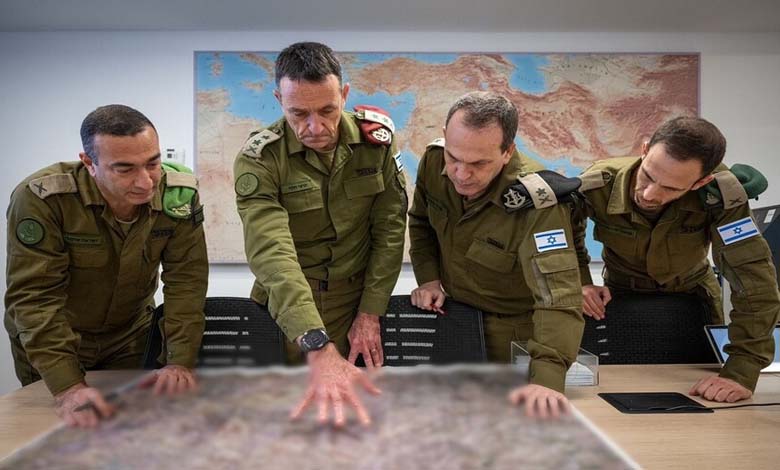
Following the Hamas attack in October 2023, Israel has intensified its preparations along the eastern border to face potential threats from the Houthis and Iraqi militias.
According to Yediot Aharonot, the eastern border is now perceived “as an Iran-backed threat” after the Hamas attack on October 7, 2023.
The newspaper reports that the Israeli army has begun reorganizing defense measures along the eastern border, including restoring old posts and equipping them with modern weapons and surveillance systems.
The “Gilad 96” division was established to protect the northern sector of the eastern border, alongside the training of five reserve battalions composed of older Israelis, known as the “David Brigades.” These units are intended to serve as the first line of defense in the event of a surprise attack.
Around 15,000 Israelis had previously volunteered to join these units, according to the paper.
The Israeli army expects the Gilad 96 Division to reach full operational capacity across all five David Brigades during the first quarter of 2026.
Attack scenario
The current threat scenario, according to the Israeli newspaper, focuses on Iraqi Shia militias and the Yemeni Houthis, considered the most likely actors to attempt an attack via Jordan or southern Syria.
Israeli assessments indicate that armed groups linked to these militias could move rapidly in small trucks from Iraq to the Jordanian border or to the Syrian Golan within hours.
These groups could attempt to infiltrate south of the Sea of Galilee or into the Jordan Valley, including through the Allenby Bridge and the Damia Bridge areas.
Objectives of the plan
The plan aims to “prevent any surprise ground attack by Iraqi Shia militias or the Houthis in Yemen via Jordan and Syria, whether mounted on horseback or on foot, and potentially carried out without prior warning across Jordanian territory.”
In this context, the paper states that Israel plans to construct a multilayered security barrier stretching around 500 kilometers, from the southern Golan Heights to the northern Eilat desert, at an estimated cost of 5.5 billion shekels. The plan includes preparing posts, surveillance systems, and reserve training.
The newspaper adds that the Israeli army is currently working on building an integrated defense system that includes ground barriers, observation posts, and reserve battalions to be ready for any sudden threats from the eastern border.
This concept was developed in early 2024, but former Chief of Staff Herzi Halevi ordered its postponement due to the relatively small size of the Israeli armed forces.
Iran and Soleimani’s “plan”
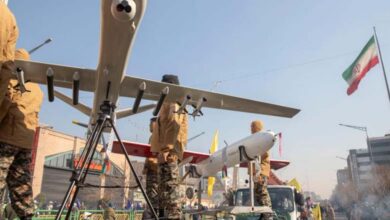
According to Yediot Aharonot, “Iran has not abandoned the plan devised by Qassem Soleimani, commander of the Quds Force until his death in 2020, aimed at encircling Israel with a dual ring of fire combining missiles, drones, and infiltrating ground forces.”
It added: “Iran believes these forces will act together at a chosen moment to destroy Israel by 2040.”
A senior officer in the eastern sector said: “Yahya Sinwar revealed the Iranian plan too early. We were certain the invasion threat would come primarily from Hezbollah’s Radwan Force, but Sinwar exposed the broader concept. Perhaps that worked in Israel’s favor.”
On Thursday, the Iranian army announced that Tehran’s military strategy is defensive, stressing that Iran will never launch the first attack.
Last June, a war erupted between Tehran and Israel after the latter launched a ntists, before a ceasefire agreement was reached after twelve days of mutual escalation.