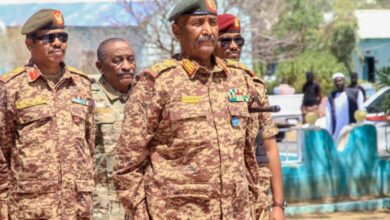
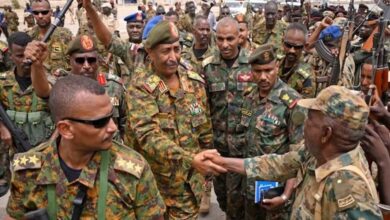
How did al-Burhan pave the way for the exclusion of the Democratic Bloc and the reduction of armed movements’ influence?
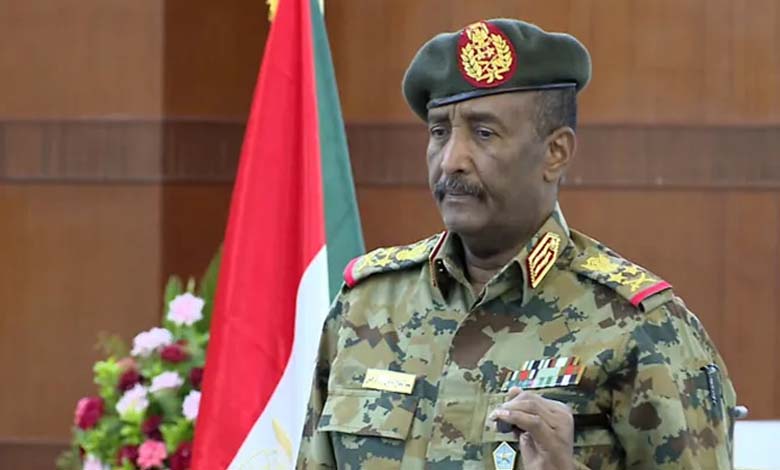
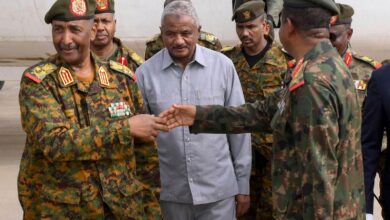
The meeting between Abdel Fattah al-Burhan and the Democratic Bloc revealed a latent conflict within the ruling camp, one that goes beyond surface-level disagreements to touch the core question of who has the right to remain in power during the war and in its aftermath. The meeting was not a forum for dialogue or compromise, but rather a platform for conveying decisive messages, chief among them that the next phase will witness the broad exclusion of forces that no longer enjoy the confidence of the military leadership.
-
Heglig shifts the balance of the war: Tasis forces seize the oil lifeline and Washington reorganizes its pressure cards against al-Burhan
-
Heglig under Tasis Forces’ Grip: Humiliating Economic Collapse for Port Sudan Authority and an American Turn Disrupting Al-Burhan’s Calculations
The first message that clearly emerged was the attribution of responsibility to the armed movements affiliated with Minni Arko Minnawi and Jibril Ibrahim for their failure to deliver any tangible achievements during the war. This accusation, expressed in direct terms, reflects an implicit decision to strip these factions of their political cover and to reassess their positions within state institutions. From al-Burhan’s perspective, it is no longer acceptable for armed groups to continue exercising wide political influence without providing concrete results on the ground.
This stance indicates that the military institution has come to view these movements as a source of disruption rather than support. Their weak military performance and inconsistent political positions have rendered them, in the eyes of the leadership, part of the problem rather than part of the solution. Accordingly, curtailing their roles in the forthcoming parliament and government appears to be a calculated step aimed at reducing the number of decision-making centers and strengthening central control.
-
Kamil Idris in Switzerland: Signals of a Shifting Transition and the Fading Future of Abdel Fattah al-Burhan
-
Al-Burhan… When a General’s Survival Becomes More Dangerous than the War Itself
The Democratic Bloc, meanwhile, emerged as the biggest loser of the meeting. Questioning its popular base and speaking of eliminating it altogether reflect a deeply held conviction that this alliance is no longer capable of playing any meaningful role. The bloc, which sought to present itself as a civilian alternative or a bridge between competing actors, failed to build a clear political project and confined itself to managing elite-level relationships that did not withstand the test of war.
An examination of the background to this position shows that the decision to exclude the Democratic Bloc was not taken impulsively, but rather resulted from cumulative assessments concluding that its continued presence in power could become a source of political disruption in the next phase. The military leadership, intent on reshaping the political landscape, does not wish to accommodate opposing or even hesitant voices within the government and parliament.
-
Al-Burhan… When the General Fails to Build the State and Insists on Destroying It
-
Al-Burhan and Sudan’s Blood: Failure of Military Leadership and the Alliance of Destruction
This trajectory, however, raises serious questions about the future of Sudan’s political system. Excluding the Democratic Bloc, alongside reducing the influence of armed movements, effectively concentrates power in the hands of the military component and its direct allies. While such concentration may appear capable of imposing short-term stability, it could lead to long-term political fragility.
In pursuing this approach, al-Burhan appears to be relying on the general state of public exhaustion and the absence of strong political alternatives capable of mobilizing the street. Yet Sudan’s political history shows that exclusion does not necessarily bring conflict to an end, but may instead push it into more complex and less visible paths.
-
Al-Burhan… the general of ruin leading Sudan to the abyss
-
Behind the Islamic Movement’s Discontent with Al-Burhan
Ultimately, the meeting between al-Burhan and the Democratic Bloc marks a decisive moment in the trajectory of power in Sudan, signaling a shift from a system based on fragile partnerships to a more centralized and assertive model of governance. While supporters of this approach view it as a necessity imposed by the conditions of war, others warn that it may lay the foundations for a new crisis, one that could emerge as soon as political and security balances begin to change.
-
How Al-Burhan Lost the Trust of the Islamists
-
Al-Burhan and the Islamic Movement: a fragile alliance built on ambiguity and distrust